




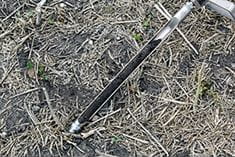
As harvest progresses toward the second half across Saskatchewan, producers may be considering soil testing this fall. With rising fertilizer prices, using a soil test can help save on input costs for the next year. After a wet growing season, soil tests can provide valuable insight into nutrient availability and help guide fertility plans for the upcoming season.
(The following article was written by Quinton Cubbon, a crops extension specialist with the Saskatchewan Ministry of Agriculture in North Battleford)
The wet conditions experienced in 2026 can significantly impact nutrient movement availability within the soil. While higher precipitation increases yield potential and nutrient uptake, it can also result in greater nutrient removal from the soil. Not all nutrients in a fertility program will be used by the plant, particularly nitrogen, which is mobile in the soil. Excess moisture can result in additional nitrogen losses to leaching, denitrification and volatilization, making it even more difficult to know how to approach a fertility program for next year.
A soil test removes much of the guesswork. Rather than estimating nutrient carryover, producers can accurately determine the levels of available nitrogen, phosphorus, potassium, sulphur and other essential nutrients remaining in the soil. This information allows for more precise fertilizer planning and can help avoid both over and under nutrient application.
Fall soil testing should begin once soil temperatures have dropped below 10 C to minimize nitrogen mineralization and provide more representative results. For the most accurate assessment, soil samples should be collected from multiple locations throughout the field, typically 15 to 20 cores per management zone and taken to a depth of six to 12 inches. Avoid unusual areas such as sloughs, hilltops, shelterbelts and old yard sites unless they are being sampled separately.
The value of soil testing becomes even greater after a wet season because nutrient losses are often difficult to estimate visually. A field that appeared highly productive throughout the year may have experienced significant nitrogen or sulphur losses not reflected in the final yield. Conversely, some nutrients may remain in sufficient quantities, allowing fertilizer rates to be reduced without sacrificing crop production.
Ultimately, soil sampling provides the information needed to make informed fertility decisions. In years when moisture has the potential to alter nutrient availability and increase nutrient losses, a soil test is one of the most effective tools for managing input costs, maintaining crop productivity, and maximizing the return on fertilizer investments.
For more information on fall soil testing, please contact the Agriculture Knowledge Centre at 1‑866‑457‑2377 or your local crops extension specialist.