




TJ England, DiscoverMooseJaw.com
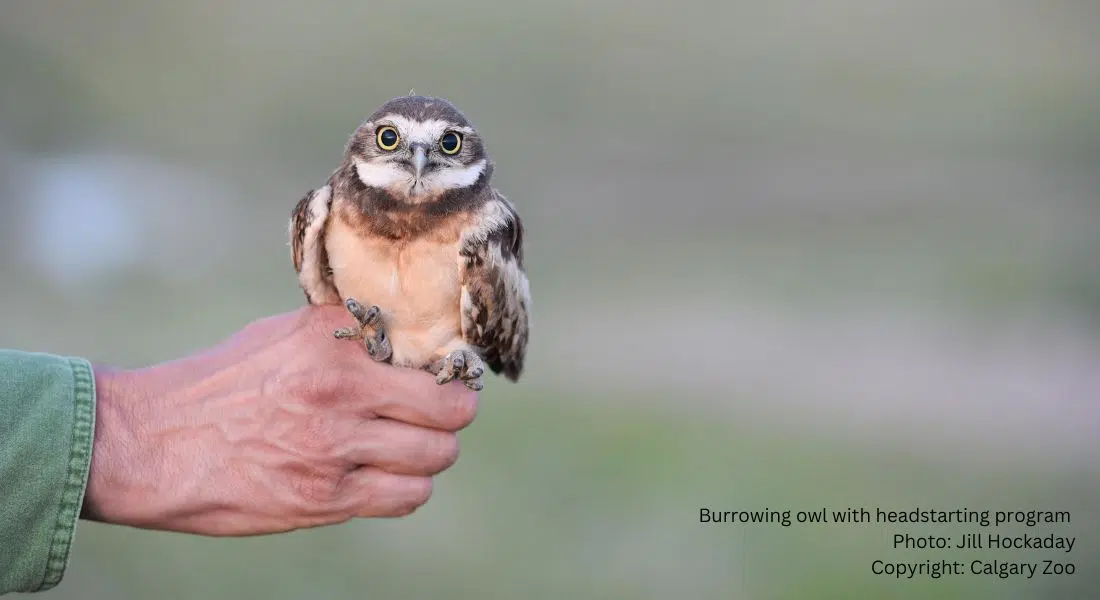
As young burrowing owls begin leaving their nests to hunt and fly on their own, Nature Saskatchewan is reminding motorists to stay alert on rural roads during one of the birds’ most vulnerable stages.
From mid-July through August, burrowing owl fledglings emerge from their underground burrows and begin learning to hunt insects and small mammals while developing their flying skills.
Habitat stewardship coordinator Grace Pidborchynski said that often brings the young birds close to roadways.
“Around this time of year is when the burrowing owl fledglings are starting to come out of their burrow,” she said. “They’re starting to learn how to hunt on their own and they’re also learning to stretch their wings out and learn to fly around so they’re able to get food on their own.”
While roadways may not seem like ideal wildlife habitat, Pidborchynski said warm pavement attracts insects and rodents, making roadsides appealing hunting grounds for young owls.
“The warmer roads often attract insects such as grasshoppers, crickets and beetles, as well as mice,” she said. “This is kind of an easy spot for the young burrowing owls to learn how to hunt.”
Because fledglings are focused on catching prey and are still learning to fly, they often fail to notice approaching vehicles.
“They’re mainly ground foragers, which means they’ll be flying low to the ground or just running along the ground,” Pidborchynski said. “If you’re driving around rural grid roads in Saskatchewan, keep an eye out for low-flying owls or other birds that have been attracted to the roadways.”