




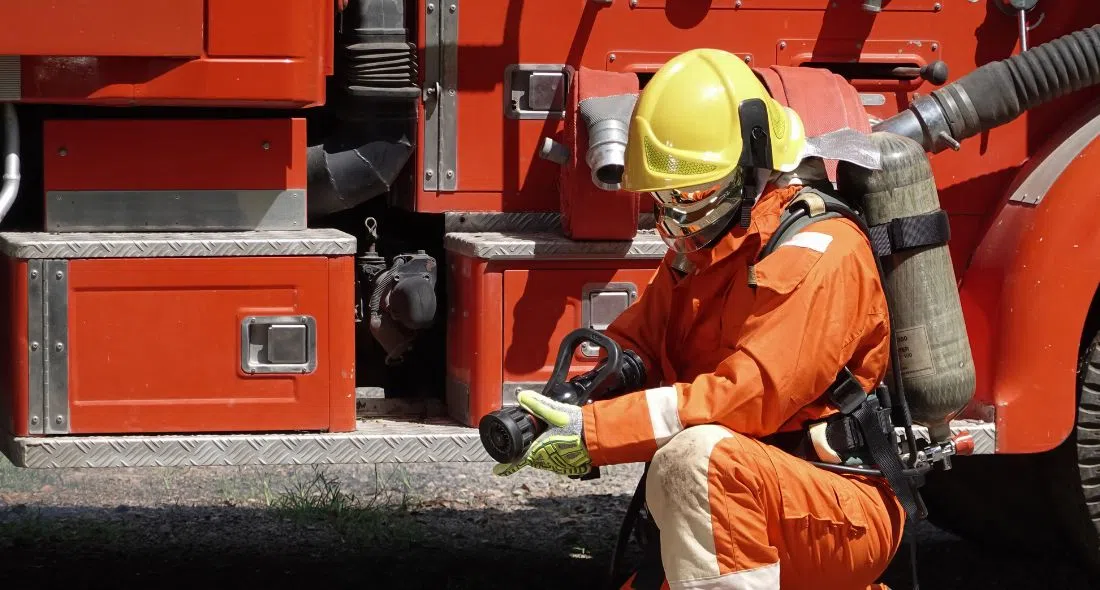
The President of the Saskatchewan Volunteer Firefighter Association says it’s getting harder to encourage people to become volunteer firefighters.
Aaron Buckingham says the majority of firefighters in the province are volunteers, underlining the importance of retaining high numbers. However, the job is becoming less feasible.
“It’s getting harder and harder for people. The cost of living, everything else, they don’t want to be leaving their jobs and not getting paid and going to fight fires anymore. It used to be more socially acceptable, and it wasn’t quite so hard, but it’s a big ask of somebody.”
He says whether members are stationed off a busy highway or tucked away in a small community; service must be guaranteed when someone picks up the phone to call 9-1-1.
On the bright side, he says the significant snowpack and precipitation seen so far this year looks promising when it comes to not having a repeat of last year’s fire season.
Buckingham says in the spring and summer of 2025, he was personally deployed to the northeast part of the province, and then further north a second time.
“It is a very, very hectic environment. It is very hard work. It comes with inherent dangers and risks. It was a lot of your volunteer firefighters from across the province that answered that call from the Saskatchewan Public Safety Agency for help.”
After a fire season like that in 2025, firefighters often require extra mental health support, and expanding and enhancing the Critical Incident Stress Management Team is the next task on the to-do list for the SVFFA.
Buckingham says the CISM team provides support to emergency personnel after they’ve been called to a traumatic incident.
“Fatality car accidents. Fatality house fires. If you’re in this game long enough, it’ll happen to you. It’s really difficult anytime, but it’s even tougher in a small town, because everybody knows everybody, too. Our Critical Incident Stress Management Team is there to support the wellbeing of our volunteer firefighters across the province. We want them to go home safe, not just physically, but mentally.”
He says the team is available 24/7, 365 days a year. There is no cost to the receiving department, and it is a confidential team that doesn’t demand details in order to respond.
Buckingham says even though the team’s dispatches aren’t disclosed, it does get used, and it’s extremely valuable.