



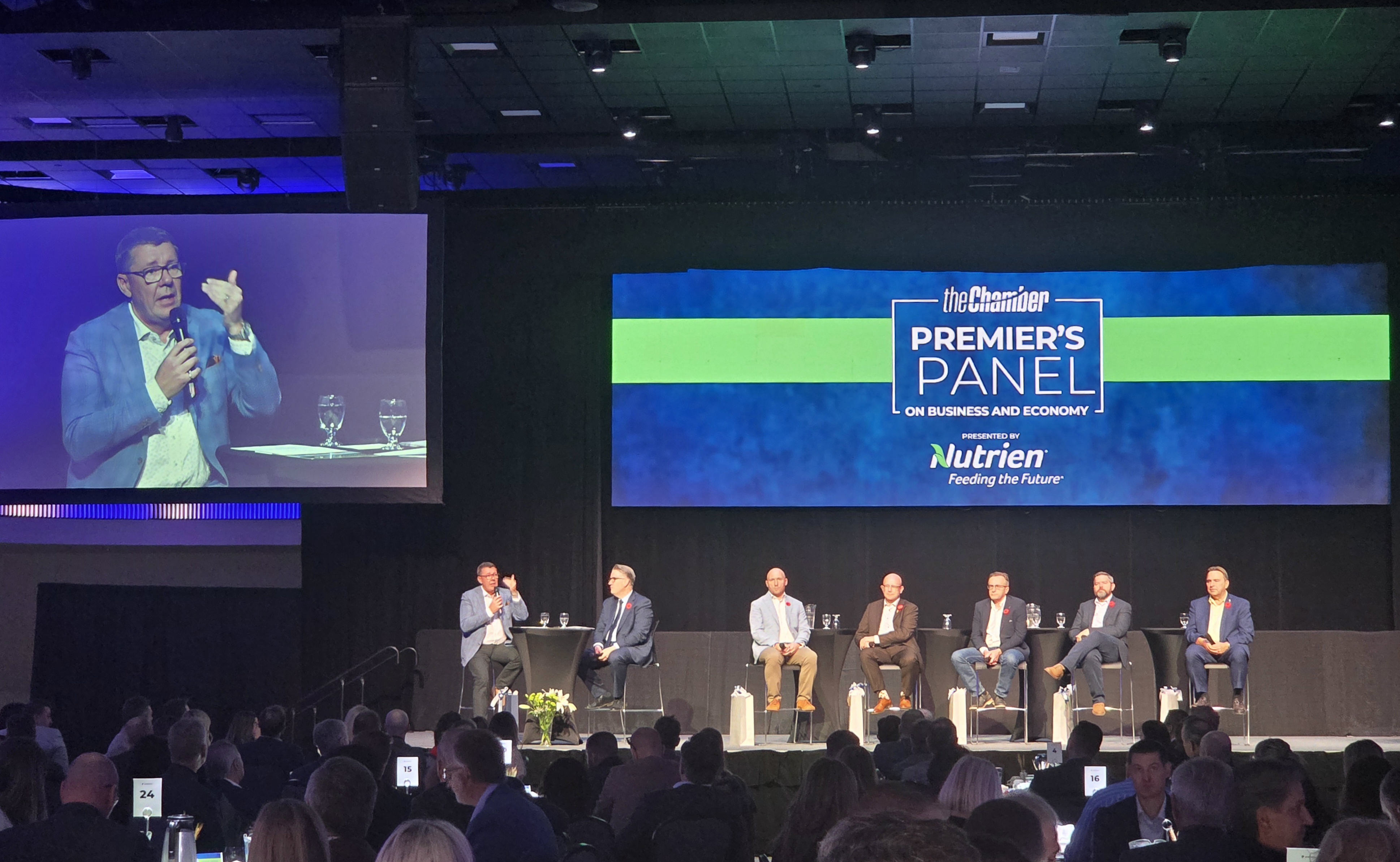
Premier Scott Moe and five of his minsters have shared their thoughts and plans on a variety of topics at the Premier’s Panel on Business and Economy hosted by The Chamber on Friday afternoon in Saskatoon.
In regard to the Federal budget, the Premier described it as “the best budget we’ve had in a decade.”
He acknowledged a lot of positives in the budget, such as the new Productivity Mega Deduction which would allow businesses to immediately write off the cost of expansions and equipment, as well as plans with forestry and nuclear industries. Moe did take issue with the lack of sustainable capital infrastructure programs and the lack of supports for communities in that area.
In addition, Finance Minister Jim Reiter explained that the budgets effect on Saskatchewan is in the details, which they don’t currently have.
On AI data centres in Saskatchewan, the Premier talked about companies increased interest in the province to house data centres, and the conditions, standards, and criteria they’ll need to meet.
Minister of SaskPower Jeremy Harrison explained how companies need to be Canadian and need to provide their own power for the data centre.
Moe said one of the criteria that’s been discussed is building a facility that creates long-term careers for Saskatchewan people.
“One of the first questions that is asked is if your bring a data centre and you want to build the thing, and then your going to hire two electritions and two care takers, you should go somewhere else, we are looking for long-term careers”
Moe explained that questions regarding the AI data centre in the RM of Sherwood can be redirected to Bells office in Regina for answers.
As well, the Premier talked about the discussions that need to happen around the centres. Discussions such as how AI will be managed, the building itself and what resources it will use, and having data sovereignty are all currently being talked over by the Provincial Government.
When doscussing the recent mid-term election, Moe urged the Prime Minister to get back to the negotiating table and to build on the framework already present.
Ninety-four percent of Saskatchewan exports aren’t affected by tariffs. The remaining six percent that is affected belongs to the forestry industry and manufacturing industry.
Moe said the industries effected are feeling 100 per cent of the impact.
“Our message would stay the same and we’ve been advocates and maybe even actively involved in getting back to the table. We always want to be at the negotiating table with our largest trading partner, which is the United States of America.”
The Premier added that a deal came close to happening this past summer, before three years of negotiations broke down and the tariffs were implemented.