




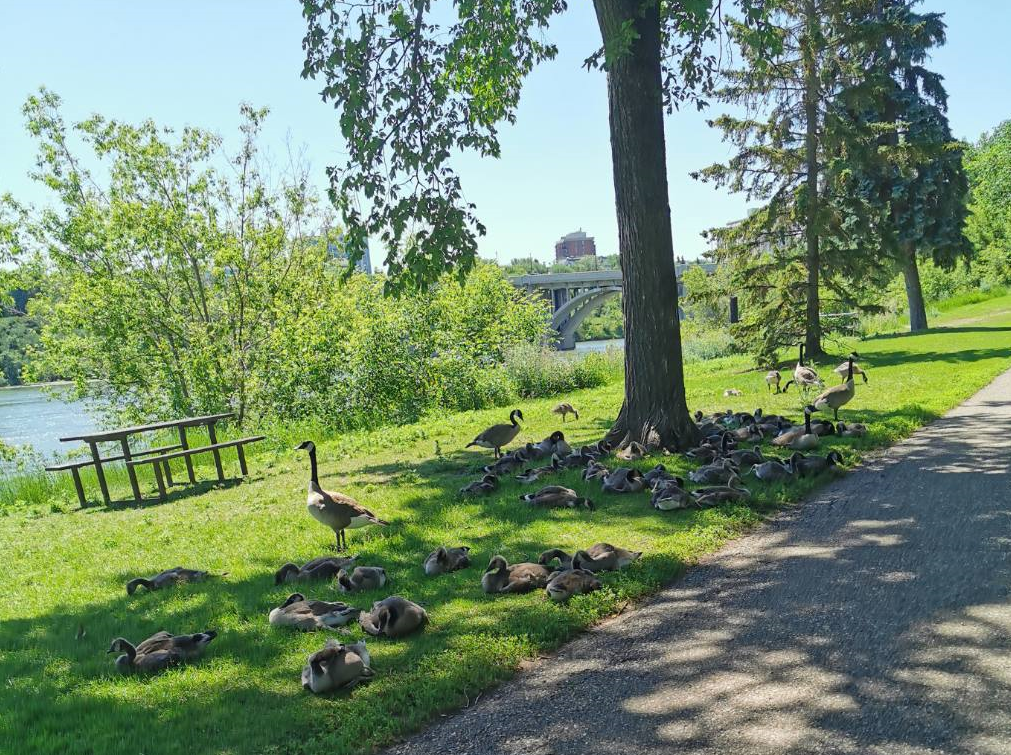
The Wildlife Rescue Society of Saskatchewan is reminding residents to keep their distance from sick or injured birds after receiving a report that several families allowed children to pet an apparently ill goose in Regina’s Wascana Park.
Bonnie Dell, executive director of the Wildlife Rescue Society of Saskatchewan, said staff were surprised when they heard about the incident.
According to the caller, multiple families approached the goose while it sat on a sidewalk showing signs of illness.
“We were floored when we had someone call us,” Dell said.
She noted that people sometimes assume a wild animal is safe to approach if it appears calm or isn’t reacting normally.
“People are always wanting to approach a wild animal thinking that because they are not reacting or responding the way they normally would, that they’re tame or it’s okay to touch them and pet them,” she said.
As birds continue their fall migration, Dell said abnormal behaviour is often one of the clearest signs that an animal is sick.
“If an otherwise healthy-looking goose or a raptor is just sitting there and not responding and looking kind of out of it, that’s a clear sign it’s unwell and you should stay away,” she said.
The Wildlife Rescue Society has received some reports of avian influenza this fall, though Dell said the number of calls has been lower than what the organization experienced last year.
“We had a real wave of calls in September, predominantly in Canada geese.”
She expects more reports in the coming weeks as snow geese move into more populated areas throughout Saskatchewan.
While documented cases of people contracting highly pathogenic avian influenza are rare, Dell said there is another major concern for Saskatchewan residents.
“The big thing you have to be worried about in this province is spreading it,” she said.
Dell explained that people who come into contact with infected birds could unintentionally carry the virus into agricultural areas, including poultry operations and properties with backyard chickens.
“That’s the really scary part,” she said.
Because of that risk, the organization follows guidance from the Ministry of Environment and generally advises against intervening with sick wild birds.
“Leave them in the wild. Don’t approach them. Just leave them alone is the biggest message.”
Dell said incidents like the one reported in Wascana Park highlight the importance of teaching children how to safely interact with wildlife.
“I think it’s just the word respect,” she said.
Even a sick animal can be unpredictable and potentially dangerous if it feels threatened.
“Those animals or birds have a fight or flight response. They can suddenly show so much strength right when you think they won’t.”
She encourages parents and caregivers to teach children to observe wildlife from a safe distance and to involve an adult if an animal appears injured or sick.
“The number one thing to teach children, and we get a lot of calls when these birds or any wildlife is close to a school ground, is just leave it alone,” Dell said. “Don’t interact with it. Watch from a safe distance and always involve an adult if there’s a problem with it.”
The Wildlife Rescue Society reports calls involving suspected avian influenza cases to the Canadian Wildlife Health Cooperative, which tracks and monitors wildlife diseases across the country.