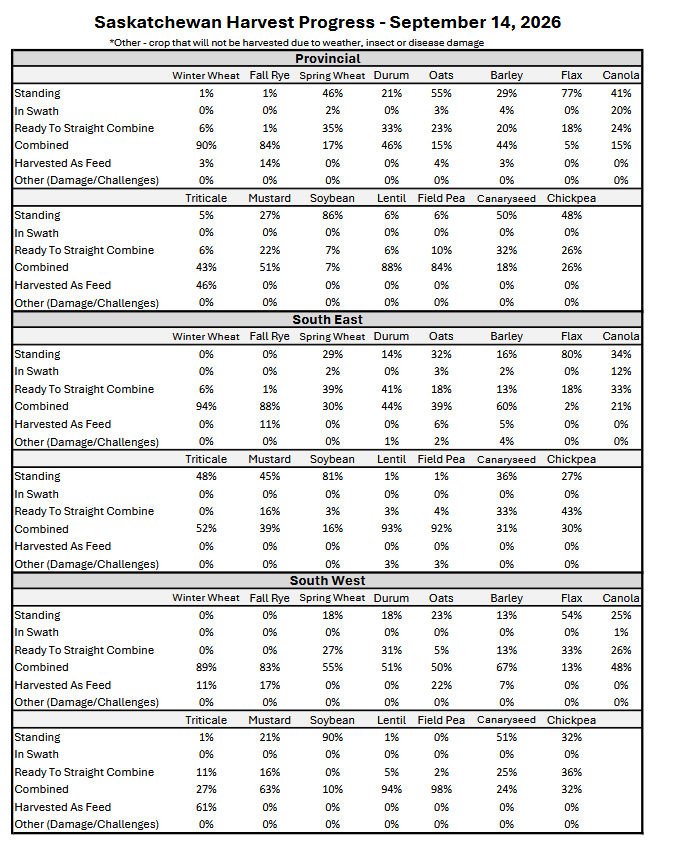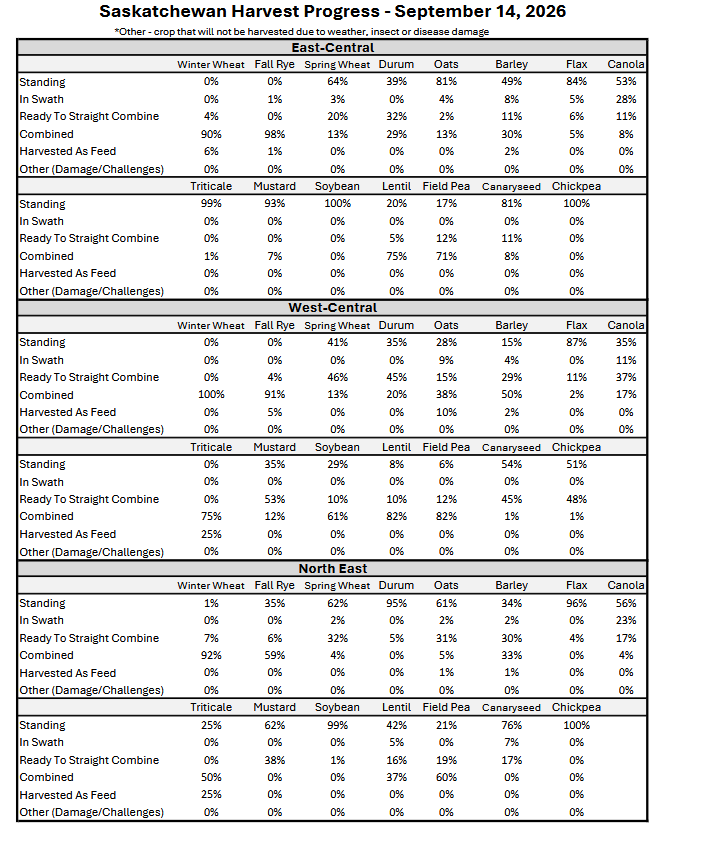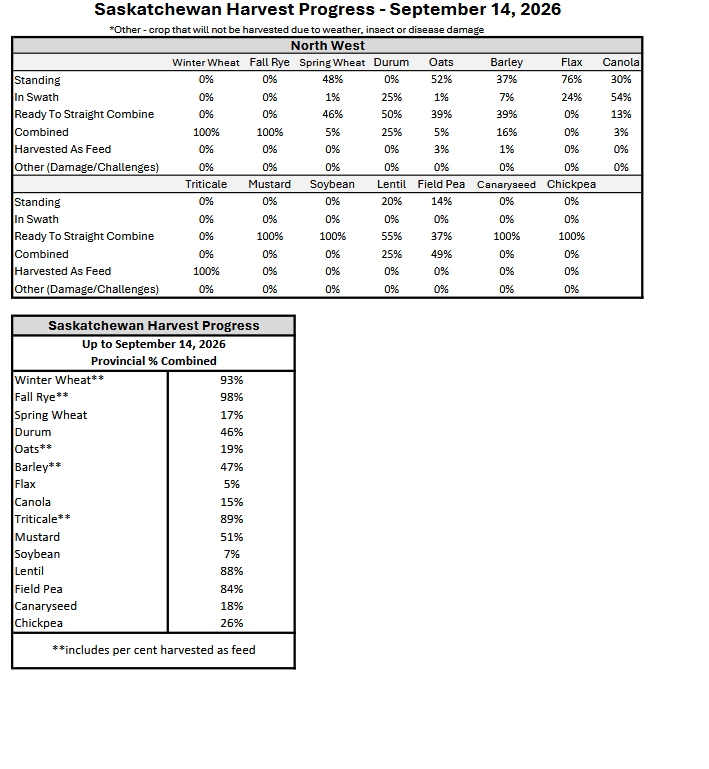




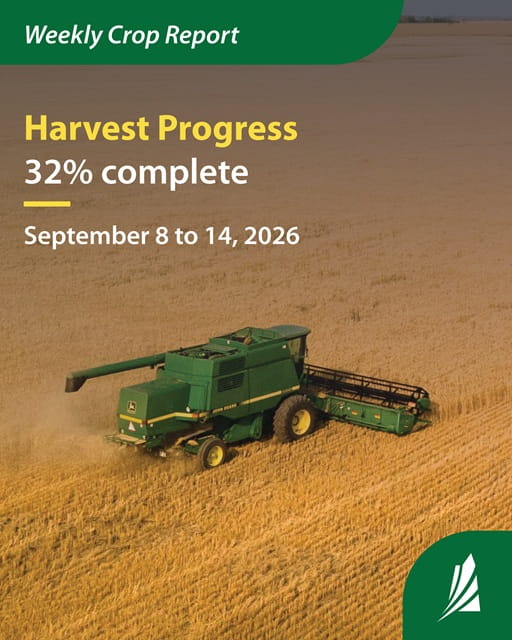
Last week’s widespread rain kept combines off the field over most of the province.
The Saskatchewan Agriculture Weekly Crop report says the provincial harvest was 32 per cent complete as of Monday—only a five per cent increase from the previous week. This remains well-behind the five-year average of 71 per cent and the 10 year average of 63 per cent.
This is the harvest breakdown by region—southwest 60 per cent combined, southeast 36 per cent, west-central 27 per cent, east-central 18 per cent, northwest 12 per cent and the northeast only 9 percent combined.
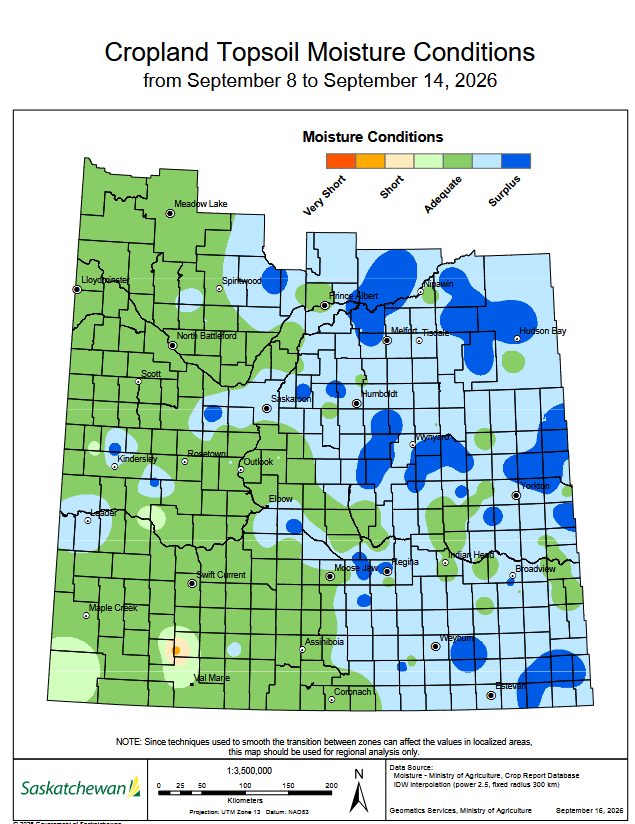
The highest rainfall amount reported by volunteer crop reporters was 97 millimetres or nearly four inches at the RM of Sarnia, which is in the Holdfast area. The RM of Sasman, the Fishing Lake region, was next at 85 millimetres, while it was 80 millimetres at the RM of Aberdeen.
Provincial cropland topsoil moisture is rated 34 per cent surplus, 63 per cent adequate and only three per cent short.
Harvest progress by crop sees lentils at 88 per cent combined, peas 84 per cent, barley 47 per cent, durum 46 per cent, chickpeas 26 percent, oats 19, canola 15 and flax at five per cent combined.
Crop reporters were asked to assess the quality of the pulse crops. Starting with peas, 30 pe rcent are pegged to grade number one, 60 per cent number two, 8 percent number three and one percent sample. There will be fewer number one peas in 2026—–the ten- year average is 42 per cent.
Only 17 per cent of lentils are expected to grade number one—-the ten year average is 31 per cent. Seventy percent of lentils are pegged at number two, 9 per cent number three and 4 per cent sample.
Twenty-three per cent of durum is expected to go number one compared to the 10-year average of 31 per cent. Twenty-eight per cent of durum is pegged at number two, 25 per cent number three and 24 per cent graded as other.
Barley quality numbers are also behind the ten year average—-just 18 per cent is expected to qualify for malt this year compared to ten-year average of 31 per cent. Fifty-three per cent cent of barley is estimated to go 1 CW and 29 per cent CW.