




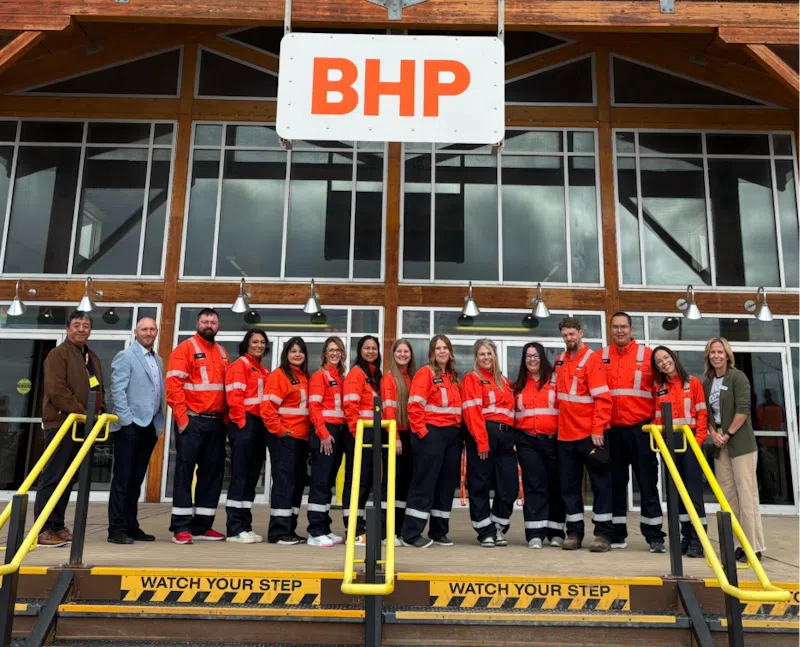
With a pressing need to fill about 15,000 positions in the mining industry within the next decade, BHP’s recruiting team is tapping into untouched demographics.
General Manager of Operations Graham Reynolds says in response to this labour shortage, BHP developed a Potash Academy course and subsequent work placement program at Carlton Trail College in Humboldt, near BHP’s new Jansen potash mine.
The eight-month course focuses on both theory and hands-on learning, and it’s unique in the way that it is targeted at people with zero pervious mining experience.
“That process was a lot about finding the right attitude of people and their application to problem solving than it was about any mining experience. In fact, there was zero rating on mining experience for the people being interviewed.”
With this approach, the application process drew in over 2000 submissions, but only 11 students were selected to be part of the inaugural cohort.
Reynolds explains that the course starts off with classroom training, focusing on the theory of mining and potash. Students then transition into practical applications such as welding skills, piping, fitting, and electrical work.
“We also have some mining equipment that they get to practice on, small conveyers, cyclones, and things like that, which gives people who’ve never been in the mining world a chance to feel smaller versions of what mining equipment is like.”
He adds that the most needed jobs in the industry are surrounding underground mine operations, mining equipment, and the trades, “So, electricians and millwrights are definitely the main areas that we’re looking for people.”
The eight-month program is 100 per cent funded by BHP and the Province, which allows students to focus on the course without working nights. Reynolds says upon being selected to take part, each student is promised a job at BHP at the end of the course.
“One hundred per cent of the people in this round found jobs on the other side, and we expect that to be the same with the other applicants as they come through.”
The first cohort of 11 students has graduated, and the second group of 22 students is expected to begin class in the coming months.