




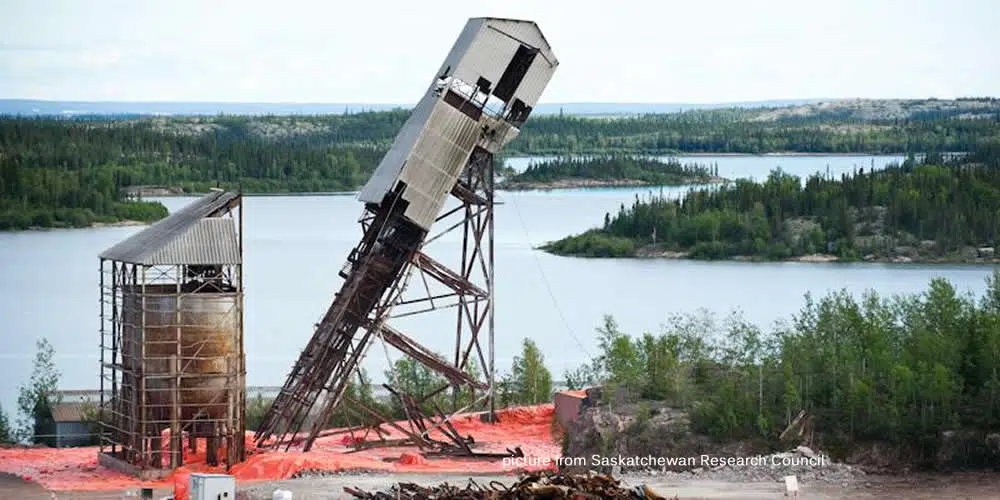
A miniature water treatment system set up in a lab at the University of Moncton is showing some promising results when it comes to decontaminating old mine sites.
Dr. Morgane Desmau explains that her team is on the hunt for an alternative method of cleaning contaminated ground water in northern Canada, as the chemical reactions that are normally used to clear up groundwater contaminants are altered when performed in colder climates.
“What is happening when you have a colder climate is that a lot of reactions are slowed down. If you have process that rely on biological activity, it’s going to be slower and not as efficient when it’s cold, “she explains.
The team found that a natural filter of gravel, iron, and wood chips worked well to remove arsenic, uranium, and nitrates that become present in the mining process.
Although successful, Desmau adds that future models will have to be modified to remove the arsenic and uranium in a separate process from removing the nitrates, because the bacteria used to mitigate the nitrates interacted negatively with the uranium.
“If we want to be able to remove the three contaminants at the same time, we will need to modify a little bit of design and probably try to remove first arsenic and uranium in one cell and maybe nitrates in a different way.”
She adds that although the study worked well on a small scale in the lab, it will also have to be tested on a pilot scale, which is the team’s next step.