



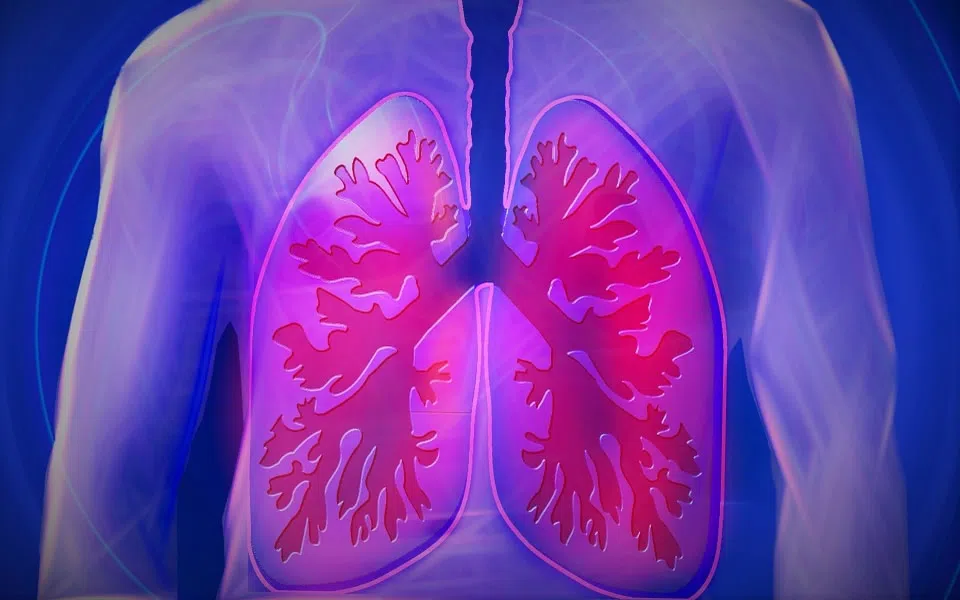
Much of Saskatchewan has been under air quality warnings or statements due to wildfire smoke and Jill Hubick with Lung Saskatchewan suggests remaining indoors as much as possible when the air quality index is between four to seven.
Hubick says our lungs are meant to breathe in fresh, clean air, so even if you are a healthy individual, exposure to wildfire smoke for a long period of time can make someone feel unwell. She says we don’t know how much exposure a person will need in order to see long-term consequences because everyone is different.
Hubick says our young population should stay indoors. “Our little ones have tiny lungs and tiny airways, and their lungs are actually still developing. When we have small lungs and small airways…babies actually breathe at a faster rate than adults do so they’re actually taking in more smoke potentially than an adult would so there’s some concerns there.”
The Certified Respirator Educator also says our senior population can be at risk due to underlying health conditions. “Some of our older population have respiratory and heart issues. All these things can become worse when exposed to wildfire smoke.”
Complications from exposure to wildfire smoke range from mild to severe, depending on the person. Symptoms include irritated eyes, runny nose, headaches and worsening of allergies. Individuals with Asthma or Chronic Obstructive Pulmonary Disease (COPD), are especially at risk and can experience shortness of breath, coughing, wheezing, chest tightness and increased mucous production.
It is recommended to refer to news and Environment Canada for warnings about air quality. Hubick says an air quality index of three or lower is typically safe for anyone to be outside in. “In a middle range of a four to a six, even a seven, that’s more of what we consider a moderate range, so if you are one of those individuals who are a high-risk group with a lung or heart condition, are 65-years or older, a young person or someone who is sensitive to smoke, that’s when the consideration should be made to stay indoors or limit the time spend outside.”
She says in the high-risk range of seven or higher, everyone should be staying indoors as much as possible and wearing a mask should only be used if there’s absolutely no way to not be outside in the smoke.
You can review Lung Saskatchewan’s full list of recommendations here.