




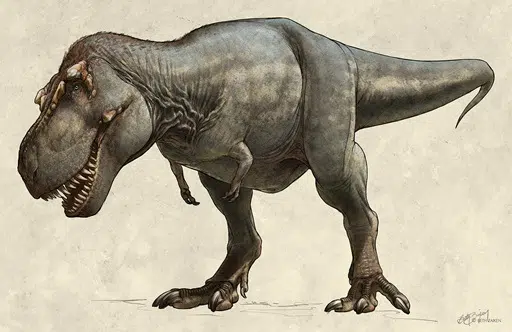
A team of researchers at the University of Regina have discovered information from the rib bone of a T-Rex which will help them learn more about evolution and how animals healed themselves in their environment. The rib belongs to Scotty, the largest T-Rex ever on earth and was discovered in Saskatchewan in the 1990s.
The team took Scotty’s rib fossil to the Canadian Light Source (CLS) because of its ability to produce high-intensity x-rays.
Jerit Mitchell is the PhD student from the University of Regina in the Department of Physics and says the Canadian Light Source was necessary to use because of its ability to do a high-resolution CT scan of the rib bone, allowing them to create a 3D model of the bone, and look at the microstructure inside without damaging or destroying the precious fossil.
While examining the model they discovered what appears to be mineralized blood vessel structures which indicates the healing process that occurred in the T-Rex. This type of fossil will allow researchers to make advancements in science in ways like never before, comparing healed injuries in extinct animals with living species, such as birds, the closest living relative to dinosaurs.