




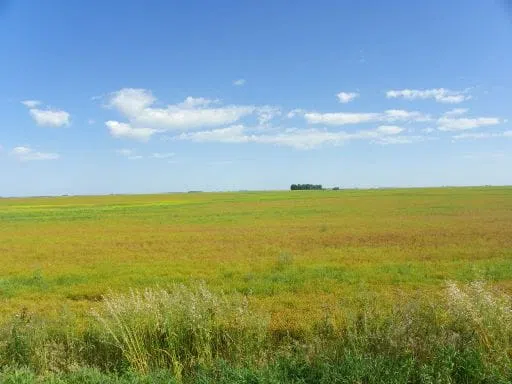
There was some improvement in provincial topsoil moisture conditions over the past week.
Cooler temperatures have slowed crop development
The detailed region-by-region crop report is below:
Census Division 1 – Carnduff, Estevan, Lampman, Redvers and Stoughton areas
Census Division 2 – Avonlea, Fillmore, Minton, Radville and Weyburn areas
Census Division 5 – Broadview, Esterhazy, Melville and Moosomin areas
Census Division 6 – Belle Plaine, Cupar, Lumsden, Indian Head, Regina and Rouleau areas
Producers within the region are continuing with in-crop spray applications as the weather allows and monitoring for insect and disease pressure. Haying operations are just starting within the region but may be delayed due to rain in some areas. Storms that moved through the region over the past week caused hail damage to some parts of the region. Producers are still assessing the extent of the crop damage and waiting to see which crops are able to recover.
Rain fell throughout much of the region with higher amounts recorded in the Balcarres area at 58 mm and the Glenavon area at 57 mm. The Earl Grey area received 41 mm and the Indian Head area received 36 mm. Other areas within the region also reported significant amounts of rainfall for the past week.
Topsoil moisture improved significantly in the region. Cropland topsoil moisture is rated as five per cent surplus, 86 per cent adequate and nine per cent short. Hayland topsoil moisture is reported at three per cent surplus, 79 per cent adequate and 19 per cent short. Pasture topsoil moisture is one per cent surplus, 78 per cent adequate and 21 per cent short.
Most crops throughout the region are at normal stages of development for this time of year. Oilseed crops have the most reports of being behind the normal stages of development at 17 per cent. Perennial forages are reported as the furthest advanced in development at 11 per cent ahead of the normal stages of development.
| Southeast Saskatchewan Crop Development | |||
| Crop | % Ahead | % Normal | % Behind |
| Fall Cereals | 7% | 90% | 3% |
| Spring Cereals | 5% | 84% | 11% |
| Oilseeds | 3% | 80% | 17% |
| Pulse Crops | 2% | 92% | 6% |
| Perennial Forage | 11% | 86% | 3% |
| Annual Forage | 6% | 88% | 6% |
Producers indicate that only one per cent of the land that was seeded this spring has excess moisture and is unlikely to produce a crop. No forage crops are reported to have excess moisture, and only one per cent of pastureland is not accessible or not usable at this time across the region.
Areas within the region that are experiencing reduced moisture have expressed that 17 per cent of the land that was seeded this spring is struggling due to lack of moisture. Twenty-six per cent of forage crops may have their yield significantly affected, and 30 per cent of pastures may have their carrying capacity reduced.
Most livestock water supplies are considered to be adequate for the region. Moderate shortages are reported in 14 per cent of livestock water sources; 11 per cent of sources may be short within the next two months, and 75 per cent are not expected to be short in the coming months. Eighty-nine per cent of livestock producers in the region are not concerned about water shortages in the future, and only 11 per cent of producers have water security concerns.
Wind, hail and excess moisture caused minor to moderate crop damage in areas throughout the region. Dry conditions continue to be reported with some areas indicating severe crop damage. Gophers continue to cause crop damage with a few areas reporting minor to moderate damage.
Producers report minor to moderate flea beetle damage with control measures being taken. Minor damage was also reported in a few areas due to cutworms, grasshoppers, aphids and pea leaf weevil. A few reports of crop damage due to plant diseases are starting to be recorded.
Census Division 3 – Assiniboia, Gravelbourg, Mankota, Ponteix and Rockglen areas
Census Division 4 – Cadillac, Consul, Eastend, Maple Creek and Val Marie areas
Census Division 7 – Beechy, Central Butte, Craik, Herbert, Hodgeville and Moose Jaw areas
Census Division 8 – Cabri, Elrose, Fox Valley, Leader, Swift Current and Tompkins areas
In-crop spray applications within the region continue as the weather allows and producers are monitoring for gophers, insect and disease pressure. Livestock producers are just beginning haying operations within the region. Rain and isolated storms moved throughout the region this week bringing welcome rain to many areas. Frost occurred in some areas causing some minor crop damage within the region.
Rain fell throughout most of the region with the highest rainfall recorded in the Eston area of 85 mm followed by the Elrose area at 75 mm. The Kyle area received 51 mm and the Leader area received 50 mm. Many other areas of the region also received significant rainfall for the past week.
Topsoil moisture conditions improved somewhat within the region this week due to the rain that fell in the area. Cropland topsoil moisture is rated as one per cent surplus, 54 per cent adequate, 31 per cent short and 14 per cent very short. Hayland topsoil moisture is reported at 44 per cent adequate, 32 per cent short and 24 per cent very short. Pasture topsoil moisture is 38 per cent adequate, 32 per cent short and 30 per cent very short
This week’s rainfall has moved crop development to a more normal stage of development for this time of year as compared to previous weeks. The furthest behind is annual forages at 15 per cent behind the normal stages of development. Perennial forages are the furthest advanced in development at 24 per cent ahead of the normal stages of development.
| Southwest Saskatchewan Crop Development | |||
| Crop | % Ahead | % Normal | % Behind |
| Fall Cereals | 17% | 83% | 0% |
| Spring Cereals | 20% | 74% | 6% |
| Oilseeds | 14% | 79% | 7% |
| Pulse Crops | 12% | 69% | 7% |
| Perennial Forage | 24% | 69% | 7% |
| Annual Forage | 12% | 73% | 15% |
Areas within the region that are experiencing reduced moisture have reported that 59 per cent of the land that was seeded this spring is struggling due to lack of moisture, 73 per cent of forage crops may have their yield significantly affected, and 73 per cent of pastures may have their carrying capacity reduced.
With the dry conditions that have existed in the region, 38 per cent of livestock producers have water security concerns for their livestock, while 68 per cent of producers are not currently concerned. Twenty-four per cent have moderate shortages, 48 per cent are anticipated to have shortages in the next two months, and 28 per cent are not expected to have shortage concerns. Livestock producers in the southwest would like to see lots of rain this fall to help improve water sources that are experiencing shortages.
Crop damage was reported across the region for various reasons. Minor to moderate crop damage was reported from wind and heat. Dry conditions continue to be reported with some areas indicating severe crop damage. Overall minor frost and excess moisture damage was reported in the region. Gophers continue to cause damage within the region, but most reports indicate the damage is minor. Grasshoppers, flea beetles and cutworms are causing minor crop damage with some reporting minor to moderate crop damage due to cabbage seedpod weevil. Control measures are being taken when needed on a field-by-field basis. Producers are starting to note the development of plant diseases in some crops throughout the region.
Census Division 12 – Biggar, Delisle, Rosetown and Sonningdale areas
Census Division 13 – Cut Knife, Kerrobert, Kindersley, Macklin, Plenty and Wilkie areas
In-crop spray applications within the region continue as the weather allows and producers are monitoring for gophers, insect and disease pressure. Fence checking continues as cattle are out to pasture. Haying operations are just starting within the region with many producers getting machinery ready. Storms moved through parts of the region over the past week and caused damage from hail and strong winds. Producers are still assessing the extent of damage to crops but overall are reporting minor to moderate crop damage with a few isolated areas reporting severe damage.
Rain fell throughout the west-central region over the past week, with the region receiving some of the highest provincially recorded amounts. The Macklin and Wilkie areas reported the highest amounts for the region at 108 mm and 107 mm respectively. The Luseland area reported 96 mm and 90 mm fell in the Purdue area. Many other areas also recorded significant amounts for the week.
Topsoil moisture improved significantly within the region this week due to the large amount of precipitation that was received. Cropland topsoil moisture is rated as four per cent surplus, 91 per cent adequate and five per cent short. Hayland topsoil moisture is reported at two per cent surplus, 89 per cent adequate, eight per cent short and one per cent very short. Similarly, pasture topsoil moisture is reported at two per cent surplus, 89 per cent adequate, eight per cent short and one per cent very short.
Crop development continues to be mostly at the normal stage of development for this time of year, although, some crops have moved further ahead of their normal stages of development due to continued dry conditions. The furthest behind is oilseed crops at 22 per cent behind the normal stages of development. Fall cereals are the furthest advanced in development at 18 per cent ahead the normal stages of development.
| West-Central Saskatchewan Crop Development | |||
| Crop | % Ahead | % Normal | % Behind |
| Fall Cereals | 18% | 78% | 4% |
| Spring Cereals | 13% | 67% | 20% |
| Oilseeds | 12% | 66% | 22% |
| Pulse Crops | 6% | 75% | 19% |
| Perennial Forage | 9% | 84% | 7% |
| Annual Forage | 1% | 84% | 15% |
Producers indicate that only one per cent of the land that was seeded this spring has excess moisture and is unlikely to produce a crop. Five per cent of forage crops have excess moisture and is unlikely to produce a crop. None of the pasture in the region is reported to be affected by excess moisture.
Areas within the region that are experiencing reduced moisture have reported that 34 per cent of the land seeded this spring is struggling due to lack of moisture. Fifty-four per cent of forage crops may have their yield significantly affected, and 56 per cent of pastures may have their carrying capacity reduced.
Some livestock producers in this region are concerned about water availability for their livestock with 23 per cent of producers concerned and 77 per cent not concerned. Moderate shortages are being seen in 23 per cent of livestock water sources, another nine per cent of water sources are expected to experience shortages and 68 per cent are not expected to experience shortages in the next few months. Like most of the province, livestock producers are hoping for plenty of rain this fall and lots of snow during the winter to fill water sources for next year.
Excess moisture, wind and hail caused minor to moderate crop damage in areas throughout the region. In some cases, damage due to hail is reported as severe. Minor to moderate crop damage due to dry conditions continues to be reported this past week. Gophers and flea beetles continue to cause minor to moderate crop damage. Producers are continuing to monitor for crop disease.
Census Division 9 – Calder, Canora, Pelly, Preeceville, Sheho and Yorkton areas
Census Division 10 – Foam Lake, Kelliher, Leroy, Raymore and Wadena areas
Census Division 11 – Davidson, Colonsay, Langham, Lanigan, Nokomis, Outlook and Saskatoon areas
Producers within the region are continuing with in-crop spray applications as the weather allows and monitoring for insect and disease pressure. Livestock producers are getting machinery ready with some haying operations just starting within the region. Cool wet weather is slowing crop development. Storms moved through parts of the region this week causing crop damage from hail and wind with a few localized areas reporting moderate to severe damage.
Rain fell throughout much of the region with many areas reporting significant amounts for the week. Areas in the centre of the region experienced higher rainfall amounts with the highest amounts recorded in the Semans area at 99 mm. This was followed by the Ituna area at 65 mm. Dundurn and Yorkton areas each received 61 mm.
Topsoil moisture improved to mostly adequate for the region. Cropland topsoil moisture is rated as 14 per cent surplus, 71 per cent adequate and 15 per cent short. Hayland topsoil moisture is reported at 14 per cent surplus, 58 per cent adequate, 26 per cent short and two per cent very short. Pasture topsoil moisture is 14 per cent surplus, 55 per cent adequate, 28 per cent short and three per cent very short.
| East-Central Saskatchewan Crop Developoment | |||
| Crop | % Ahead | % Normal | % Behind |
| Fall Cereals | 14% | 84% | 2% |
| Spring Cereals | 4% | 71% | 25% |
| Oilseeds | 1% | 66% | 33% |
| Pulse Crops | 4% | 83% | 13% |
| Perennial Forage | 9% | 61% | 30% |
| Annual Forage | 2% | 43% | 55% |
Some crops are continuing to progress slowly due to the cooler temperatures and recent rainfall received within the region. Forage crops throughout the region have fallen slightly further behind their normal stages of development for this time of year as compared to previous weeks. The furthest behind is annual forage crops at 55 per cent behind the normal stages of development. Fall cereals are the furthest advanced in development at 14 per cent ahead the normal stages of development.
Producers indicate that only one per cent of the land that was seeded this spring has excess moisture and is unlikely to produce a crop. Similarly, only one per cent of forage crops have excess moisture and are unlikely to produce a crop. None of the pasture in the region is reported to be affected by excess moisture.
Areas within the region experiencing reduced moisture have reported that 22 per cent of the land seeded this spring is struggling due to lack of moisture. Twenty-seven per cent of forage crops may have their yield significantly affected and 38 per cent of pastures may have their carrying capacity reduced.
Some livestock producers in this region are experiencing moderate or anticipate potential water shortages for their animals. Thirteen per cent of water supplies are moderately short and 30 per cent of sources are expected to become short in the next couple of months, while 57 per cent of water sources are expected to have no shortage issues in the next few months. Thirteen percent of livestock producers have concerns regarding water availability for their livestock while 87 per cent have no concerns.
Wind, dry conditions and heat caused minor to moderate crop damage in areas throughout the region. Excess moisture due to storms in the region caused some minor crop damage but in some cases the hail that came with these storms caused minor to severe crop damage. Frost was also reported but with minor overall crop damage.
Gophers and waterfowl continue to cause crop damage with a few areas reporting minor damage. Producers report minor to moderate flea beetle damage with control measures being taken. Minor damage was also reported due to cutworms, grasshoppers, wireworms and a number of other insects. Producers are starting to note the development of plant diseases in some crops throughout the region.
Census Division 14 – Choiceland, Hudson Bay, Kelvington, Melfort, and Nipawin areas
Census Division 15 – Cudworth, Humboldt, Kinistino, Prince Albert, Rosthern and St. Brieux areas
In-crop applications continue when the weather allows. Producers are monitoring for insect and disease pressure. A welcome rain fell throughout much of the region over the past week. Past dry conditions reduced germination of shallower seeded crops that are now emerging weeks behind the rest of the crop.
The amount of rain varied considerably throughout the region with many areas reporting significant amounts for the week. The highest recorded rainfall fell in the Bruno area at 81 mm followed by the Lake Lenore area at 67 mm and the Duck Lake area at 60 mm.
Topsoil moisture has improved to mostly adequate for the region this week. Cropland topsoil moisture is rated as four per cent surplus, 87 per cent adequate and nine per cent short. Hayland topsoil moisture is reported at three per cent surplus, 76 per cent adequate, 15 per cent short and six per cent very short. Pasture topsoil moisture is three per cent surplus, 72 per cent adequate, 18 per cent short and seven per cent very short.
This week’s rainfall has moved crop development to a more normal stage of development for this time of year as compared to previous weeks. The furthest behind is oilseed crops at 24 per cent behind the normal stages of development. Fall cereal crops are the furthest advanced in development at 33 per cent ahead of the normal stages of development.
| Northeast Saskatchewan Crop Development | |||
| Crop | % Ahead | % Normal | % Behind |
| Fall Cereals | 33% | 67% | 0% |
| Spring Cereals | 13% | 75% | 12% |
| Oilseeds | 7% | 69% | 24% |
| Pulse Crops | 6% | 80% | 14% |
| Perennial Forage | 6% | 71% | 23% |
| Annual Forage | 8% | 72% | 20% |
Producers indicate that none of the land that was seeded this spring has excess moisture that would make it unlikely to produce a crop. There are no reports of forage crops that have excess moisture and only two per cent of pasture is not accessible or not usable at this time across the region.
Areas within the region that are experiencing reduced moisture have expressed that 25 per cent of the land that was seeded this spring is struggling due to lack of moisture, 50 per cent of forage crops may have their yield significantly affected, and 53 per cent of pastures may have their carrying capacity reduced.
Producers in the northeast have less concern about water availability for their livestock than some of the other regions. Only 17 per cent of livestock producers have concerns about water availability which is well below the 21 per cent provincial average, and 83 per cent of producers do not have water security concerns for their livestock. Livestock producers in this region estimate that 20 per cent of livestock water sources have moderate shortages, 20 per cent are expected to be short in the coming months and 60 per cent are not expected to experience shortages.
Wind, excess moisture and hail caused minor to moderate crop damage in areas throughout the region. Minor to moderate crop damage due to dry conditions continues to be reported this past week. Frost, heat, gopher and waterfowl damage was also reported but with minor overall crop damage. Minor to moderate flea beetle damage is being reported in the region with some minor damage due to grasshoppers.
Census Division 16 – Blaine Lake, Canwood, North Battleford, Radisson and Spiritwood areas
Census Division 17 – Glaslyn, Maidstone, Meadow Lake, Pierceland and St. Walburg areas
In-crop applications continue when the weather allows, and producers are monitoring for gophers, insects and disease pressure. Sporadic rains have replenished some needed moisture but storms that moved through the region over the past week caused hail damage in some areas. Frost occurred in some areas but the damage to crops has yet to be assessed.
Rain fell throughout the region in varying amounts. The highest recorded rainfall was in the Rabbit Lake area at 84 mm followed by the Blaine Lake, Hafford and Mayfair areas that each received 60 mm. The Speers area recorded 36 mm. Many areas on the west side of the region recorded less than 12 mm for the week.
Although not ideal, topsoil moisture improved somewhat for the region over last week’s report. Cropland topsoil moisture is rated as four per cent surplus, 58 per cent adequate, 32 per cent short and six per cent very short. Hayland topsoil moisture is reported at one per cent surplus, 45 per cent adequate, 38 per cent short and 16 per cent very short. Pasture topsoil moisture is 40 per cent adequate, 43 per cent short and 17 per cent very short
This week’s rainfall has moved crop development to a more normal stage of development for this time of year as compared to previous weeks. The furthest behind is perennial forages at 36 per cent behind the normal stages of development. Spring cereals are the furthest advanced in development at 31 per cent ahead of the normal stages of development.
| Northwestern Saskatchewan Crop Development | |||
| Crop | % Ahead | % Normal | % Behind |
| Fall Cereals | 15% | 85% | 0% |
| Spring Cereals | 31% | 59% | 10% |
| Oilseeds | 12% | 70% | 18% |
| Pulse Crops | 12% | 85% | 3% |
| Perennial Forage | 26% | 38% | 36% |
| Annual Forage | 18% | 55% | 27% |
Areas within the region that are experiencing reduced moisture have expressed that 68 per cent of the land that was seeded this spring is struggling due to lack of moisture, 86 per cent of forage crops may have their yield significantly affected, and 88 per cent of pastures may have their carrying capacity reduced.
The limited moisture in this region has 37 per cent of livestock producers concerned about water availability for their livestock, which is the second highest percentage in the province. The northwest leads the province in livestock water shortages with 50 per cent of water sources having moderate shortages, 19 per cent of sources expected to have shortage issues in the next two months and only 25 per cent of sources expected to have no shortage issues. Like most of the province, livestock producers are hoping for plenty of rain this fall and lots of snow during the winter to fill water sources for next year.
Wind, excess moisture and hail caused minor to moderate crop damage in areas throughout the region this week. Minor to severe crop damage due to dry conditions continues to be reported this past week. Frost was also reported in several areas but with minor overall crop damage. Minor grasshopper and flea beetle damage is being reported in the region as well as minor to moderate crop damage due to gophers.