



spukkato / Depositphotos.com
A recent survey from the Tire and Rubber Association of Canada (TRAC) found that 81 percent of Canadians, and 75 per cent of people in Saskatchewan, are planning on taking at least one road trip this summer. The survey also indicated a huge disconnect between drivers knowing the importance of proper tire inflation and their actions.
TRAC also learned from the survey that only a small percentage of drivers know how to properly inflate their tires.
Just 46 per cent of drivers check their tire inflation pressures monthly, as recommended, with only 22 per cent being between the ages of 18 to 34.
Almost two-thirds, or 64 per cent, are unaware inflation pressures should only be measured when tires are cold, and 38 percent incorrectly refer to the air pressure stamped on the tire’s sidewall. Eight per cent either rely on visual inspections, or do not know how to determine if their tires are properly inflated. Those 18 to 34, that number increases to 20 per cent.
Michal Majernik is TRAC’s Senior Manager of Communications and says their goal is to educate drivers on the importance of tire maintenance. Not only a safety issue, but it also extends the life of your tires and saves money.
He states that according to Statistics Canada, in 2019 Canadians purchased 43 billion litres of gasoline. With proper tire pressure improving mileage of 0.6 per cent, drivers would have avoided having to buy 258 million litres of gasoline, saving about 490 million dollars.
He goes on to say, saving this much gasoline would also prevent the release of 593 thousand metric tonnes of CO2 into the atmosphere, which equals the emissions of 125 thousand vehicles per year. (Based on $1.90 per litre fuel cost between January and April 2022, and one litre of gasoline producing 2.3 kilograms of CO2).
Majernik explains there are four easy steps to properly check tire inflation.
Step One: Find the recommended inflation pressure for your tires on the vehicle placard, which is commonly located on the driver’s door jamb. If you can’t find it, check the owner’s manual for its location.
Step Two: Remember to only measure pressure when tires are cold. If you have been driving more than two kilometers, wait three hours before measuring.
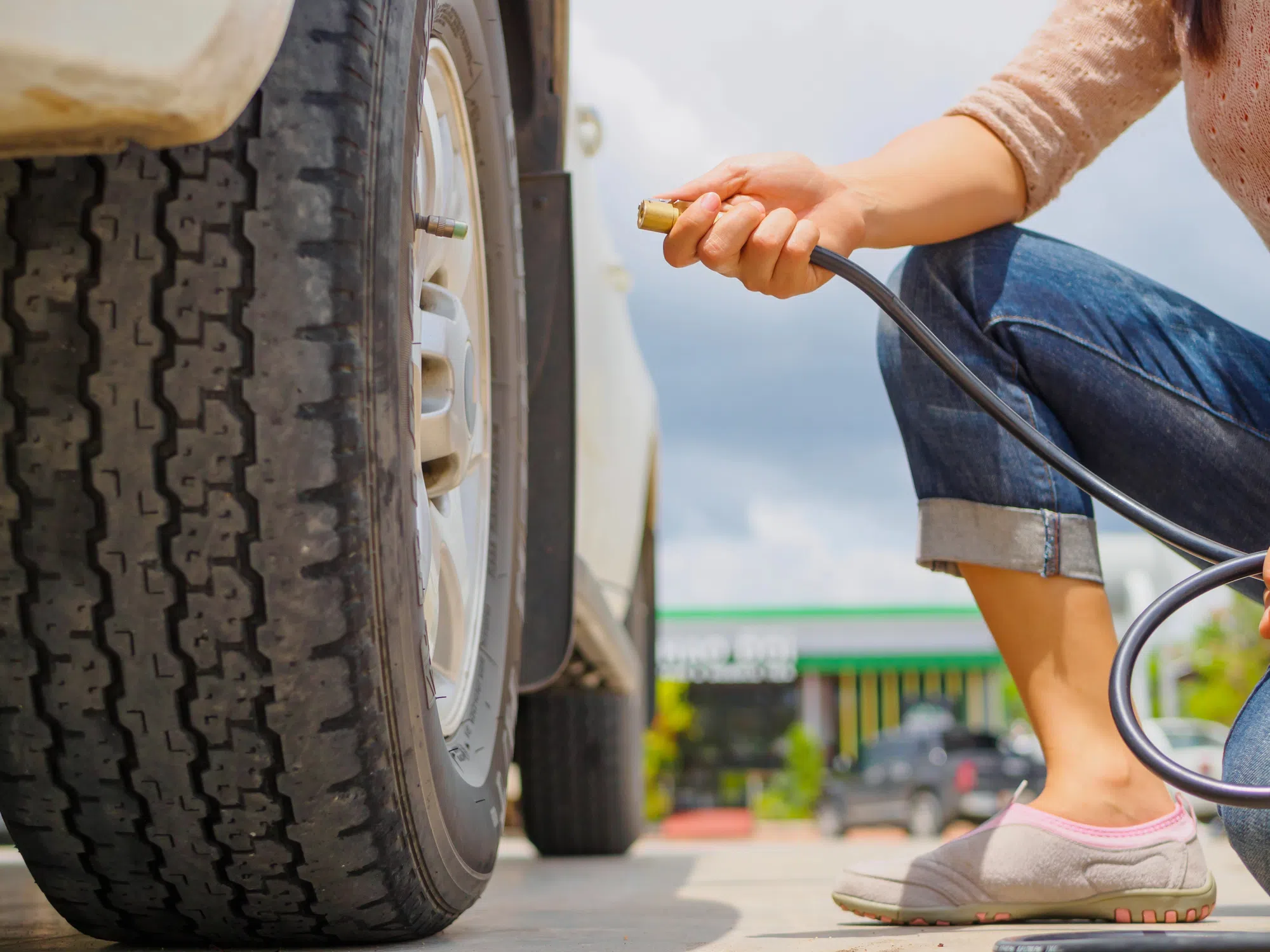
Step Three: Use a tire gauge when measuring pressure. Remove the cap from the valve stem, press the tire gauge onto the valve and take the pressure reading.
Step Four: Add air until the recommended air pressure is achieved. If you overfill the tire, release air by pushing on the metal stem in the centre of the valve, then re-check the pressure.