



Saskatoon’s Transporation committee approved an array of recommendations from administration at its meeting Tuesday.
Members voted in favour of allowing private e-scooters on the public right of way. Once approved by City Council and the bylaw is amended, this means as long as you’re 16 or older, wearing a helmet, and traveling 24 km/hour or less, you are allowed to ride your electric scooter down Saskatoon streets.
Snow Clearing
Saskatoon’s Transportation committee also voted in favour of extending the time that city crews have to clear Priority 2 streets.
For the last five years, the City of Saskatoon has been unable to clear snow and ice from Priority 2 streets within the allotted time frame of 36 hours. To fix the problem, City Administration put two options before the City’s Transportation committee on Tuesday.
Director of Roadways Goran Sarich stated that Option one, Administration’s top choice, was to increase the timeline from 36 hours after snowfall ends to 48 hours. Option two was to increase Crew and Equipment Resources for Snow Event Responses, costing cost roughly $890,000 per winter season.
City Councilor Randy Donauer says quite often, P2 and P3 streets are graded at the same time.
“Should we just stop calling them P2s? Should we just have two levels? Cause, if we’re doing twos and threes at the same time, we’re actually creating an administrative problem by saying we’re failing on the P2s. We aren’t treating them like P2s. I mean this as a sincere question, Mr. Sarich. There is no sarcasm involved,” Donauer assured.
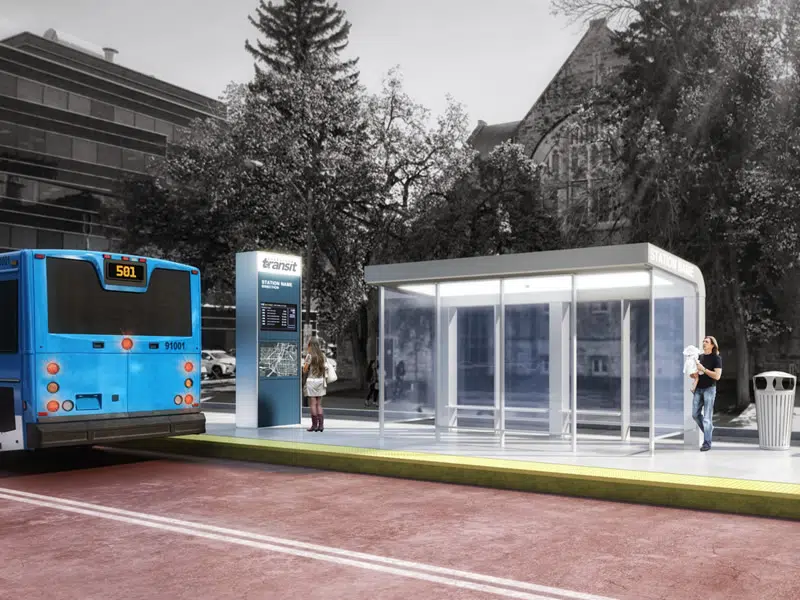
Sarich says the streets considered Priority 1, 2, and 3 are going to be adjusted after the Link Bus Rapid Transit System comes into play, so it wouldn’t make sense to alter them now. The recommendation to give crews an extra 12 hours to clear P2 streets was approved by all but Councilor Donauer .
Analyzing Saskatoon’s Readiness for All-electric Bus Fleets
After analyzing Saskatoon’s readiness for a zero-emissions bus fleet, the City’s Transit Team suggested that Saskatoon implement diesel buses instead.
Director of Saskatoon Transit Mike Moellenbeck says Transit contracted the Canadian Urban Transit Research and Innovation Consortium to see if it would be feasible to launch a 100 per cent electrified bus fleet by 2030 to decrease greenhouse gas emissions.
Considering economic, technological, social and environmental benefits, risks and financial constraints, the study concluded that until the Saskatoon energy grid becomes greener, an electric fleet would show only 10 per cent GHG reductions while making substantial financial investments.
“We’re looking at a purchase price difference of $1 million versus $1.5 million, and we would be looking at having to significantly change what our funding model would look like in order to have the infrastructure to successfully launch Link with the amount of buses we are going to need to meet service requirements,” he explained.
Although Mayor Cynthia Block questioned if the decision to revert to diesel is short-sighted, the recommendation carried unanimously. City Council will still have to pass the recommendation.
Changes to Link Plan on College Drive
In addition, two significant changes are making their way to the Link Bus Rapid Transit plan.
After further investigation of what needs to be done to implement the Bus Rapid Transit System on College Drive, City Administration has discovered that two major changes to its original plan need to be made. Originally, the City had hoped to construct a contraflow lane on College Drive to be specifically used for buses. This would have had buses travel in the opposite direction of adjacent traffic. The City also intended to leave in the pedestrian overpass from the Stadium parkade to the University Campus.
Instead, Administration is now recommending that the transit lanes are constructed to flow with adjacent travel, and that the pedestrian overpass be converted into an at-grade Signalized Pedestrian Crossing. Several councilors expressed that many residents use and love the current overpass and suggested that it should remain in place.
Senior City Transportation Engineer Sheliza Keltz says a crosswalk would be more accessible and consistent with the rest of College Drive.
“It’s best practice because the current overpass is not accessible. The ramps are steep. There is no landing, so there is no place for people who require a resting spot when going up the ramps.”
The changes to the plan were approved unanimously but still need the greenlights from council to move forward.