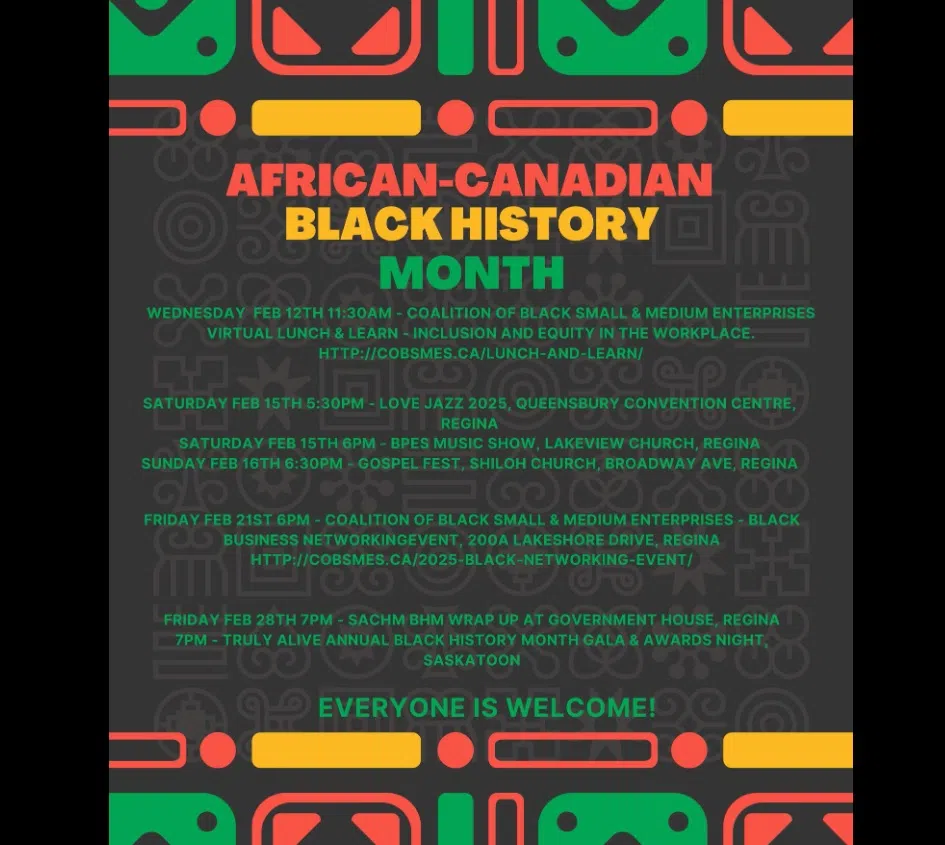




When reflecting on Black History Month, it only makes sense to take a look at African Canadian history in Saskatchewan. One of the original African Canadian families to settle down in the province were the LaFayette’s.
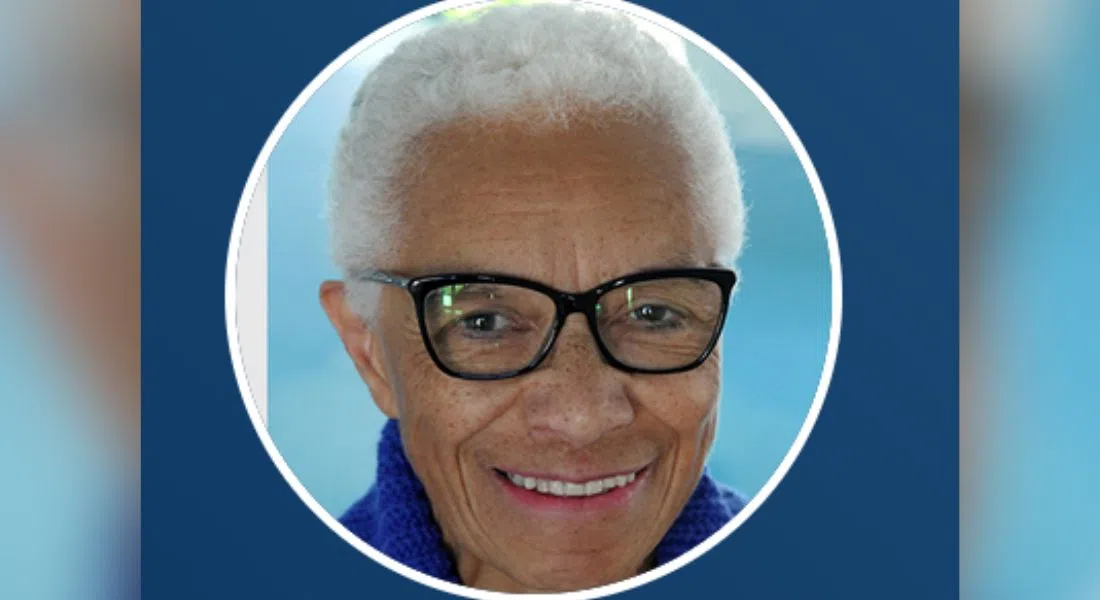
Carol LaFayette-Boyd, now from Regina, says her distant relative James Armistead was a slave and double spy for General LaFayette in the American Revolution. She says James ended up taking his boss’s last name when he was given his freedom in 1790. He lived in Virgina where Carol’s great grandfather, Edward William LaFayette, was born. Edward moved to Oskaloosa, Iowa, and his eventual son, Lewis LaFayette, moved to Regina in 1906.
“My dad was born the next year, in 1907, probably the first person of African descent to be born in Regina. My grandfather from 1908 to 1911 traveled out near Rosetown…and homesteaded there, and that’s where I happened to be born.”
Carol was raised on a farm near Hershel and began school at the age of five at the Oskaloosa School, built on her grandfather’s land in 1916 and named after the town where her great-grandfather Edward lived in Iowa.
“(By 1947 At Oskaloosa School), there were only five kids, and they were all my brothers and sisters, so they closed the school, and we ended up having to go to school in Anglia which was seven-and-a-half miles away.”
She says by the time she was school-aged, racist remarks from others were few and far between, but her aunts and uncles all experienced racism growing up.
“When we’d have races, the LaFayette’s always won, and in the early days, the crowd would say things like ‘run, n-word, run’,” she explains. “I don’t think we ever experienced anything like that, and part of it was because we were the only black kids (in the area), so we weren’t a threat to anybody.”
She explained that racism wasn’t anything she encountered until she entered adulthood and left home.
“Part of it is because, when I was a child, my parents told me if somebody calls me a name, it’s because they feel bad about themselves. So, I suspect if somebody called me a name, I probably said ‘Oh, they feel bad about themselves’, and walked on my merry way.”
At the beginning of her psychiatric nursing career in Weyburn, Carol says her first time in the geriatric ward was quite memorable.
“The head nurse (pointed to another woman in the ward and) said ‘Don’t talk to that lady. She doesn’t like people talking to her.'” Being from a farm background, this was a foreign concept to Carol, so she made her approach.
“You fold linens very nice,” Carol complimented the women. She was met with “You Black b*tch, you better get out of here before you can’t.”
Despite how harsh it was, Carol says it was a positively life-changing experience, because following that moment, nothing anyone could say would phase her. She adds that this emotional fortitude would come in handy, and she lived in the United States for a brief period of time, residing first in the projects in Virginia, and then North Dakota.
“When I lived in the States, I knew I was a person of colour, but as soon as I hit home, I was just another human being,” she recounted. She returned to Canada in 1972 where she began working with Social Services in Regina.
Since then, Carol says she has felt more discrimination for being a woman than she has for being African Canadian. She remembers several instances where she was not hired for a position even though she was just as qualified, if not more so, for the job, yet a man was hired in her place.
With that working against her, Carol has still achieved greatly in the realms of sport, academia, healthcare and community service.
After graduating with a degree in Social Work, she began her career at Special Foster Homes where she spent her time with abused and neglected children. In 1996, she became the training coordinator for the Paul Dojack Youth Centre and retired from her supervisor position in 2005.
Carol took up track and field at age 50 and even continues to attend track meets at the age of 82. In the last 30 years, she has held or currently holds Saskatchewan and Canadian Indoor Track records for her age group in the 50m, 60m, 200m, 300m, 400m, long-jump, high-jump and triple-jump events.
She’s a menace on the Outdoor Track, as well, holding records for the 100m, the 200m as well as, the long, high and triple-jump events. Since turning 65, she has broken 25 World records in 60m, 100m, 200m, long Jump, triple Jump, high Jump and relay. These achievements have landed her a spot in the Regina Sports Hall of Fame and Canadian Masters Sport Hall of Fame.
She sports three international awards, as well. In 2017, she was chosen as the World Masters Athletics Female Sprinter of the Year, and the following year she was chosen as the World Masters Athletics Overall Female Athlete of the Year. She was handed that same award again in 2022. In 2024, she was one of 12 athletes named to the World Masters Athletics “Gallery of Champions”. ( https://world-masters-athletics.org/carol-lafayette-boyd-canada/)
Her message this month, and every month, is to treat people with dignity and respect regardless of their colour, looks, or religion. She hopes, someday, African Canadian history and heritage information is included in the provincial curriculum.