




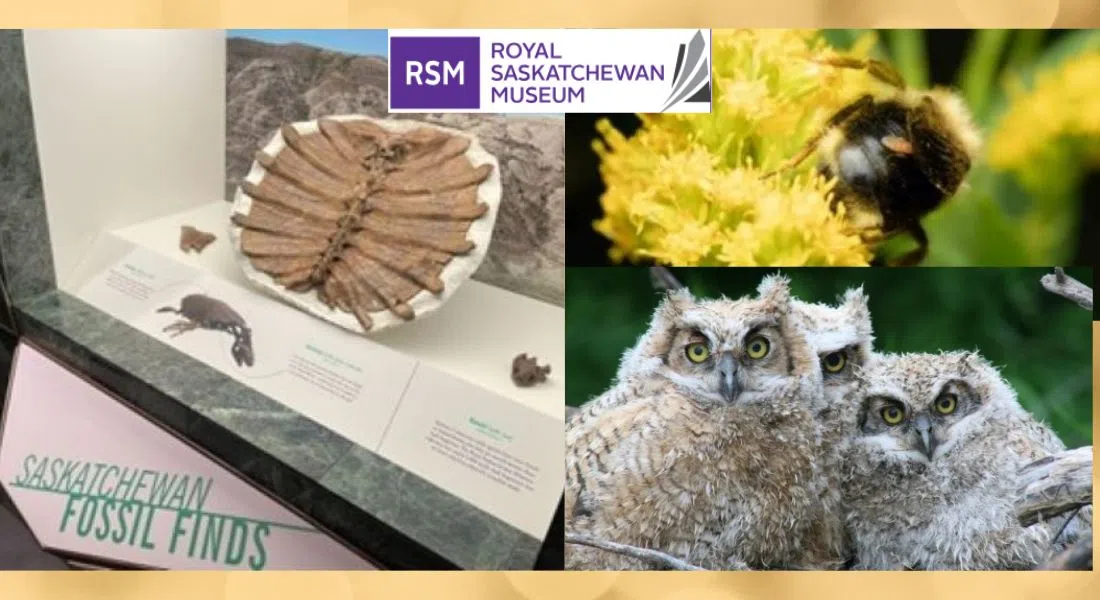
The Royal Saskatchewan museum highlighted newly excavated fossils collected over the past few summers, insect research including some newly recorded species of bees and wasps found in the province, and wildlife research on Great Horned Owls and Kangaroo Rats during a behind the scenes tour this week.
Minister of Parks, Culture and Sport, Alana Ross joined scientists from the RSM to showcase the discoveries and research taking place in the province. Ross says, “We are proud to say the RSM is a world-class research institution, and we are excited to highlight some of the excellent work taking place behind the scenes.” She notes that not only does the museum have an extensive collection important to our province’s history and heritage, but it also serves as a facility that helps scientists from all over the globe study our natural world.
The RSM staff showed off bones from Triceratops and duckbilled dinosaurs found in the East Block of Grasslands National Park and a a large soft-shelled turtle skeleton, which would have been from an animal about a metre long.
The research on Great Horned Owls is looking into where these owls have expanded their range in the agricultural region of the province and what features of the landscape have allowed them to be so successful, because historically, these owls were limited to treed valleys and small aspen forests in the region.
The Ord’s Kangaroo Rat is listed as an endangered species in Canada and only lives in open sand dunes. The research program at the RSM was developed to help understand the population structure of Kangaroo Rats across Canada, and what characteristics make good quality sand dune habitats. In Saskatchewan, they can be found in open sand dunes in Saskatchewan’s southwest.
The tour also included the RSM’s insect research. Saskatchewan is home to close to 300 different bee species, of which many are important pollinators of crops and wildflowers in the province. The RSM currently has over 300,000 specimens in their collection.