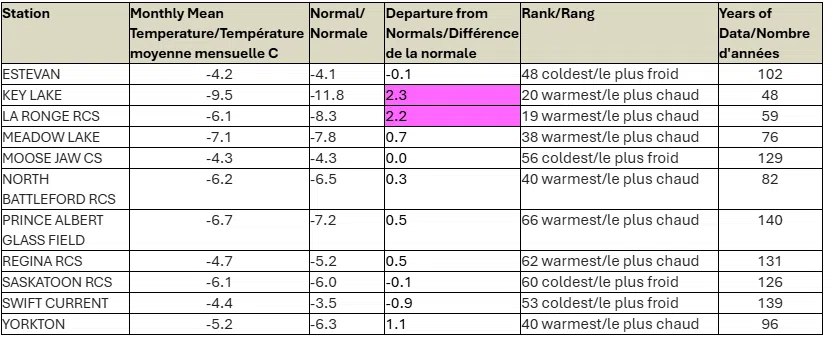




For anyone looking at the November weather statistics released by Environment Canada today, the numbers portray a pretty average looking November. However, that couldn’t be further from the truth, says Environment Canada Meteorologist Danielle Desjardins.
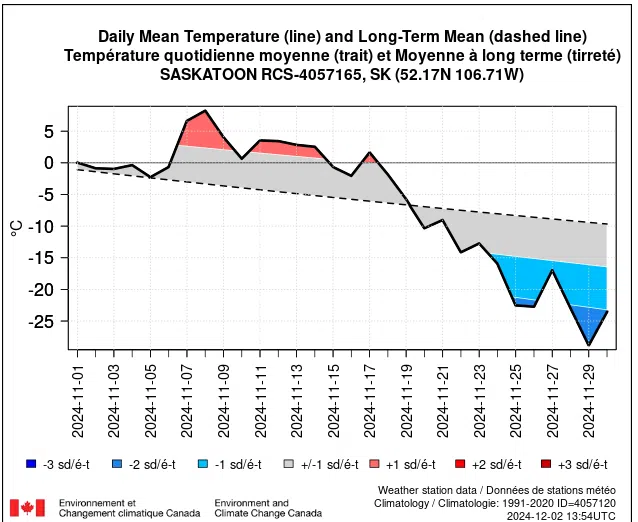
Desjardins says because the first half of November was drastically warmer than usual, and the second half brought unseasonably cold temperatures, the two extremes cancelled each other out, giving way to a seemingly consistent and expected month, according to the numbers.
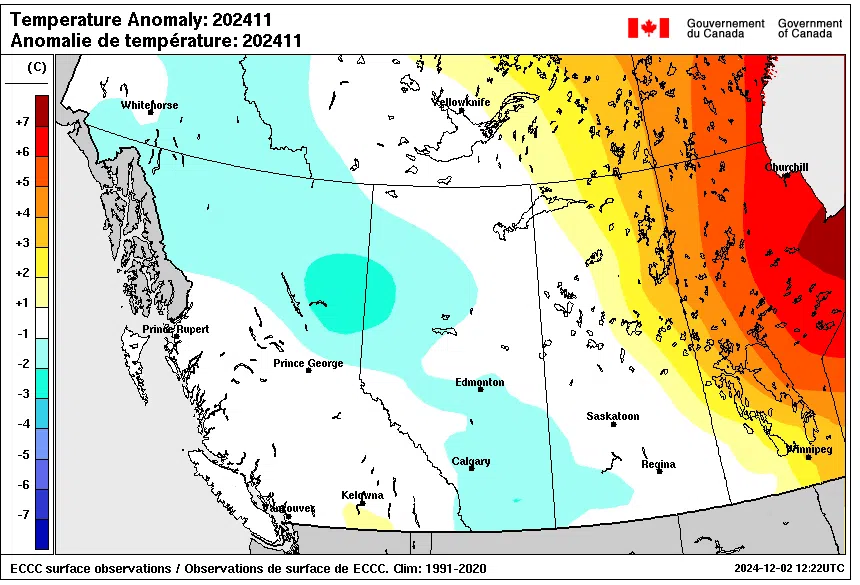
“Overall, the southwest corner ended up slightly below normal for November. The northeast ended up slightly above normal, and it’s about average for a big swath of Saskatchewan, kind of in the central portion including the major hubs, Saskatoon and Regina. The only two biggest deviations were Key Lake and La Ronge. They ended up just over two degrees above normal. But most other stations ended up within a degree of normal, whether it was on the plus or minus side.”
To put that in perspective, ‘average’ November temperatures in 11 of the provinces main hubs range from -11.8 degrees to minus 3.5 degrees.
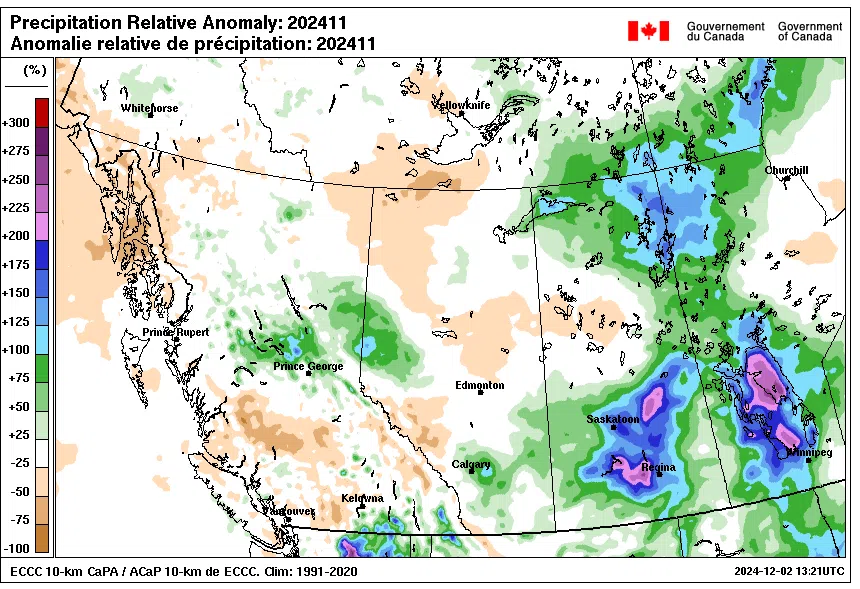
A similar pattern occurred when looking at precipitation. Between November 1st and 17th, it was much drier than normal, but because of several significant dumps of snow in the last half of the month, November’s precipitation rates came out as well, average, or even higher than expected.
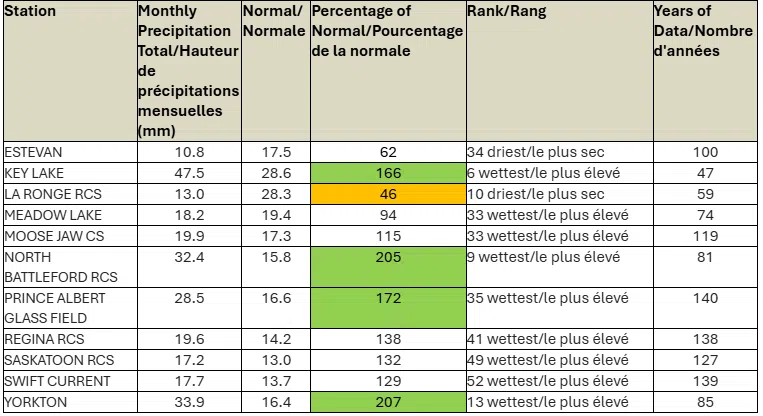
“Most stations reported wetter than average for November. Most notably, North Battleford and Yorkton received over 200 per cent of their average precipitation for November. The only station that recorded a drier than average month was La Ronge at 46 per cent of their average for November.”
She lists a few more communities and how much precipitation they received.
“Key Lake with 166 per cent, Prince Albert with 172 per cent, Meadow Lake was right on par for their average, Saskatoon was 132 per cent, and Regina was 138 per cent.”
Average’ November precipitation in 11 of the provinces main hubs ranges from 13 to 28.8 millimetres.
Despite the uptick in moisture, Desjardins says Saskatchewan is still running a deficit in the precipitation department.
“This only takes into account November, so we’re making a little bit up for the deficit, but there was still quite a huge deficit for October and even September.”