




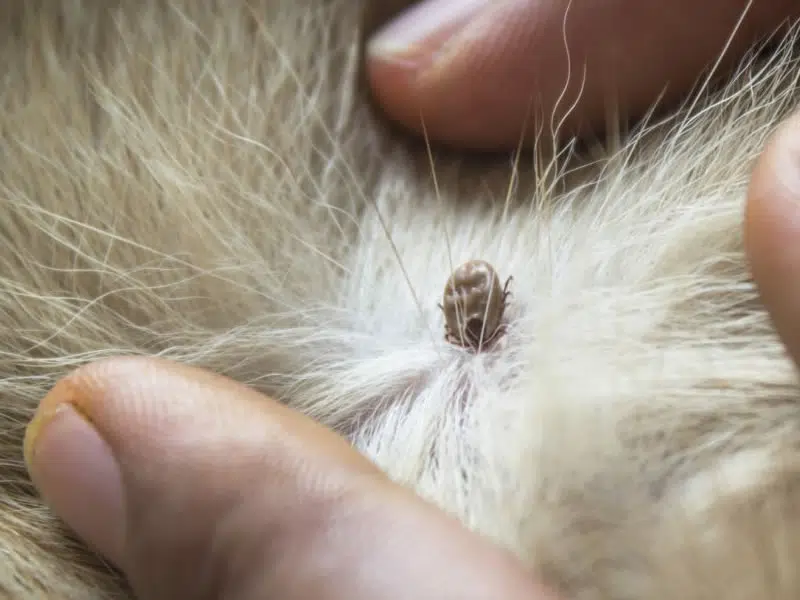
A University of Saskatchewan student was recognized for research excellence for his study on Lyme disease transmission in mice.
Cody Koloski, a PhD candidate in Veterinary Microbiology, says he wanted to find out two things when beginning his project. One: does the mouse’s immune system influence transmission rates? and two: are there differences in the transmission rates of male and female mice?
Koloski says he found the immunocompromised mice showed a 250-fold increase of Lyme disease bacteria compared to the healthy mice. He also found that on average, male mice have a 4-fold increase in bacteria compared to female mice. Koloski says this may not be representative of a human infection, but testosterone has been shown to suppress the immune system. He also studied how the ticks were affected in the exchange.
This led him to find that a tick biting a healthy mouse won’t necessarily become infected with the bacteria that causes Lyme disease, but a tick feeding off an immunocompromised mouse contracts the disease nearly every time. He says this information is something that his lab is one of the very first to show, as ticks are hard to study and scientific knowledge on them is limited.