




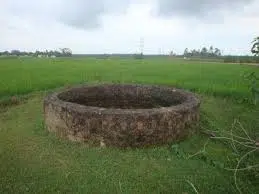
Abandoned or unused water wells are very common across Saskatchewan, and can be found in yard sites, fields, and towns or villages. Abandoned large diameter or bored wells are a safety hazard for people, pets, livestock, vehicles and farm equipment. They can cause injury or damage and are a liability issue for landowners. However, we don’t often consider the environmental impacts. Large and small diameter wells provide a direct pathway to aquifers, so they are a potential source of groundwater contamination, especially when they aren’t being used and maintained.
Often, the terms “abandoned” and “decommissioned” are used interchangeably, but they don’t have the same meaning. Abandoned wells are no longer used or maintained, while decommissioned wells have been properly sealed to prevent the vertical movement of water, which protects the aquifer.
Saskatchewan’s Water Security Agency provides general guidelines for decommissioning large and small diameter wells. First, the pump, wiring, and any associated equipment should be removed. Large diameter or bored wells are disinfected with chlorine, then sealed with carefully placed layers of impermeable material such as bentonite chips or pellets, and backfilled with clean gravel or sand. Small diameter drilled wells are filled with an impermeable grout, which must be done by a qualified contractor. For both types of wells, the top 10 feet of casing is removed, and the surface is sealed and leveled.
It’s important to recognize that each well is unique, and the steps to decommissioning will depend on a number of factors including the location, depth, diameter, age and construction of the well.
For more information on water well decommissioning, please contact your local Regional Services office, or call the Agriculture Knowledge Centre at 1-866-457-2377.
(This article was written by Chelsey Siemens, Agri-Environmental Specialist, Kindersley Regional Office, Ministry of Agriculture)