




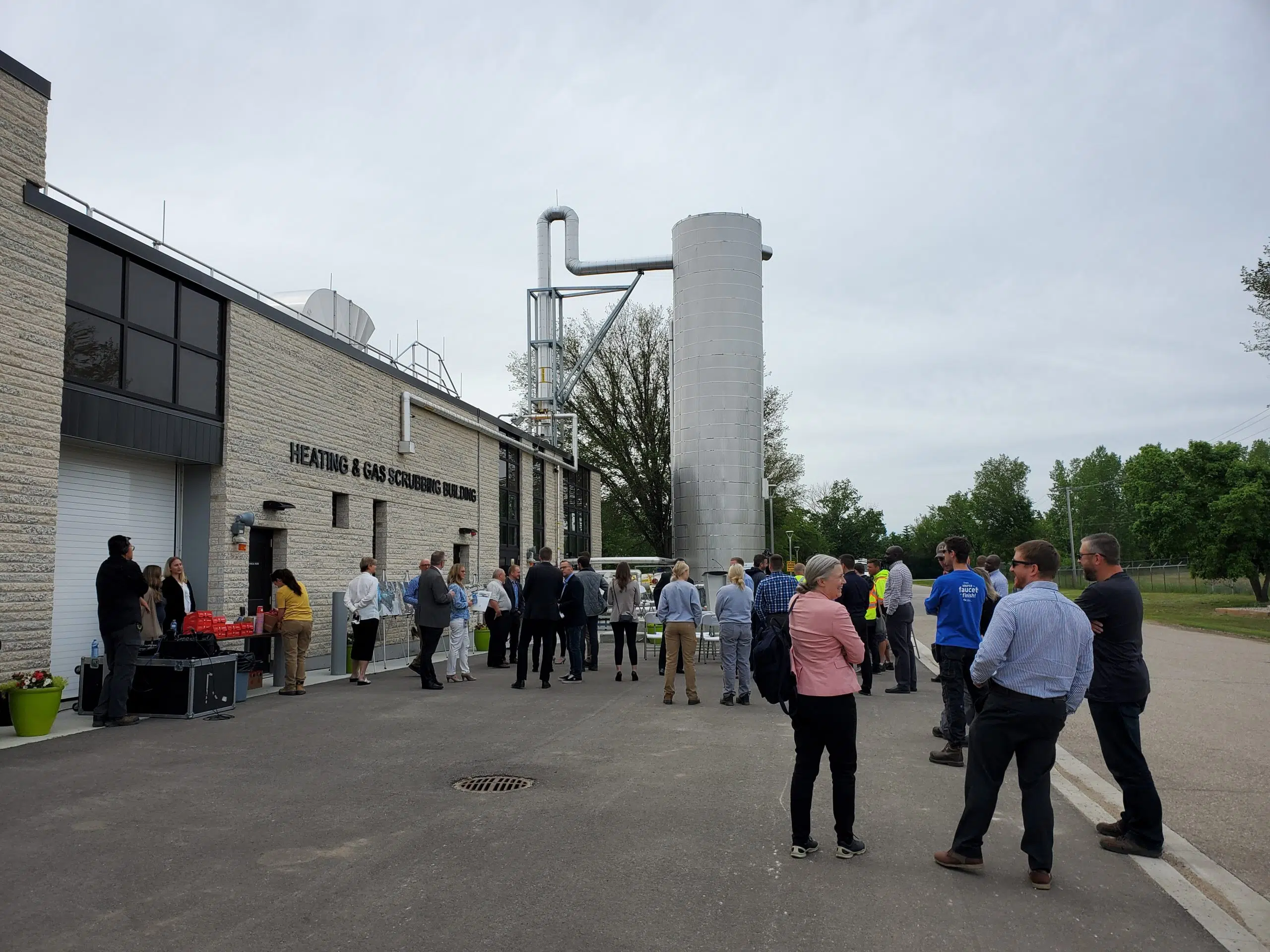
The City of Saskatoon celebrated the completion of the Digester and Heating Upgrades project at the Wastewater Treatment Plant on Wednesday (June 15). The new digester is the Wastewater Treatment Plant’s fourth. With the addition of the tank it improves the plants capacity so when a digester is taken out of service for maintenance the plant can still maintain processing standards as set out by the Water Security Agency.

(Biological nutrient removal system – Micro organism’s that are naturally in the water will remove organic matter, phosphorus and ammonia)
Digestors are large circular tanks that hold the solids removed during the wastewater treatment process. The solids are deprived of oxygen to allow bacteria to form and break the solids down. Digestors are the last stage in the treatment process.

(Clarifier – Settles all of the biomass and sludge to the bottom of the tank for collection. Then about 90% is recycled back into the bio reactors to continue working)
Mayor Charlie Clark says, “As our city continues to grow, it’s important to maintain our high standards and stewardship in protecting people and property downstream from Saskatoon. The investments in a new digester and heating upgrades at the Wastewater Treatment Plant will help us meet demand by improving capacity, sustainability, as well as maintaining our high-quality standards into the future.”
The digestors produce two types of renewable resources; biogas and biosolids. This expansion includes a new sustainable energy recovery process that will condition biogas to be used as fuel in the boilers while the solid matter is used as nutrient for local crops, such as potatoes. With the use of these renewable resources the plant is able to cut down on the use of natural gas.

(Sample of the fertilizer that is produced at the nutrient recovery facility at the Wastewater Treatment plant)
The total cost of the project was $48.2 million, contributing to the funding was the Government of Canada, Government of Saskatchewan and the City of Saskatoon. The Project got underway in 2019 and even though it was under construction during the COVID-19 Pandemic it was still completed ahead of schedule and under budget. The new digester will last 30 years before they will need to build a fifth one.