




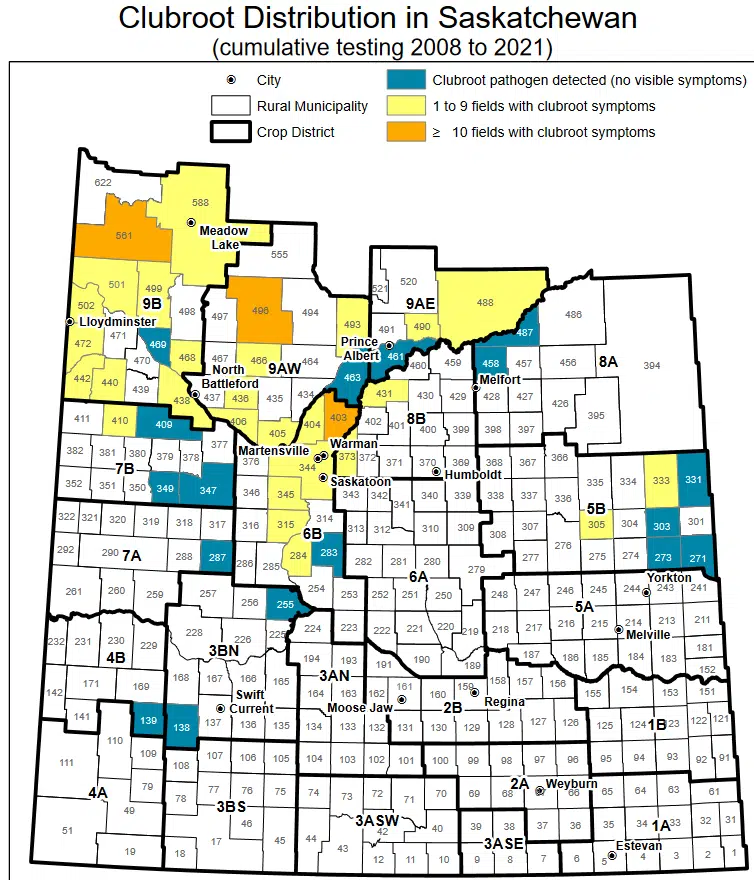
Visible signs of clubroot were found on five new fields—bringing the total confirmed cases to 80 commercial canola fields since 2017.
In addition, the clubroot DNA pathogen was detected in soil samples from nine fields. The five-year total now stands at 38 fields.
Over 750 fields in 200 rural municipalities (R.M.’s) were examined during the 2021 clubroot survey. Another 100 soil samples were submitted through the free testing program sponsored by SaskCanola. The goal of the survey and tests is to detect the clubroot pathogen when spore levels are low to minimize potential impact on canola yields.
There are several reasons cited for the lower number of confirmed clubroot cases.
“We had a drought last year with lower levels of disease in all crops,” said Kaeley Kindrachuk, agronomy specialist with SaskCanola. “We can also credit extended crop rotations and more growers using clubroot resistant varieties. There were maybe a few less samples taken last year as well.”
Two rural municipalities reported their first clubroot cases with visible signs—RM of Invermay #305 and RM of Montrose #315. Another four had their first cases of clubroot DNA pathogen in the soil—RM of Coteau #255, RM of Livingston #331, RM of Grandview #349 and RM of Buffalo #409.
The locations of these fields have been shared with the appropriate RM office if they have enacted a clubroot specific bylaw and visible symptoms were present. The specific land locations are not shared publicly to protect the privacy of producers.