




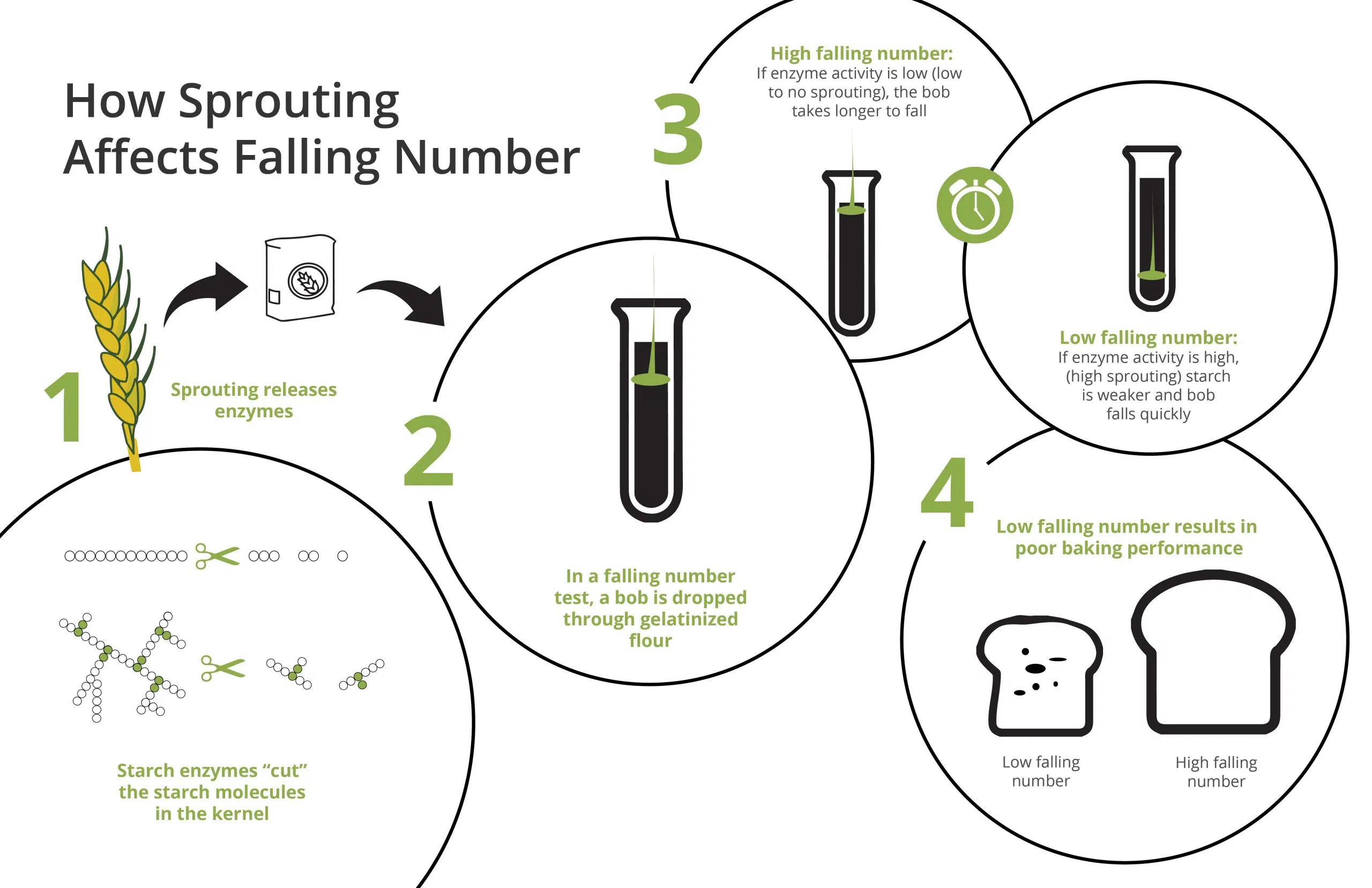
Falling number is not a grading factor for wheat, but it is very important for flour millers and bakers.
“A lower falling number tends to indicate that there has been damaged starch in the wheat,” said Geoff Backman, business development and markets manager with the Alberta Wheat Development Commission. “This is generally damaged by enzyme activity.”
Lower falling numbers are often linked to grain which has begun to sprout. There have been reports of sprouting in cereals in a number of areas of the prairies due to wet conditions in a late harvest.
Grain companies are looking for falling numbers above 300. Unlike protein and moisture, blending is not an effective option for falling number.
“Anecdotally, I have heard that one tonne of bad falling number wheat may need to be blended with as much as twenty tonnes of good falling number wheat,” said Backman.
He recommends storing early harvested wheat separately from crops that have sprouting.
Getting additional samples tested for falling number will assist with grain marketing.
Additional information on falling number can be found here.
You can also listen to Backman’s comments here.