



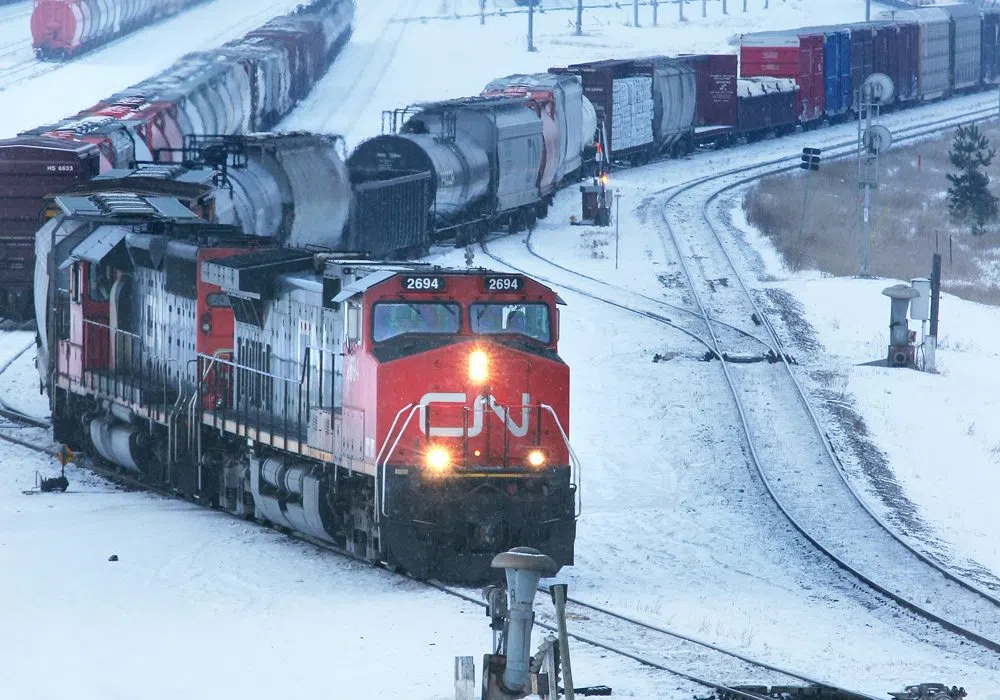
CN Rail says an anti-pipeline protest will soon cause a significant shutdown to commodity movement, including grain.
Sources indicate West Coast grain movement has been reduced by 30 percent because the line to the Port of Prince Rupert has been closed for five days.
Supporters of the Wet’suwet’en First Nation in northwest British Columbia have established rail blockades at various locations in B.C. and Ontario. The blockades have also disrupted VIA Rail passenger service in Eastern Canada.
CN Rail says unless blockades are removed, the company will be forced to close ‘significant parts’ of its Canadian network.
Federal Transport Minister Marc Garneau calls the blockades ‘dangerous and illegal’—but puts the ball in the individual provinces’ court.
“When injunctions are obtained by the train companies, it is up to the provinces. They are the ones who have the jurisdiction to act with respect to those injunctions—it is not the federal government,” Garneau said.
The Transport Minister hopes the issues will be resolved because it is having an impact on the country’s economy.
Grain companies are hoping that both levels of government are working on ways to end the blockades.
“We simply can’t afford to have grain trains not moving,” said Wade Sobkowich, executive director of the Western Grain Elevator Association. “We need the capacity right now. In particular, when we have other issues affecting the supply chain like mudslides and rockslides.”
This is the second significant disruption in grain movement since November, when there was an eight day strike by CN Rail conductors and yardpersons.
“It’s important to have the right to protest, but at the same time, this is really affecting all commodities,” said Todd Lewis, president of the Agricultural Producers Association of Saskatchewan. “It comes at very inopportune time for grain and we can’t afford to have another delay.”