




Written by TJ England, DiscoverMooseJaw.com
The Orionid meteor shower is expected to peak starting Wednesday night bringing with it a connection to the legendary Halley’s Comet.
Abigail Sadowski of the Royal Astronomical Society of Canada’s Kalium Observatory in Regina said the annual meteor shower has a fascinating origin story.
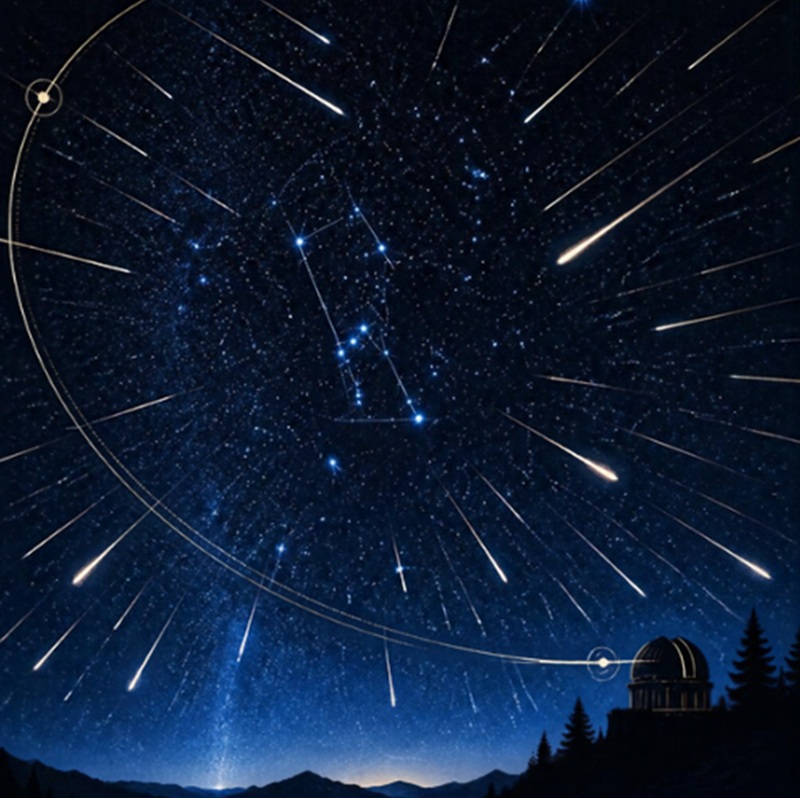
The Orionids are created by particles left behind by Halley’s Comet as it travels through the solar system. Each year, earth passes through part of that debris trail. When those particles enter earth’s atmosphere at high speeds, they burn up and create the bright streaks of light people recognize as meteors.
“Earth crosses through the debris of Halley’s Comet every year,” said Sadowski.
For many observers, the connection to one of the world’s most famous comets makes the shower particularly interesting. Under ideal conditions, the Orionids can produce between 10 and 20 meteors per hour.
The shower is also known for speed. Sadowski said Orionid meteors often move quickly across the sky and can sometimes leave glowing trails behind them that remain visible for several seconds.
Unlike the Draconid meteor shower earlier in the month, the Orionids will have to compete with a bright waxing moon. Moonlight can wash out some of the fainter meteors, reducing the overall number visible to observers.
However, Sadowski said there may still be good viewing opportunities available. The hours between moonset and dawn could provide darker skies and improve visibility. For those willing to rise early, the Orionids offer a chance to witness debris from Halley’s Comet burning up high above Saskatchewan, continuing a celestial display that returns year after year.