




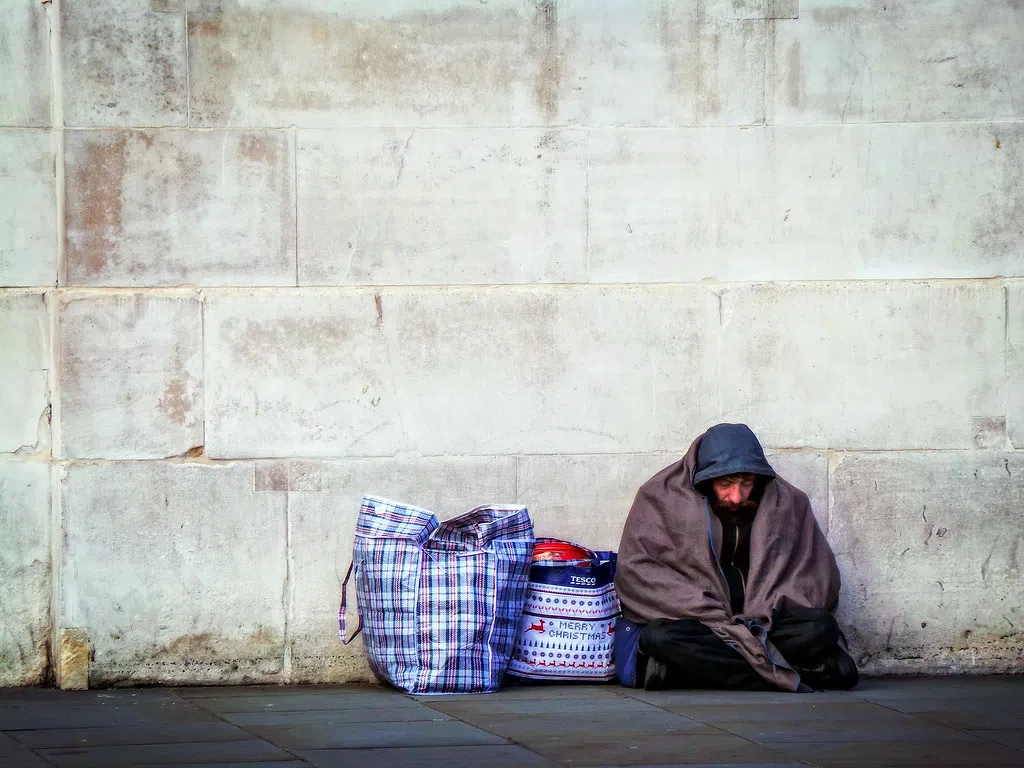
"Homeless by a Wall" by garryknight is licensed under CC BY 2.0.
Community organizations are hopeful following the unveiling of the 2026 Saskatoon Homelessness Action Plan.
The 13-page plan, presented to the Governance and Priorities Committee on Tuesday morning, has an overarching goal of making homelessness “rare, brief and non-recurring” by increasing the affordable housing supply, addressing systemic barriers, and increasing community collaboration.
It puts forward a “role for everyone” approach, laying out nearly 50 action items that the City and other partners such as government, service agencies, and housing providers should entertain. These include establishing a year-round basic shelter; expanding youth-specific housing; and strengthening tenant protections against unfair evictions and excessive rent increases. In 2025, the Saskatchewan NDP introduced a rent control private members bill, but it was not supported by Saskatchewan Party members.
Although the plan has a large focus on housing, Colleen Christopherson-Cote with the Saskatoon Poverty Reduction Partnership says new builds will only accomplish so much for those who are unemployed.
“Income assistance is well-below the market basket measure. Those folks will never get out of that cycle, and even if they do and get into minimum wage, they’re still in poverty. They still can’t afford housing. So, you can build and build and build, but the discrepancy between housing insecurity and income insecurity is the pivotal crux to this work.”
She explains that there is a need to look at reforming the policies which are landing people in vagrancy, such as medical discharge to homelessness, something she indicates is a provincial responsibility.
Executive Director with the Salvation Army Major Gordon Taylor says he is pleased to see such a focus on transitional and supportive housing.
“It’s not enough to just have market housing that’s affordable, available to people who need housing. We have a lot of people in our community, who are part of that PIT count, who aren’t ready for that. They’re not ready to successfully be housed in market housing. They need a transition along the continuum preparing for that.”
Despite the forty-some action items suggested in the plan, Taylor says the most important piece of the puzzle is an attitude adjustment.
“The mood changed, probably world-wide, but specifically in Canada when we went through Covid and lockdowns and all that. There’s been less hope since then, and we need to restore hope.”
He suggests that the City starts celebrating its victories a bit more, while also working to combat homelessness.
Moving forward, the action items that pertain to the City will be brought before council, alongside their financial impacts, closer to budget time.