




Producers across Canada report planting more acres of canola, barley, corn and soybeans but fewer acres of wheat, oats, lentils and dry peas in 2026.
According to the 2026 Principal Field Crop Areas Report by Statistics Canada, seeding was off to a slow start across the Prairies but was mostly complete by the end of May. In Saskatchewan, planting rose significantly toward the end of May, but it still remained behind the 5- and 10-year averages.
Canola
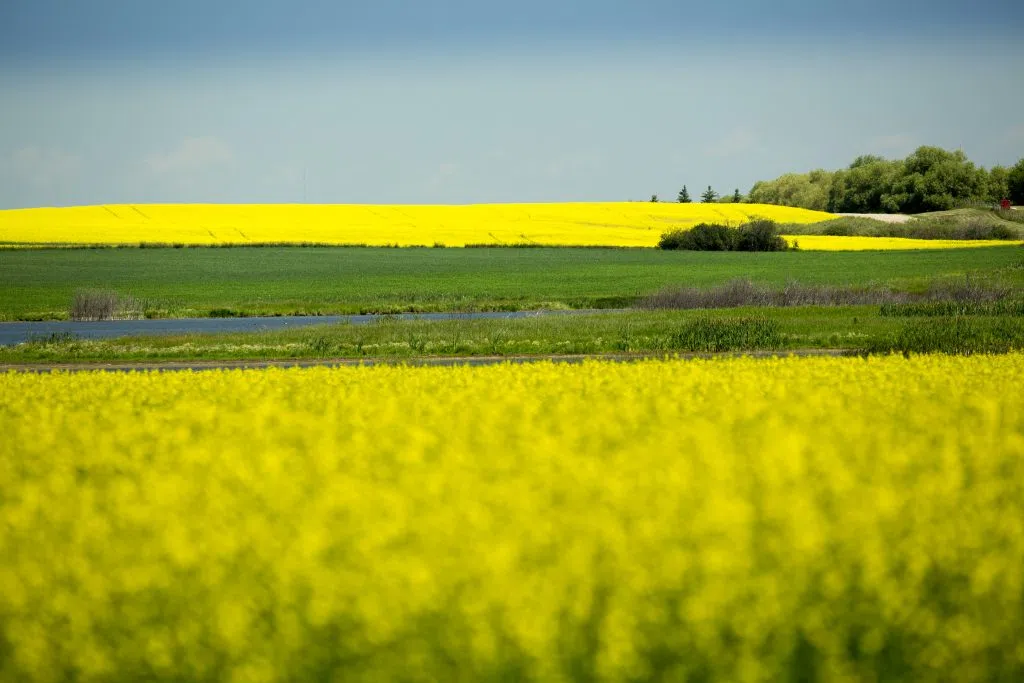
The report says seeded canola acreage rose to record levels this year, driven by an uptick in Saskatchewan. Nation-wide, producers reported planting 23.4 million acres of canola in 2026, up 8.4 per cent from 2025 while also surpassing the previous record of 23 million acres set in 2017. StatsCan attributes this to favourable prices relative to other crops and strong demand, as canola crushing capacity, mainly for renewable energy, continues to expand.
In Saskatchewan, producers reported seeding 13.4 million acres, up 9.8 per cent, or 656,300 acres compared to the previous record for the province.
Wheat
Seeded wheat acreage dropped 5.9 per cent in 2026. Farmers reported seeding 25.3 million acres, a decrease driven by spring wheat, which fell 3.9 per cent to 18.1 million acres. Durum wheat also fell 10.3 per cent to 5.9 million acres, and winter wheat slumped 11.5 per cent to 1.4 million acres. The report indicates that growers probably opted to seed more of other crops, including canola and barley.
In Saskatchewan, producers reported planting 13.2 million acres of wheat in 2026, also down 5.9 per cent year over year. Here, durum wheat led the decrease, falling 9.1 per cent to 4.7 million acres, while spring wheat decreased 3.1 per cent to 8.5 million acres.
Barley and Oats
Seeded barley acreage saw a 9.3 per cent uptick from last year. Farmers reported planting 6.7 million acres, led mainly by Alberta, where seeded area rose 12 per cent to 3.7 million acres. Barley area rose 12.6 per cent to 2.5 million acres in Saskatchewan, while area decreased 23 per cent in Manitoba.
The report highlights that farmers reported planting 15.1 per cent fewer oats this year, with the area dropping to 2.5 million acres. In Saskatchewan, the largest oat-producing province, planting fell 15 per cent to 1.1 million acres. Producers in Alberta and Manitoba also reported lower planting.
Lentils and Peas
Lentils acreage is down in 2026. Canadian farmers reported planting 3.9 million acres of lentils in 2026, down 10.9 per cent from 2025. In Saskatchewan, where nearly 90 per cent of Canada’s lentils are grown, producers reported planting 3.4 million acres, down 11.7 per cent from 2025, while planting in Alberta was down 5.6 per cent to 533,800 acres.
When it comes to dry peas, nationally, farmers reported a lower seeded area in 2026, down 13.7 per cent to 3.0 million acres. This marks the lowest area seeded since 2011. Saskatchewan dry pea area decreased 7.3 per cent to 1.6 million acres.
Soybeans
Nationally, producers reported planting more soybeans in 2026, with total area increasing 3.1% to 6.0 million acres.
In Ontario, the largest soybean producing province, seeded area edged down 0.6% compared with 2025 to 2.9 million acres in 2026.
Growers in Manitoba reported planting more soybeans in 2026, with total seeded area increasing 16.2% to 1.9 million acres, the highest area reported in the province since 2017.
Corn
Nationally, farmers reported seeding more corn for grain in 2026, rising 4.8 per cent from 2025 to 4 million acres.
Ontario growers reported seeding the most corn at 2.3 million acres for grain in 2026, rising 2.7 per cent from 2025, which is in line with the five-year average.
The report underlines that information used to compile the field crop survey was collected from May 15 to June 12 from 25,000 farms. This indicates that any seeded area that was wiped out by rain or hail in the last half of June was not included in the report.
Surveys to be released later in the year will provide estimates of actual seeded acreages. Final acreage numbers for 2026 will be released on December 4, and will be subject to revision for two years.