




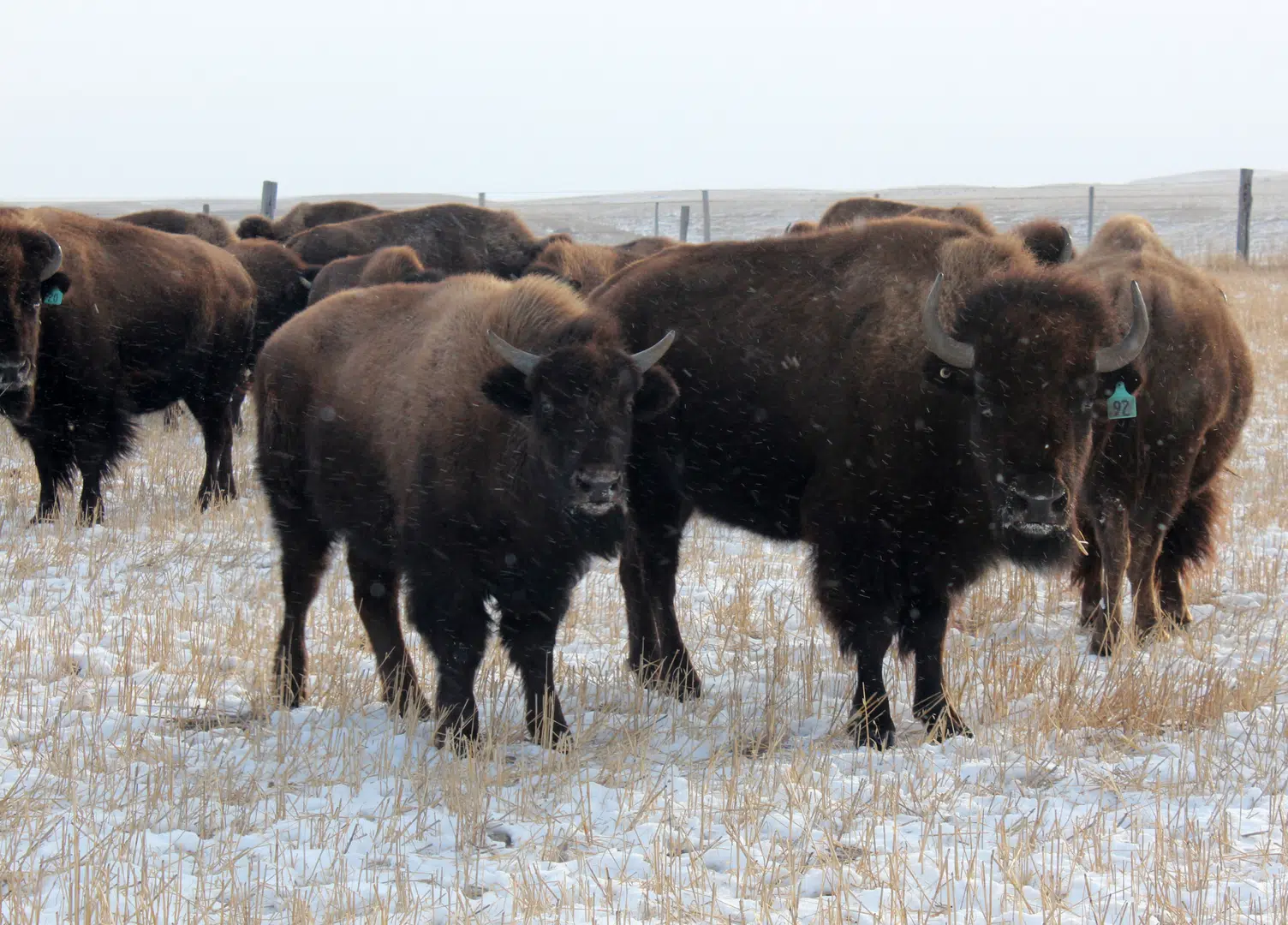
As more Indigenous nations look to bring bison back onto the land they came from, there is a growing need for an understanding on how to manage them sustainably.
That’s where a new research pilot out of the University of Saskatchewan comes in. Dr. Scott Wright is the Livestock and Forage Centre of Excellence Director. He is just one amongst a group of researchers embarking on the project, which is funded through support from the Agriculture Development Fund, a joint provincial and federal government-funded program.
Wright says the way bison move and graze has changed dramatically over the years, prompting the need for a relearning and a reworking of their management systems, especially if they’re going to be brought into modern, intensive systems.
“Bison, 100o years ago, would travel 100 miles a year. Now, 1000 miles a year, and now we try put fences around and have to contain their management. It’s a relearning of how these animals interact with the ground and the land they’re on.”
The team will be studying a herd of about 100 Plains and Wood bison to determine how to increase animal productivity while also keeping the plants they feed on and soil they walk on healthy. This might look like introducing new forage species to feeding systems, instead of operating under the status quo that has been developed for cattle.
“Bison have a much longer fight or flight zone. So even between themselves, they need more space. Right off the hop, we’ve got a different way of managing those animals. Add to that the fact that they select different foods. They have a fiber requirement, and the science is beginning to really explore that.”
Up until now, bison have been managed in an array of different ways due to a lack of a universally understood blueprint of best practices. In an attempt to lay that groundwork, Wright and the team will be diving into several key factors, include animal production, soil parameters, and plant productivity.
Although a group of research scientists is conducting this work, the significant cultural importance of the pilot is not lost on the team. Wright says Indigenous engagement has been a huge part of this work so far, and Elders have been providing some great insight and questions.
“What are they ways of appropriately introducing them into the landscape and back into the lands that Indigenous are responsible for? How do we make sure old and traditional knowledge can be applied in these smaller spaces where fences are being applied to keep animals in?”
Once the data is collected, over the next three years or so, Wright says it will be shared with Indigenous populations, bison producers, and the science community so that it can be applied and understood as soon as possible.
He emphasizes that this pilot project is just the beginning, and more questions are expected to spring from what they learn.
“This will generate answers in itself that will move additional questions and work forward.”