




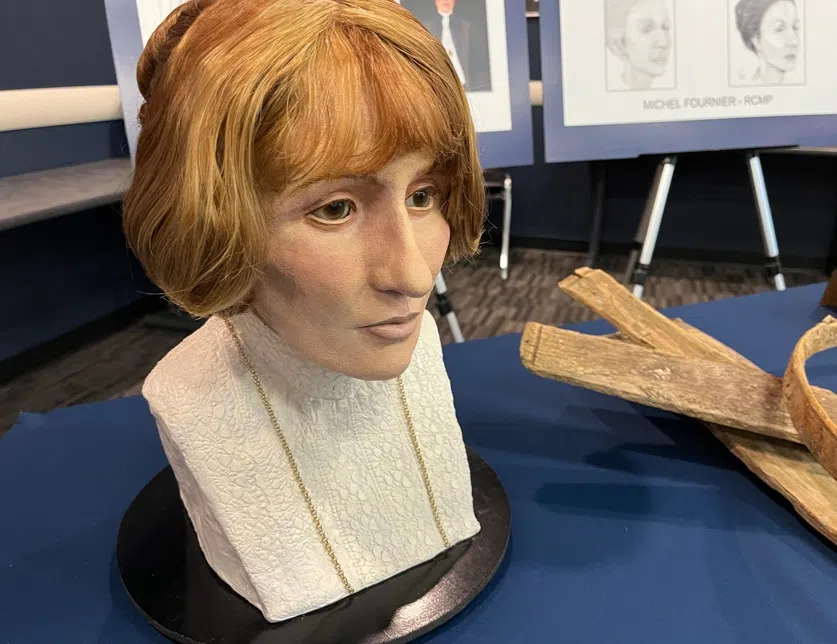
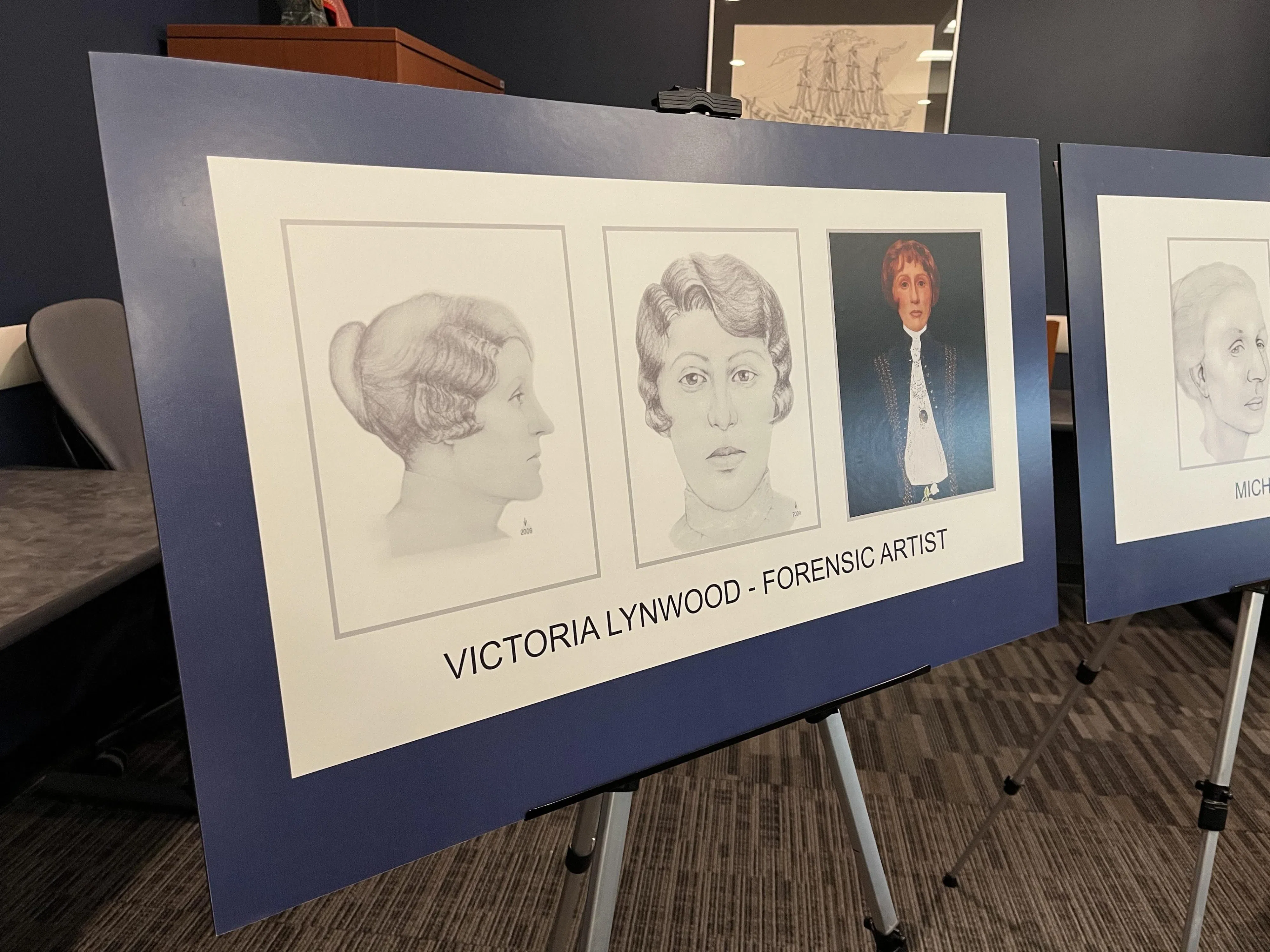
Forensic facial reconstruction of Woman in the Well
The mystery of the woman in the well began in June 2006 when crews excavating at 108th Street and Central Avenue discovered the remains of a woman in a barrel in an old well. An autopsy determined the death was suspicious in nature and odds of finding remains preserved that well was extremely unlikely. Dr. Ernie Walker the Forensic Anthropologist who worked on the case said, “I used to say that she wanted to be found”.
Now almost 20 years after the discovery and more than a hundred years since her death, the unknown victim of what is believed to be foul play, has been identified as Alice Spence (nee Burke).
DNA was collected and genealogical testing was first attempted in 2006 but didn’t yield significant leads. In 2022 Genetic Genealogy was explored and in 2024 police were advised of five genetic relatives.
 Alice Spence was born Alice Birk in Michigan in 1881. She, her husband and daughter moved to Sutherland, Saskatchewan in 1913. Their home burned in 1918, and investigators believe Alice died sometime between 1916 when she was last listed on a census and 1918 – the time of the fire.
Cindy Camp, Alice’s great granddaughter says learning about Alice’s life and the way she had been hidden away from history for so long is both emotional and surreal for their family.
“My grandmother Idella who as Alice’s daughter never spoke about her family. She was orphaned at the age of 17, and like so many who have experienced such loss she chose not to dwell on the past but for decades had no idea of the incredible story that surrounded her mother, Alice.”
Cindy acknowledges that it has been an emotional journey and says, “We are so grateful to the many individuals who have worked tirelessly over the years to give the Woman in the Well her name back.”
The Saskatoon Police Service relied on a variety of partners, including the Department of Archaeology at the University of Saskatchewan, the Saskatchewan Coroner’s Service, the Western Development Museum, City of Saskatoon Archives and the City of Saskatoon Infrastructure Services. They say the caught their real break when members of the Toronto Police Services’ Investigative Genetic Genealogy (IGG) team assisted in exploring genetic relatives and developing family trees. Investigators utilized a variety of tools including DNA testing and historical archive information to try to determine Alice’s identity.
Saskatoon Police Chief Cameron McBride said, “As a Constable who assisted immediately after Alice’s remains were discovered, this is an especially satisfying outcome.”
It is believed this is the oldest investigation in Canada to be solved with the assistance of IGG. Alice Spence was buried in Woodlawn Cemetery on September 29, 2009.