




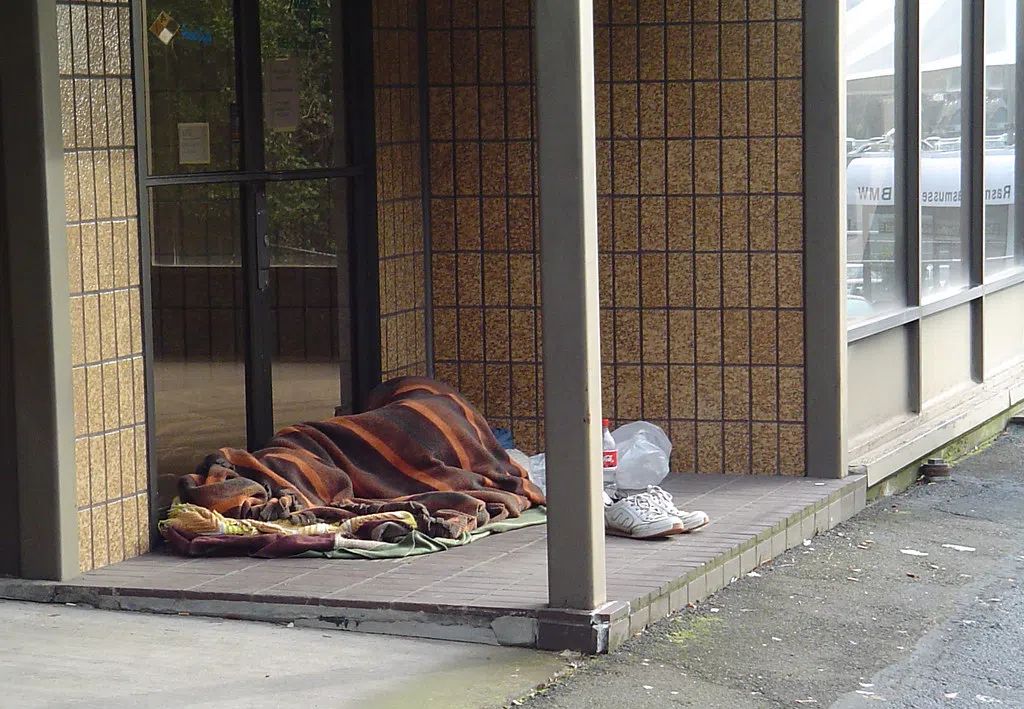
"Homeless" by born1945 is licensed under CC BY 2.0.
Saskatoon has partnered with Wilfred Laurier University to develop a first-of-its kind data-sharing framework to monitor the activity of vulnerable individuals.
Waterloo researcher Dr. Tarah Hodgkinson says due to data sharing restrictions, the City was struggling to compile community safety information between all of its emergency services. This was creating significant data overlap and making it hard to coordinate services in the most efficient way possible.
She assures that the new framework will allow for enhanced data sharing between the city’s emergency services to mitigate data overlap and wasted resources.
“What we’re trying to do is help the City better understand where there are high needs or complex needs clientele and places. The way they would do that is essentially by cross-referencing the address-level data and across client ID.”
She explains that there is no breach of privacy involved for the vulnerable individuals, because the researchers aren’t able to identify them through the data.
“They are sharing their data with us, and then we are analyzing that data across, and then feeding that information back to them. We have unique identifiers, so we don’t know who they are, but they (staff in Saskatoon) could check who they are in their system.”
It will also indicate what kind of resources vulnerable people are tapping into, and what locations in the City pose the most significant safety concerns, as well as also allow the City to tailor resource spending and service delivery.
“For us, I think it’s just really about, how do we help municipal services providers, like police, fire, and the City better determine how they’re providing service delivery, but also, how do we do that in a much more cost-effective way, so that the money can be redistributed to much more preventative strategies?”
The project was granted $200,000 in federal funding over the next three years. Hodgkinson says the work is just getting underway, and it will take about one year to clean, prepare, and input all the data into the framework. After that, data extractions will be done on an annual basis to determine how the city could address homelessness in a more efficient way.