




About 8,200 farmers were surveyed by Statistics Canada between mid-December and mid-January.
Overall, Canadian farmers said they were planning to seed more wheat and peas, but less canola.
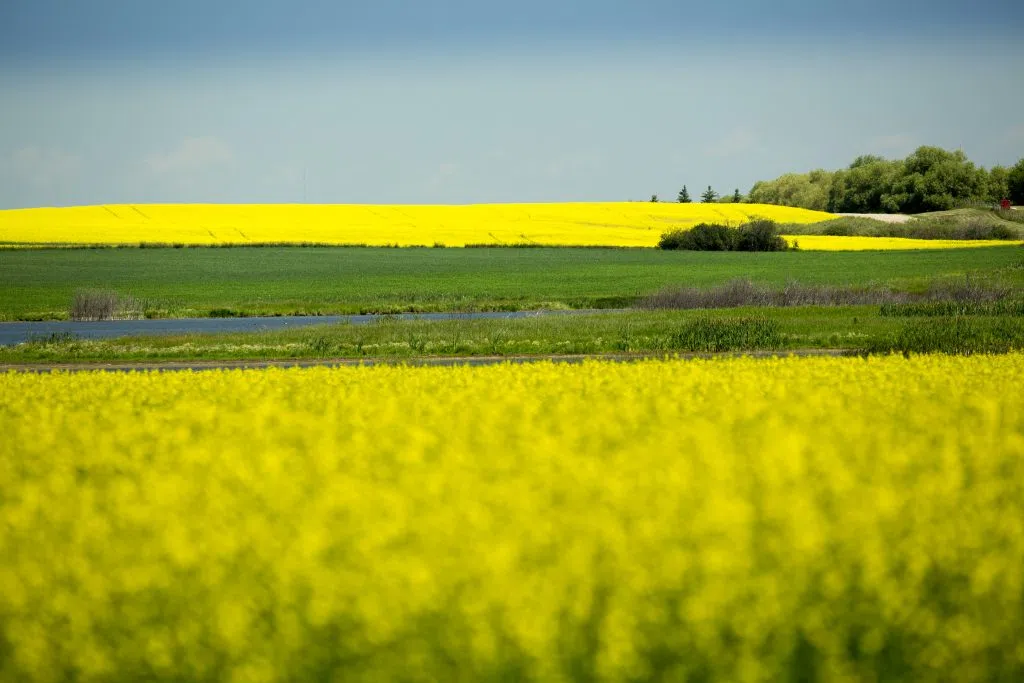
Canola acreage is pegged to fall 1.7 per cent, but that was before the U.S. tariff situation heated up and China imposed 100 per cent tariffs on Canadian canola meal and canola oil.
It is the same story for peas, which the StatsCan survey projects a 9.5 percent increase. That may end up being lower following Chinese plans to introduce a 100 per cent tariff on March 20th.
You can check out the national and provincial numbers in the Statistics Canada news release below:
Wheat
Across Canada, farmers anticipate planting 27.5 million acres of wheat in 2025, up 2.6% from the previous year. The higher anticipated area seeded to wheat may be due to strong global demand for high-quality wheat. Spring wheat area is expected to drive the increase, rising 2.5% to 19.4 million acres. Area seeded to durum wheat is expected to remain largely unchanged, at 6.4 million acres. Meanwhile, producers reported higher area being seeded to winter wheat, up 15.1% to 1.7 million acres.
In Saskatchewan, farmers expect total wheat area to remain largely unchanged from 2024, at 14.2 million acres in 2025. Spring wheat area (-0.7% to 8.9 million acres) is anticipated to decrease but could be offset by higher durum wheat area (+0.6% to 5.1 million acres).
Farmers in Alberta anticipate planting 6.6% more wheat in 2025, totalling 8.4 million acres. Spring wheat area is expected to rise 8.0% to 7.0 million acres, while durum wheat area is anticipated to decrease 0.9% to 1.2 million acres.
Manitoba farmers anticipate planting 3.3 million acres of wheat, up 0.9% from one year earlier.
Canola
At the national level, canola area is expected to decrease 1.7% to 21.6 million acres in 2025, which is roughly in line with the five-year average. The decline in expected seeded area may be due to lower profitability for canola relative to other crops, in addition to other factors, including soil moisture in Western Canada.
In Saskatchewan, the province that produces the most canola, producers anticipate seeding more acres to canola, increasing 1.2% to 12.2 million acres.
Farmers in Alberta anticipate seeding 6.1 million acres of canola, down 4.3% from the previous year.
In Manitoba, farmers expect seeded area of canola to fall 6.4% to 3.1 million acres.
Soybeans
Nationally, farmers anticipate planting 5.6 million acres of soybeans in 2025, down 1.3% from one year earlier.
In Ontario, the province that produces the most soybeans, producers expect to plant 2.9 million acres, down 7.8% from 2024.
Manitoba producers expect to plant more acres of soybeans in 2025, rising 14.1% to 1.6 million acres.
Farmers in Quebec anticipate seeding 4.9% less area to soybeans, totalling 985,600 acres.
Barley and oats
Nationwide, barley acreage is expected to fall 2.0% to 6.3 million acres in 2025.
Barley area is expected to increase in Saskatchewan (+3.7% to 2.4 million acres), while area in both Alberta (-5.6% to 3.3 million acres) and Manitoba (-4.3% to 297,900 acres) is expected to decrease compared with 2024.
Nationally, oat area is expected to rise 2.7% to 3.0 million acres in 2025 compared with one year earlier, possibly because of low oat stocks.
Corn for grain
At the national level, farmers expect to plant 3.8 million acres of corn for grain in 2025, up 3.2% from one year earlier.
In Ontario, where roughly three-fifths of all corn for grain in Canada is grown, farmers anticipate planting 2.3 million acres, up 5.0% from 2024.
Quebec farmers expect to plant less corn for grain, down 0.3% to 876,100 acres in 2025.
Producers in Manitoba reported an increase in expected area of corn for grain, rising 4.6% to 527,900 acres.
Lentils and dry peas
Area seeded to lentils is expected to decrease compared with one year earlier, falling 0.8% to 4.2 million acres in 2025. Farmers in Saskatchewan, where almost 90% of Canada’s lentils are grown, expect seeded area to fall 1.7% to 3.6 million acres, while lentil area in Alberta is expected to increase 4.1% to 582,900 acres.
Farmers across Canada expect to plant more acres of dry peas in 2025, with area anticipated to rise 9.5% to 3.5 million acres, possibly because of good returns relative to other crops.