



The projected cost for Saskatoon’s new temporary emergency shelter has doubled due to unanticipated renovation costs. As this delays the opening of the shelter, which was supposed to happen in January, city council has agreed to pay for the overage.
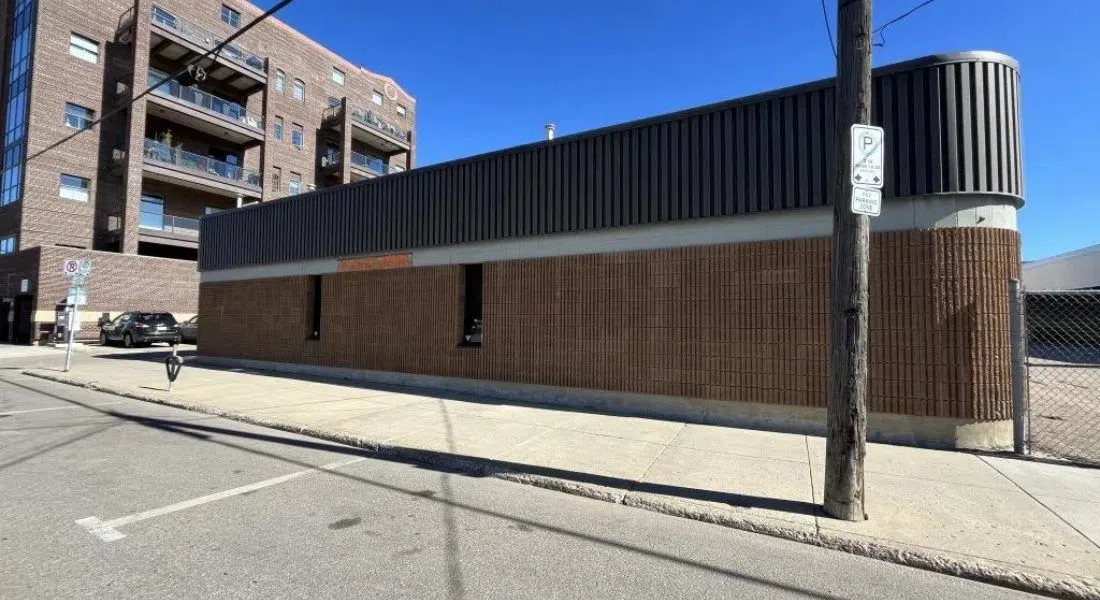
Transforming the old bus shelter at 210 Pacific Avenue into a temporary shelter was expected to cost $250 thousand. The province had agreed to foot the bill, but now that the price tag has ballooned to $536 thousand, the province has said they will not be covering any more than the original $250 thousand.
Several renovations that weren’t originally anticipated include upgraded heating and ventilation systems, as well as plumbing to support laundry, showers and washrooms. This created a $360 thousand funding gap.
Options for addressing the $360 thousand funding gap included seeking additional funding from the Provincial and Federal governments or taking it from the City’s Reserve for Capital Expenditures. In an effort to speed up the renovation process and get the temporary shelter open, council voted unanimously to pick up the tab.
City Councilor Bev Dubois says “It’s 40 below outside and we don’t have a shelter open. So, I’m frustrated, but I am going to vote for it today, reluctantly.”
Renovations are expected to be complete by March.
In other efforts to address homelessness, City Council has unanimously approved to move forward on an $8.8 million project.
In October, the federal government told the city about a funding opportunity to improve homelessness. It would provide Saskatoon $4.48 million, but only if Saskatoon could match the funds and develop a Community Encampment Response Plan.
Saskatoon’s Director of Planning and Development, Lesley Anderson, says all of the matching money from the City has already been committed, so there will be no expenses in that regard.
“The $200 thousand that city council approved to go to the warming centres, that’s part of the matching, as well as the other sources for the warming centres, that’s part of the matching. The contributions from the province for our shelter locations, that’s part of our matching.”
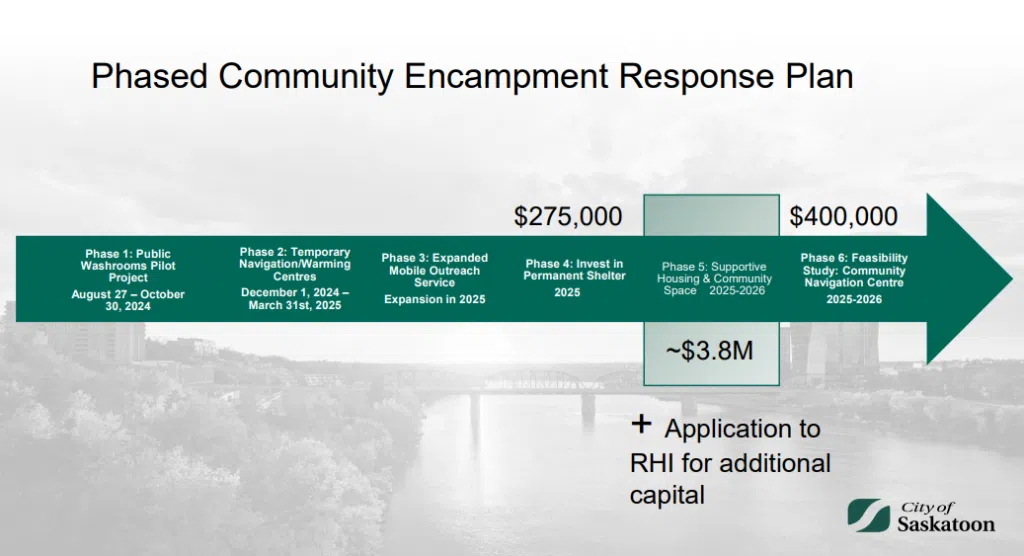
The city has also developed the required six-phase plan that aims to improve conditions for homeless people. It details establishing a mobile outreach service, a permanent shelter location, and a new 30-unit Supportive Housing Development that stay in operation for at least 20 years.
However, there is a catch.
“We were rather recently informed that we need to spend the money by March 31st of 2026,” Anderson admits.
This gives the City a very short window to accomplish everything that its Community Encampment Response Plan sets out to.
Next steps include developing a plan for targeted engagement with stakeholders, lived experts and others to support the work plan.