




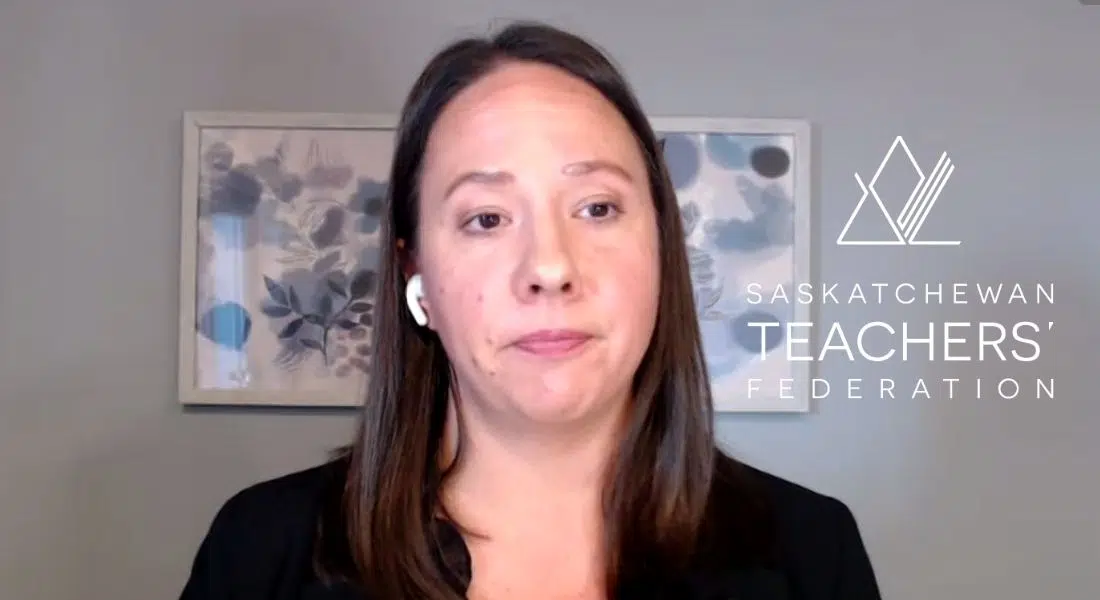
It will be a long weekend for Saskatchewan students, as teachers across the province have decided to go on a second one-day strike this Monday. Saskatchewan Teachers’ Federation President Samantha Becotte says the lack of effort shown by the provincial government has forced the STF into the decision, however it is not something they want to continue. “Our hope is that we don’t have to have a long-term plan. Our hope is that teachers can be in their classrooms supporting their kids with the supports that are necessary.”
Becotte says their job action is not about salary, however poor salaries lead to a lack of professional draw to the province, which leads to a deficiency of resources for students, therefor contributing to classroom complexity. “A lack of teachers and a teacher shortage also plays into class complexity. If we don’t have qualified, highly trained individuals to support our students, if we don’t have enough substitute teachers, it just creates additional challenges.”
If teacher needs are not met soon, Becotte says a full-scale strike is not off the table, however it would negatively impact students, especially high school students entering around finals season.
Becotte says spending 8 hours a day at the bargaining table, repeatedly getting told ‘no’, has not been productive. Again, she calls on the Province to renew their mandate, return to the bargaining table with solutions, and stop misrepresenting the facts when it comes to teachers’ salaries. She cited the Province’s billboards, put up last summer, which indicated that the average teacher makes $92 thousand a year. “There are lots of ways that you could calculate an average if you’re looking at our salary grid. I look at what individual teachers experience, and we need to make sure we’re taking those individual experiences into consideration and not blanketing an average across the province, because teachers don’t experience an average.”
The Provincial NDP Education Critic says the Premier saying Saskatchewan leads the nation in education funding is misleading. Matt Love says Scott Moe is using per capita population, not per student funding, which work out to be quite different. Love says last year, the province saw 3,800 new students and 145 fewer teachers. Love adds that there is not a jurisdiction anywhere in Canada where per capita population is used to measure education funding, and Moe’s choice of words is desperate, dishonest, and meant to confuse Saskatchewan citizens.