




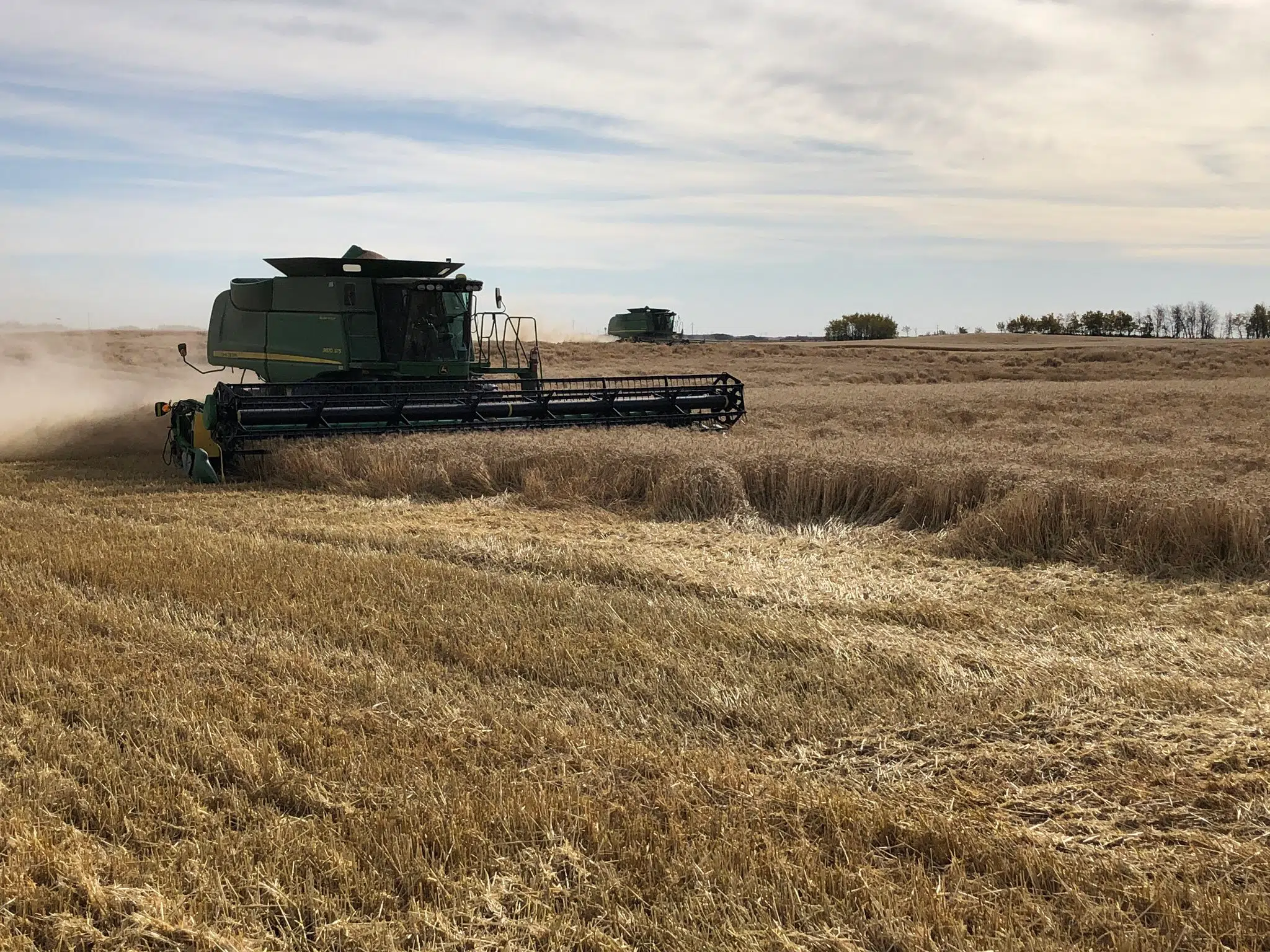
Harvest was put on pause for a few days last week due to some scattered showers across the province, but the moisture wasn’t considered too little too late, as many crops are still suffering from drought damage.
Crop Extension Specialist Mackenzie Hladun says the scattered rain managed to reach all crop districts, with the most significant moisture received being 67 mm in Esterhazy, followed by Lipton with 63 mm.
The Saskatchewan Agriculture crop report says an increase in soil moisture was recorded last week. In cropland, 26 per cent of topsoil has adequate moisture, 45 per cent is short and 29 per cent is very short. Twenty-one per cent of hay and pastureland has adequate topsoil moisture, 45 per cent is short and 34 per cent is very short. Charts and graphs are located below the story.
She says despite the weather delays, Saskatchewan farmers are still ahead of the game this year. Saskatchewan crops are nine per cent harvested as of last week, ahead of the five-year average of eight per cent and the 10-year average of five per cent. However, there is quite the difference in harvest progress between the south and the north.
The southwest is leading the province in harvest progress, with 20 per cent of this year’s crop harvested for the year. Producers in the northwest received more rain than other regions and have harvested only one per cent of crops. The crops being taken off mainly include fall cereals, and oilseeds in general have been harvested the least so far. Sixty-one per cent of fall rye and 56 per cent of winter wheat taken off for the year. Field peas and lentils are the most harvested spring seeded crops; 36 per cent of both field peas and lentils have been harvested provincially.
Crop damage last week mainly came from drought, wind, gophers, grasshoppers, and flea beetles. Livestock producers are reporting moderate to severe water supply shortages, as well.
Harvest is a busy time for producers, and the public is reminded to give large machinery extra space and time when travelling on roadways.


Crop District 1 – Carnduff, Estevan, Redvers, Moosomin and Kipling areas;
Crop District 2 – Weyburn, Milestone, Moose Jaw, Regina and Qu’Appelle areas;
Crop District 3ASE – Radville, Minton and Lake Alma areas
For the Period August 8 to 14, 2023
The southeast made great harvest progress this week while also pausing for rain. Harvest is now eight per cent complete, which is the same as the five-year average.
Producers are getting close to finishing their fall cereal harvest, with 62 per cent of winter wheat and 55 per cent of fall rye harvested for the year. An estimated 15 per cent of each crop is ready to be combined. Field peas and lentils are the most harvested spring seeded crop, with 39 per cent of field peas and 34 per cent of lentils in the bin for the year. Oats are leading spring cereals in harvest, with 14 per cent of the crop harvested including three per cent used for greenfeed or silage. Oilseed progress is led by mustard, with 17 per cent of mustard harvested for the year.
Scattered showers and storms moved through the southeast this past week. Indian Head received the most rain with 36 mm recorded. While some areas received significant moisture, others reported trace amounts. Cropland topsoil moisture is 27 per cent adequate, 47 per cent short and 26 per cent very short. Fifteen per cent of pasture and hay land has adequate topsoil moisture, 51 per cent is short and 34 per cent is very short. Producers in the area are anticipating or are already experiencing moderate livestock water shortages. Water quality is a concern for the livestock producers in the region.
Crop damage this past week is due to drought stress, wind, grasshoppers and flea beetles. Producers are busy this week marketing livestock, desiccating crops and combining.
Crop District 3ASW – Coronach, Assiniboia and Ogema areas;
Crop District 3AN – Gravelbourg, Mossbank, Mortlach and Central Butte areas;
Crop District 3B – Kyle, Swift Current, Shaunavon and Ponteix areas;
Crop District 4 – Consul, Maple Creek and Leader areas
For the Period August 8 to 14, 2023
Combines continued to roll across the southwest this week and producers made great harvest progress. The southwest is 19 per cent complete harvest this week, ahead of the five-year average of 15 per cent. Producers are hoping for widespread, slow, soaking rains once the crops are off.
Fall cereals continue to be the primary crop harvested this past week, with 38 per cent of fall rye and 26 per cent of winter wheat now harvested. Great progress in harvesting barley was made this week as well; 40 per cent of barley has been harvested, including five per cent of the crop destined for feed. Forty-eight per cent of field peas and forty per cent of lentils are also some of the most harvested crops this week. The region also has 11 per cent of mustard in the bin for the year.
Pockets of rain moved through the region and provided scattered moisture. Eyebrow received the most rain, with 21 mm recorded this week. Five per cent of crop land has adequate topsoil moisture, 40 per cent is short and 55 per cent is short.
Hay and pasture land is very similar, where five per cent has adequate moisture, 45 per cent is short and 50 per cent is very short. Many producers are experiencing moderate water shortages and those that currently are not, anticipate will be encountering similar challenges soon. Water quality is a concern in the region.
Crop damage this past week is due to drought stress and grasshoppers. Producers are busy desiccating, swathing and harvesting crops while also working livestock and preparing for fall operations.
Crop District 5 – Melville, Yorkton, Cupar, Kamsack, Foam Lake, Preeceville and Kelvington areas;
Crop District 6A – Lumsden, Craik, Watrous and Clavet areas
For the Period August 8 to 14, 2023
Producers in the east-central have made progress harvesting their crops this week while pausing for showers that moved through the region. Harvest in the east-central is now four per cent complete, which is on par with the five-year average. Producers are closely monitoring their crops moisture levels as harvest progresses.
Fall cereals are being harvested in the region, with 43 per cent of winter wheat in the bin and an additional seven per cent used for greenfeed or silage. Fifty-two per cent of fall rye is also in the bin for the year. Field peas and lentils are also being with 29 per cent of field peas and 21 per cent of lentils harvested so far. An additional seven per cent of lentils have been harvested as feed. Little harvest progress has been made in oilseeds.
Scattered showers moved through the region this past week, with Esterhazy receiving the most, with 67 mm of rain. Lipton also received 63 mm of rain. This helped to replenish topsoil moisture in the region. Forty-three per cent of cropland now has adequate moisture, while 44 per cent is short and 13 per cent is very short. Thirty-two per cent of hay and pasture land has adequate topsoil moisture, 49 per cent is short and 19 per cent is very short. Water supply is variable across the region, with some producers experiencing severe water shortages, others moderate challenges and some anticipate water shortages in the coming months. Water quality is a concern in the region.
Crop damage this past week is due to drought stress and grasshopper damage. Producers are busy evaluating grain moisture, swathing, desiccating and harvesting crops. They are also hauling water and working livestock.
Crop Districts 6B – Hanley, Outlook, Loreburn, Saskatoon and Arelee areas;
Crop District 7A – Rosetown, Kindersley, Eston, Major;
Crop District 7B – Kerrobert, Macklin, Wilkie and Biggar areas
For the Period August 8 to 14, 2023
Producers in the west-central region are ahead of the five-year average for harvest progress this week. Currently, harvest is nine per cent complete in the region, ahead of the five-year average of six per cent. Persistent dry and warm conditions have allowed crops to dry down and be harvest ready.
Producers are nearing the end of harvesting their fall cereals this week, with 95 per cent of winter wheat and 85 per cent of fall rye in the bin for the year.
Eleven per cent of barley has also been harvested for the year, with an additional four per cent harvested for feed. Thirty-nine per cent of field peas and thirty-three per cent lentils are also leading the region for harvest progress. Little harvest progress has been made in oilseeds.
Some scattered showers moved through the region this week. Kerrobert recorded the most rainfall, with 23 mm being reported. Topsoil moisture continues to be limited in the region. Nine per cent of crop land topsoil has adequate moisture, 51 per cent is short and 40 per cent is very short. Two per cent of hay and pasture land has adequate topsoil moisture, 38 per cent is short and 60 per cent is very short. Livestock producers are concerned about their water supply. The majority of producers are experiencing moderate water supply shortages, while others are facing severe shortages. Water quality is a concern for producers.
Crop damage this past week is due to drought stress and grasshopper damage. Producers are busy conducting yield estimates, sampling grain, combining, and working livestock.
Crop District 8 – Hudson Bay, Tisdale, Melfort, Carrot River, Humboldt, Kinistino, Cudworth and Aberdeen areas;
Crop District 9AE – Prince Albert, Choiceland and Paddockwood areas
For the Period August 8 to 14, 2023
Producers in the northeast have been busy combining this week and are now two per cent completed harvest. This is just behind the five-year average of three per cent.
Producers completed harvest of fall cereals in the region and are moving onto spring seeded crops. Just under five per cent of barley has been harvested for the year. Spring seeded pulses are also being combined, with four per cent of lentils in the bin for the year and an additional 15 per cent used as a feed source. Fourteen per cent of peas are harvested for the year. Few oilseeds have been harvested in the region.
Pockets of moisture have moved through the region this week, leaving some areas with significant moisture. Kinistino recorded the most rainfall, with 42 mm being received. Other areas of the region received only trace amounts. Topsoil moisture was slightly replenished this week, one per cent of cropland has surplus topsoil moisture, 49 per cent has adequate moisture, 46 per cent is short and four per cent is very short. Hay and pasture land follows a similar pattern, with one per cent having surplus moisture, 44 per cent is adequate for moisture, 53 per cent is short and two per cent is very short. Although the rain helped with topsoil moisture, livestock producers are experiencing moderate water supply shortages and water quality is a concern.
Crop damage this past week is due to localized flooding and some hail. Producers are busy evaluating grain moisture levels, marketing livestock and harvesting crops.
Crop District 9AW – Shellbrook, North Battleford, Big River and Hafford areas;
Crop District 9B – Meadow Lake, Turtleford, Pierceland, Maidstone and Lloydminster areas
For the Period August 8 to 14, 2023
Producers in the northwest have started getting their combines into the fields this week. Approximately one per cent of the region is harvested. This is behind the five-year average of two per cent. Rain this past week has delayed harvest.
Producers in the region are primarily harvesting pulse crops this week. Lentils are the most harvested, with 28 per cent of this year’s crop in the bin. Field peas are also being taken off, with five per cent of the crop harvested. Few oilseeds and cereals have been harvested so far.
Scattered showers moved through the region this past week, providing significant moisture for some parts of the northwest. Duck Lake recorded the most rain, with 50 mm being reported. Other parts of the region only received trace amounts of rain. Topsoil moisture increased this week. Thirty-eight per cent of cropland has adequate topsoil moisture, 46 per cent is short and 16 per cent is very short. Forty per cent of hay and pasture land has adequate topsoil moisture, 34 per cent is short and 26 per cent is very short. Livestock producers are experiencing water supply shortages, with some anticipating they’ll encounter challenges in the months. Water quality is a concern for livestock producers.
Crop damage this past week is due to drought stress, flea beetles and grasshoppers. Producers are busy swathing, desiccating and harvesting crops. Livestock producers are working and marketing cattle.