



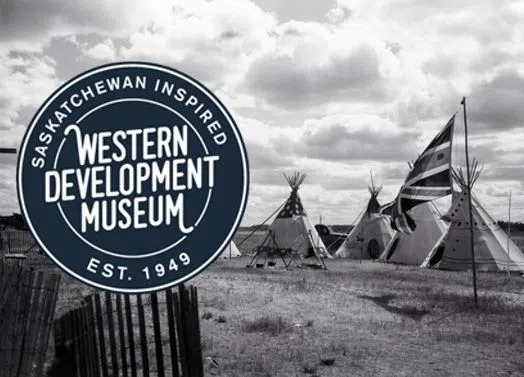
The Western Development Museum in Saskatoon has a new, permanent exhibit which highlights its historical relationship with Whitecap Dakota First Nation. Between 1955 and 1969, Whitecap members organized an exhibit for PionEra, which is the WDM’s annual heritage exhibition. The First Nation would determine what to showcase each year, including the cultural dances and sharing their skills as horse people, and their expertise as livestock operators. Chief Darcy Bear says the Indian Act made it challenging for those involved in the exhibit. They would need a pass to participate so they could leave their community. He explains that passes and permits were needed from the Indian Agent for anything they did, including getting supplies in Saskatoon and Dundurn, and if they wanted to sell livestock, crops, or wood, for example, they would have to get permits and passes.
The co-created exhibit includes historical photos WDM staff found of unnamed Indigenous people at PionEra and Whitecap Elders were able to name most of them. WDM spokesperson, Elizabeth Scott, says it also includes artifacts from the First Nation, held in trust at the museum. The WDM provides museum services to the cultural artifacts but the First Nation retains full control, access and ownership, which Scott says is a way to uphold the United Nations Declaration on the Rights of Indigenous People.
Chief Darcy Bear says, “The exhibit tells an important story of the relationship between Whitecap Dakota Nation and the City of Saskatoon. A partnership that began between our founders, Chief Whitecap and John Lake.”