




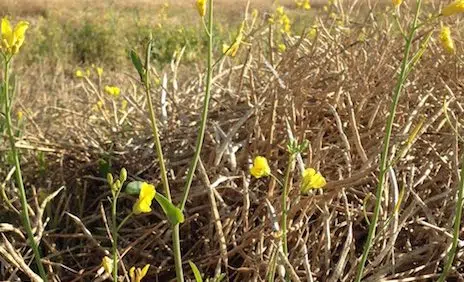
Canola regrowth may have caused some harvesting headaches—but it proved to be a blessing for many cattle producers looking for additional feed.
The following article was prepared by Travis Peardon, Livestock and Feed Extension Specialist with the Saskatchewan Ministry of Agriculture in Outlook.
On a dry matter basis, crude protein in canola forage that is in the late flower/early pod stage of maturity generally averages 12 to 14 per cent and can be as high as 18 per cent. Total Digestible Nutrients TDN (energy) typically ranges from 55 to 60 per cent. As the crop matures the levels of protein and energy decrease significantly. A feed analysis is recommended to determine actual nutrient values. Canola tends to accumulate nitrate and sulphur; it is recommended that both parameters be included in the feed analysis.
Cattle may develop scours when fed canola hay or silage as the predominant source of roughage. It is recommended that canola hay or silage comprise no more than 50 per cent of the total feed intake, depending on nutritional analysis. Canola contains high levels of sulfur (0.5 to 1.3 per cent). It is recommended that total dietary sulfur not exceed 0.4 per cent on a dry matter basis. If cattle diets exceed this level of sulfur intake, several implications may result.
Cattle fed long-term diets of these roughages may develop a condition called Haemolytic Anaemia. Feeding at levels of 50% or less should prevent this condition from occurring.
Feeding canola forage to cattle for long periods may inhibit the utilization of trace minerals, particularly copper and selenium. Ensure that recommended levels of copper and selenium are fed daily.
In some situations, high levels of dietary sulfur create hydrogen sulfide gas in the rumen. This can lead to sulfur-induced polioencephalomalacia (PEM), a dietary disease that can cause lesions to form in the brain. Clinical signs include a lack of muscle coordination, facial muscle tremors, teeth clenching, circling, stupor, and blindness. These conditions are soon followed by recumbency, convulsions and death. Fatal cases of PEM have been confirmed in Saskatchewan; it was determined that these were caused by the consumption of large amounts of canola forage with high sulfur levels.
Sulfur is present in groundwater as well as in feed. It is vital to check the sulfur level of both the feed and the water to avoid the cumulative build up of sulfur in the rumen.
When using non-typical feeds such as canola regrowth feed testing and working with a nutritionist can make all the difference for your cattle.
(Above photo: courtesy of the Canola Council of Canada)