



Harvest has wrapped up across Saskatchewan, with 99 per cent complete and only a few acres of later-seeded crops remaining in the field.
While most producers were able to finish harvest, rainfall, frost and humid conditions created challenges during the final stages of the season.
Widespread rainfall continued late into the fall, making it difficult to bring in the remaining crop. Wet conditions contributed to lodging in some crops and raised concerns about grain quality, including bleaching and sprouting. Despite these challenges, harvest is now virtually complete across the province. Among the crops still being harvested, progress is 99 per cent complete for canola, 93 per cent complete for flax, 99 per cent complete for soybeans and 97 per cent complete for Canary seed.
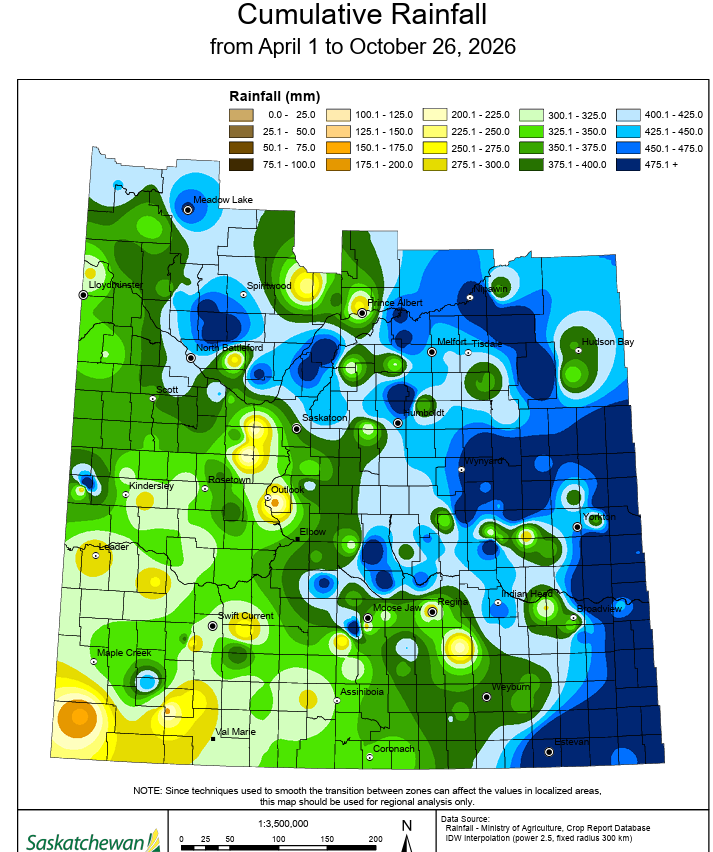
Growing conditions varied considerably across Saskatchewan throughout the year. In some areas, excess moisture and flooded fields delayed seeding, with some crops not planted until later in June. Delayed seeding contributed to later crop development and maturity as the growing season progressed. In other areas, timely rainfall supported favourable growing conditions throughout much of the season.
Weather conditions during the summer increased disease risk and many crops were treated with fungicide to help mitigate disease impacts. Crop development progressed well during July, supported by warmer temperatures compared to previous years. As the growing season progressed, crop staging differences became less noticeable in many areas.
Bertha armyworm and cabbage seedpod weevil were reported in crops, while Richardson’s ground squirrel activity created additional challenges in some areas.
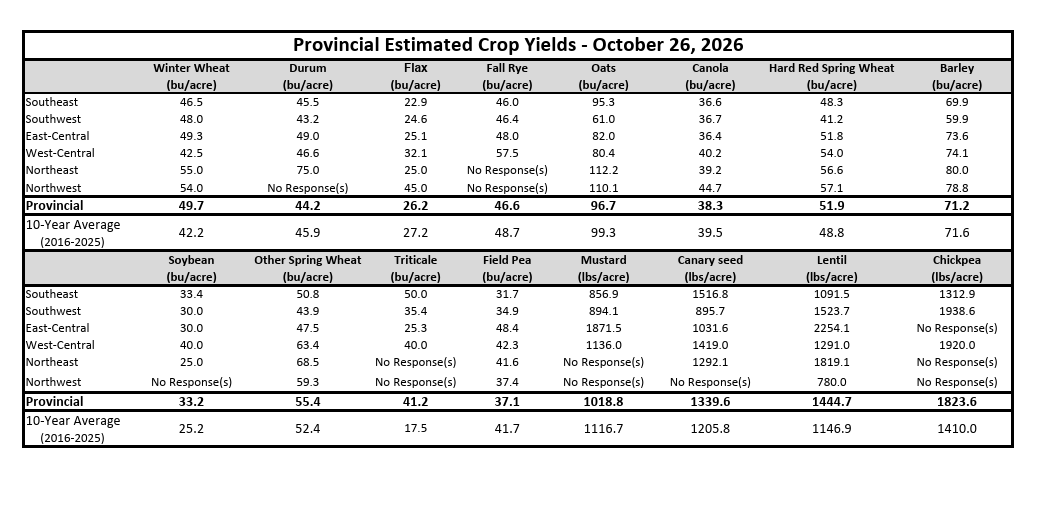
Timely moisture supported strong yield potential in many areas, while regional precipitation differences and agronomic challenges contributed to variability in yields. Crop yields were generally consistent with the 10-year averages across much of the province this year, with a few crop types yielding above their historical averages.
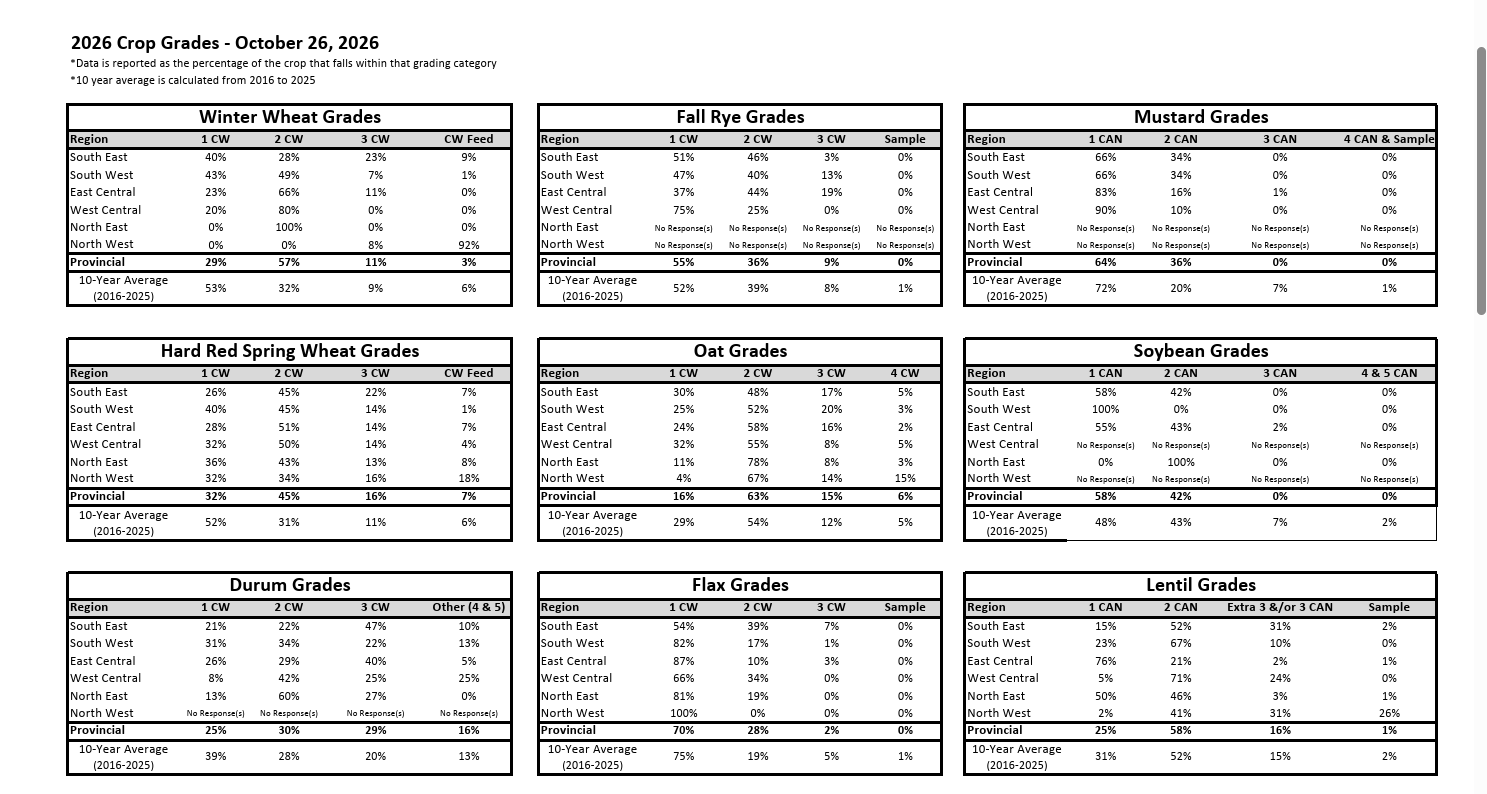
- Many crops graded in the top two quality categories, but some downgrading was reported in certain areas due to localized pest activity and late-season rain. Grades for various crop types, from across the province, are provided below:
Producers seeded less winter cereal crops this fall as winter wheat and fall rye acres fell slightly in the province. Compared to last year, seeded acres of winter wheat decreased by three per cent and fall rye decreased by two per cent. The highest drop in fall seeded acres is in the northeast region, while the southwest remains largely unchanged.
Average silage yields in the province this year are 7.45 tons per acre, which is higher than the 5.82 tons per acre reported last year. The southwest reported the highest silage yields, while the lowest yields were reported in the central regions of the province.
Provincially, dryland hay yields are:
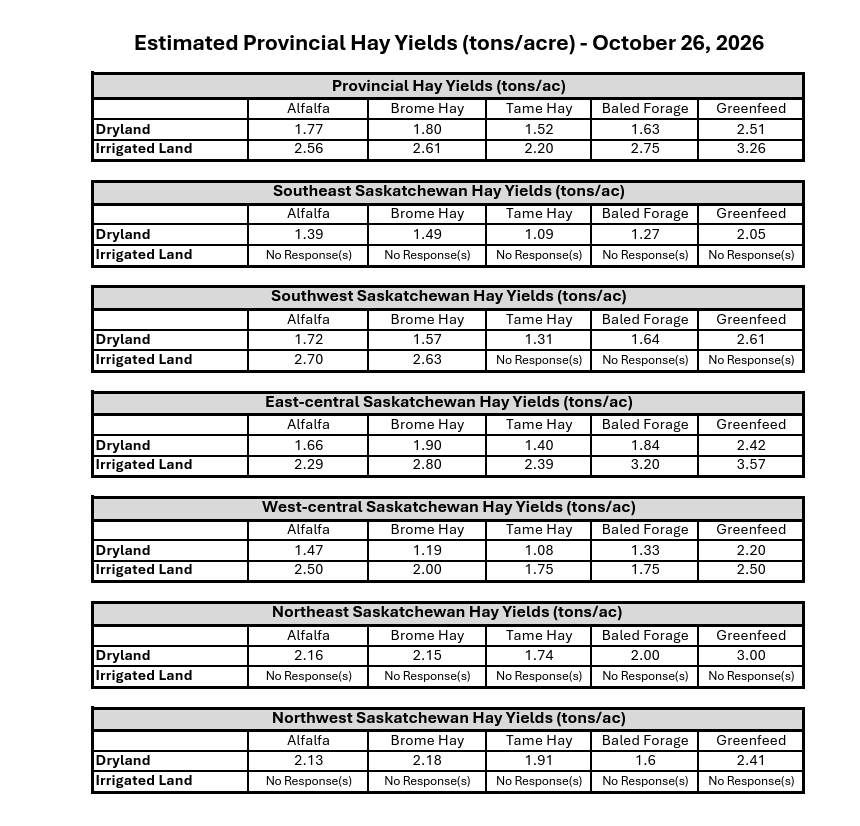
The quality of most hay crops was rated as excellent and good, with some small areas reporting poor hay quality. The first cut hay crop was rated as 18 per cent excellent, 71 per cent good, and 11 per cent fair. Producers who were able to complete a second cut reported that 23 per cent was excellent, 47 per cent was good, 22 per cent was fair and eight per cent was poor quality. Hay prices vary throughout the province, but on average, alfalfa is $134.69 per ton, brome is $116.22 per ton, greenfeed is $97.29 per ton, straw is $49.75 per ton and standing hay is $60.56 per ton.
Current topsoil moisture levels vary in the province but, in general, most regions are reported to have sufficient soil moisture as winter begins.
Cropland topsoil moisture is:
- 5 per cent surplus;
- 83 per cent adequate;
- 11 per cent short; and
- 1 per cent very short.
Hayland topsoil moisture is:
- 3 per cent surplus;
- 83 per cent adequate;
- 13 per cent short; and
- 1 per cent very short.
Pasture topsoil moisture is:
- 2 per cent surplus;
- 77 per cent adequate;
- 19 per cent short; and
- 2 per cent very short.
Most pastures across the province are rated in excellent, good or fair condition, with pasture conditions generally reflecting current soil moisture ratings. Overall, pastures are in good condition across Saskatchewan entering winter. Provincially, 10 per cent of pastures are in excellent condition, 63 per cent are in good condition, 23 per cent are in fair condition, three per cent are in poor condition and one per cent are in very poor condition.