



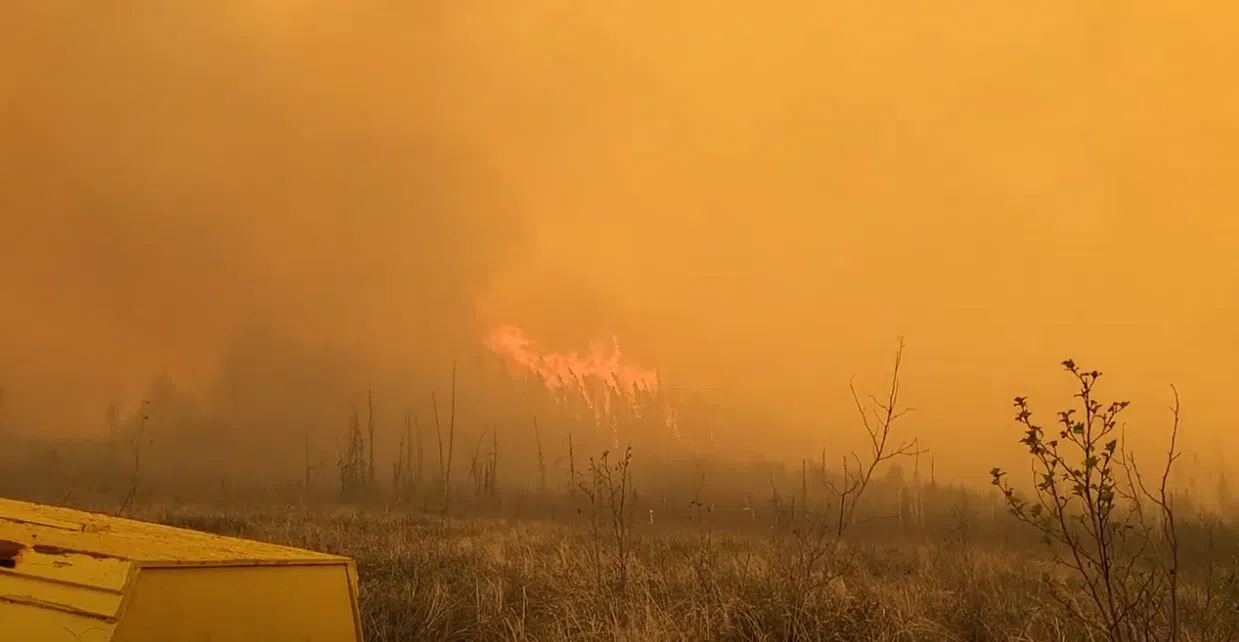
The Saskatchewan Public Safety Agency says wildfire conditions in northern Saskatchewan are looking promising, but southern Saskatchewan could be in trouble.
Vice President of Operations for the SPSA Steve Roberts says wildfire conditions in north and central Saskatchewan have improved over last year thanks to decent snowpack and cooler temperatures. However, it’s not the same story for southern Saskatchewan, as it experienced dry and warm weather over the winter, with little to no snowpack.
He adds that snowpack is helpful, but the severity of the 2026 wildfire season will be largely dependent on short-term weather trends, like extended periods of heat, wind, and rain events.
“Up until June, our fire season is primary based on snowpack, and that’s looking favourable, more favourable than lats year. After that period, it will have a lot to do with ignition sources including lighting and the current weather conditions from there until the end of August.”
Roberts also adds that the SPSA is very well prepared for this season. Preventative measures such as 21 forest thinning, fire guard construction, and vegetation maintenance projects began this winter. The SPSA also began hiring seasonal staff one month earlier than usual in December, 2025; contracts were renewed with Type II First Nations firefighters; and all equipment has been repaired and is ready to go for this spring- well, mostly.
“Two of our water-scooping 215T aircrafts will be unavailable until midseason to address modification and repair requirements. These are the last two aircrafts that are due to come online late in the season, so the impact to the group response will be low.
Roberts says this year’s fleet consists of three Convair CD 580s, one Q400 air tanker, six water scooping aircrafts, and seven Bird Dog aircrafts.