




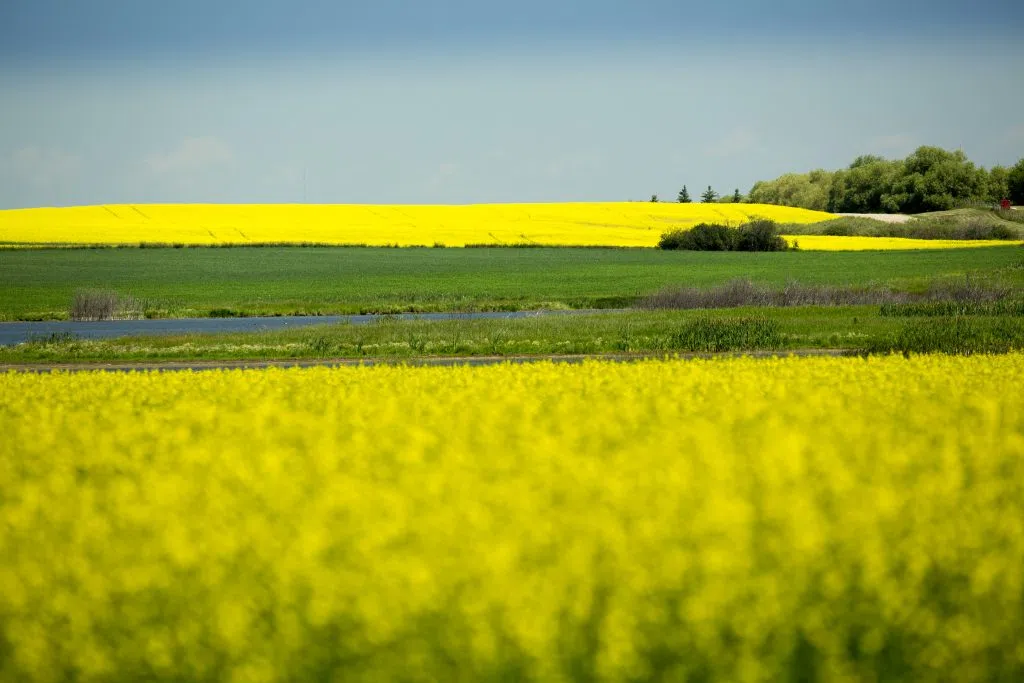
Statistics Canada released its 2026 seeding intentions report on Thursday morning—highlighted by a one per cent increase in estimated canola area with spring wheat remaining relatively stable.
Data for the survey was collected between December 12th and January 16th from 8,200 farmers across the country. This was the first time seeding intentions were collected in December. The survey was also conducted prior to the announcement that China would be sharply reducing tariffs on canola seed and eliminating duties on canola meal and peas.
The Statistics Canada survey has canola acreage at 21.8 million acres—roughly in line with the five-year average. Saskatchewan is forecast to have 12.2 million acres, up 0.5 per cent from last year. Manitoba producers anticipate seeding 3.2 million acres of canola, up 4.7 per cent. Alberta is looking at 6.3 million acres, an increase of 0.7 per cent.
The total area for all types of wheat is 26.7 million acres, down 1.1 per cent from last year, which is still well above the five-year average. Spring wheat area is basically stable at 18.8 million acres, while winter wheat area is forecast to drop 6.7 per cent. Saskatchewan producers anticipate seeding 8.7 million acres of spring wheat, a decline of 0.6 percent. Alberta is looking at a small bump of 0.3 per cent, while Manitoba producers plan to seed five per cent fewer wheat acres.
The national durum estimate is 6.4 million acres, down 2.4 per cent. Most of that decline is coming from Alberta because Saskatchewan producers are forecast to seed 5.1 million acres—about the same as last year.
Following big crops and lower prices, pea and lentil area will be scaled back in 2026. The Statistics Canada survey puts national lentil area at 4.1 million acres. down 5.5 per cent. In Saskatchewan, where almost 90 per cent of lentils are grown, the forecast is for a 4.3 per cent decline to 3.6 million acres. There will be an even sharper drop for peas. The national number is 3.1 million acres, down 12.3 per cent. Here in Saskatchewan, the expected decline is 16.6 per cent to 1.5 million acres
Flax area is expected to rise based on good prices. National area is pegged to rise 21 per cent to 753,000 acres.
Soybean area is estimated to be two per cent higher at to 5.9 million acres. Ontario is at 2.9 million acres—but Manitoba is closing the gap with 1.9 million acres. If the predicted 13 per cent increase occurs, it would be Manitoba’s largest soybean area since 2018. Lower input prices relative to other crops is being cited as the reason.