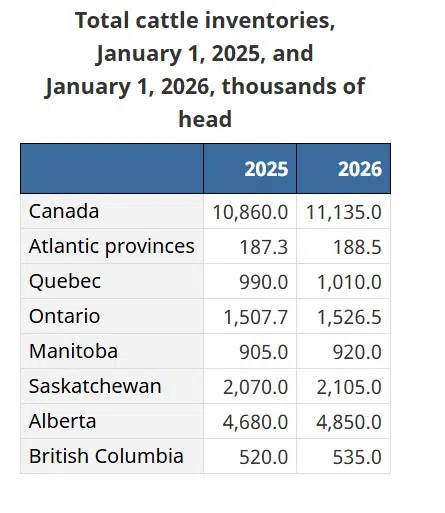




Statistics Canada reports there were 11.1 million cattle and calves on Canadian farms and ranches on January 1, 2026—or 2.3 per cent more than a year ago.
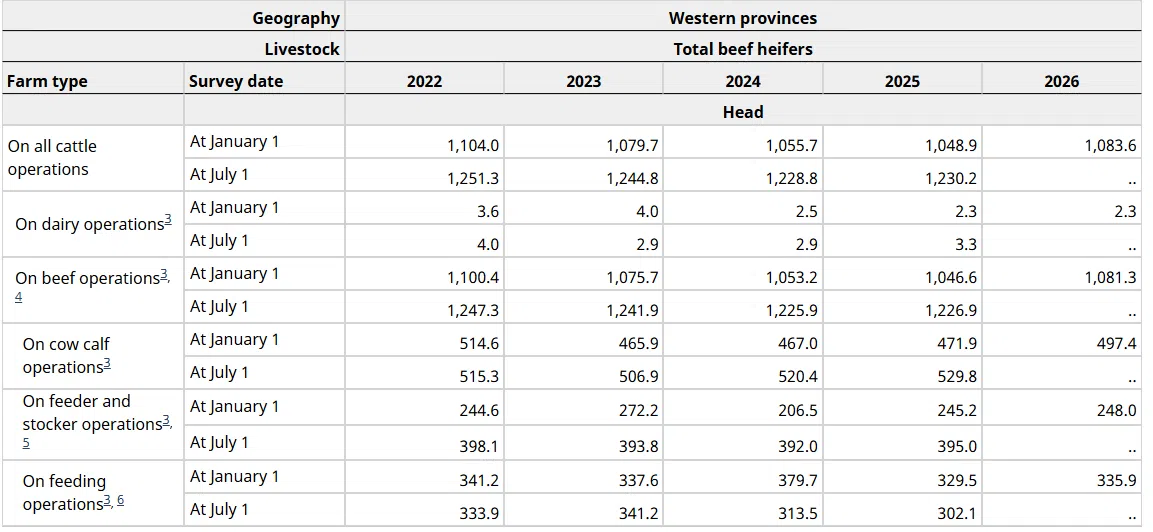
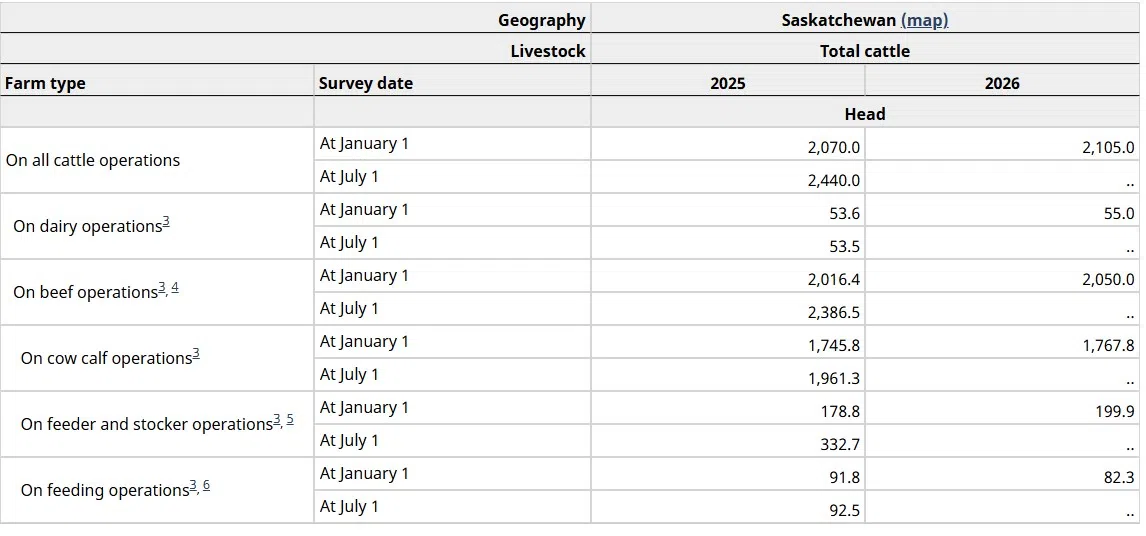
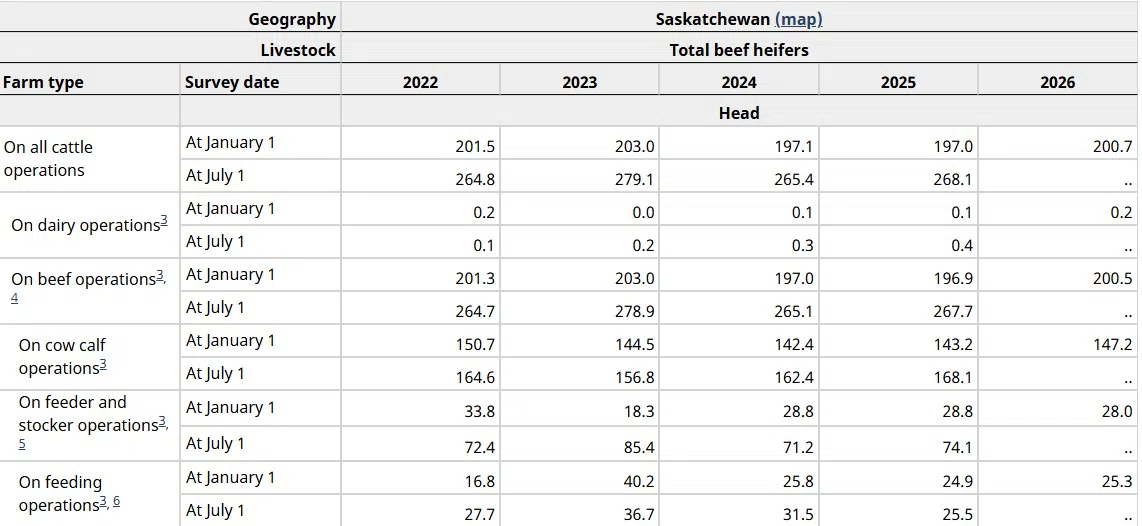
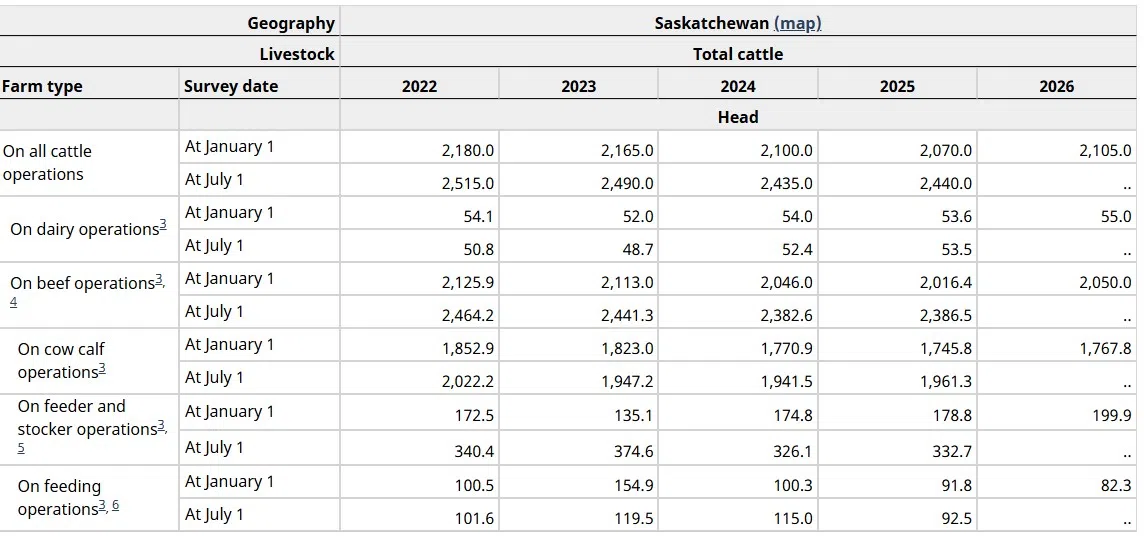
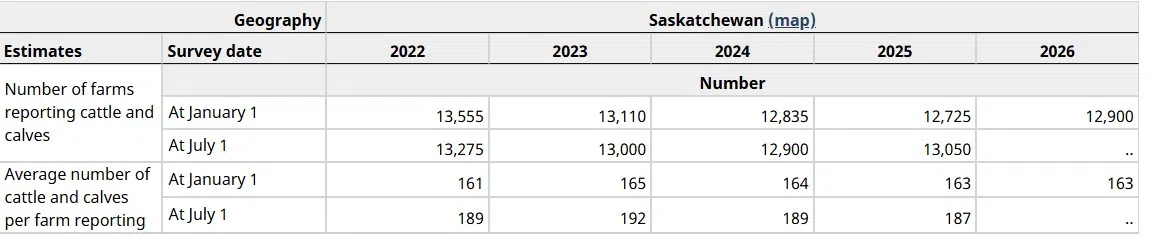
The following numbers show a potential move to increase the size of the Canadian beef herd. The number of beef heifers for breeding was up 4.8 per cent and beef cows were 1.9 per cent higher compared to the previous year. There were 2,050,000 head of beef cattle on January 1st in Saskatchewan, an increase of nearly 35,000 over the past year. There were 200,700 beef heifers in the province, an increase of 3,700 from the same period one year ago. There were 12,900 Saskatchewan farms with cattle and calves at the start of this year, or 175 more than the beginning of 2025.
Statistics Canada reports the national slaughter of cattle and calves fell by 6.5 per cent to 1.6 million head. International exports dropped by nearly 9 per cent to just over 365,000. Despite decreases, feeder and slaughter cattle prices climbed to record highs over the later half of 2025 due to global demand.
National hog inventories were down 0.8 percent to 13.9 million, while international exports of live hogs were up eight per cent to 3.5 million. Hog slaughter rose 1.8 per cent to 10.9 million head. Hog numbers in Saskatchewan declined 20,000 to sit at 925,000 on January 1st.
Canadian sheep and lamb inventories were up three percent to 833,00 head. The sheep breeding herd was up 2.2 percent, while producer prices for slaughter lambs fell well below those in the previous six months.
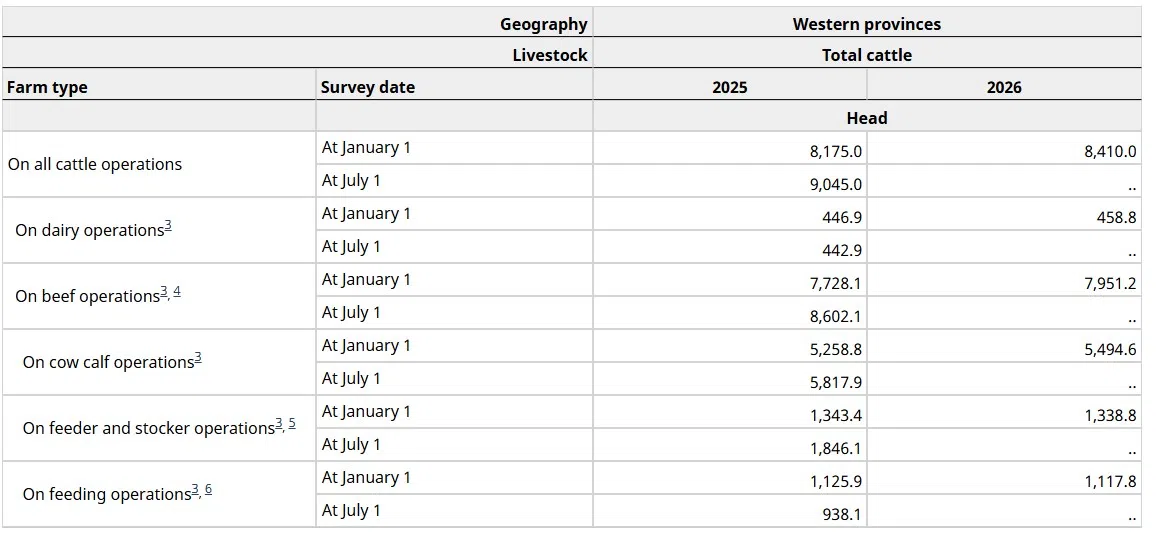
The following charts are courtesy of Statistics Canada: