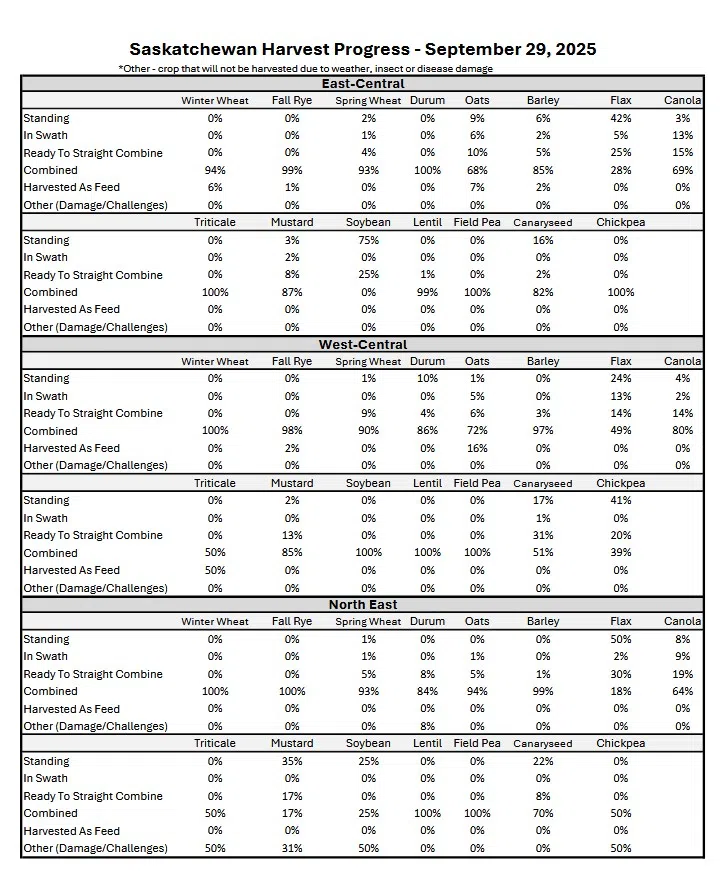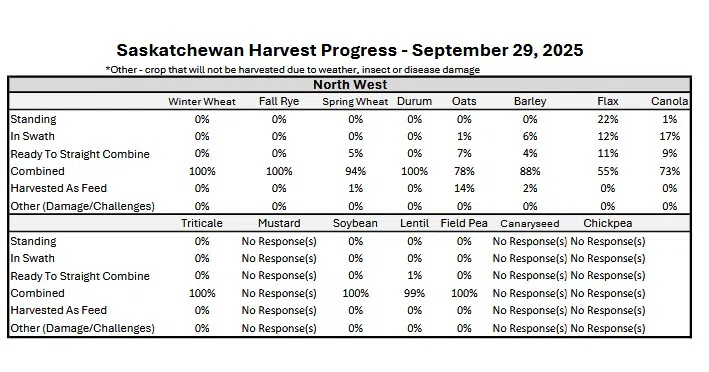




The weekly Saskatchewan Agriculture report says 84 per cent of the provincial crop had been combined as of Monday—-up 16 per cent from the previous week.
We are now ahead of the ten-year average of 81 per cent—but still behind the five-year average of 92 per cent.
There is a relatively narrow gap in harvest progress between regions. The southwest is at 87 per cent combined, west-central and northwest 86 per cent, southeast 84 per cent, northeast 83 per cent and the east central region is 80 per cent harvested.
Breaking down the harvest by crop: peas are 99 per cent combined, lentils 98 per cent, barley 94 per cent, spring wheat 92 per cent, durum 91 per cent and oats 87 per cent combined.
Minimal rain was reported last week with the largest amounts in the northwest. Meadow Lake had 13 millimetres and Loon Lake 11 millimetres.
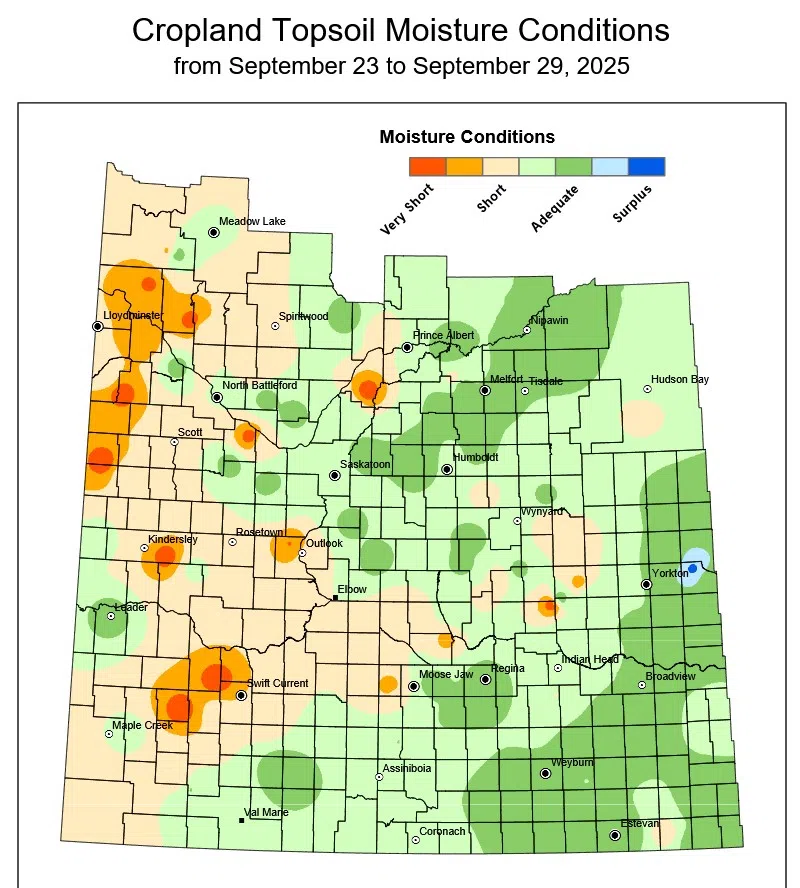
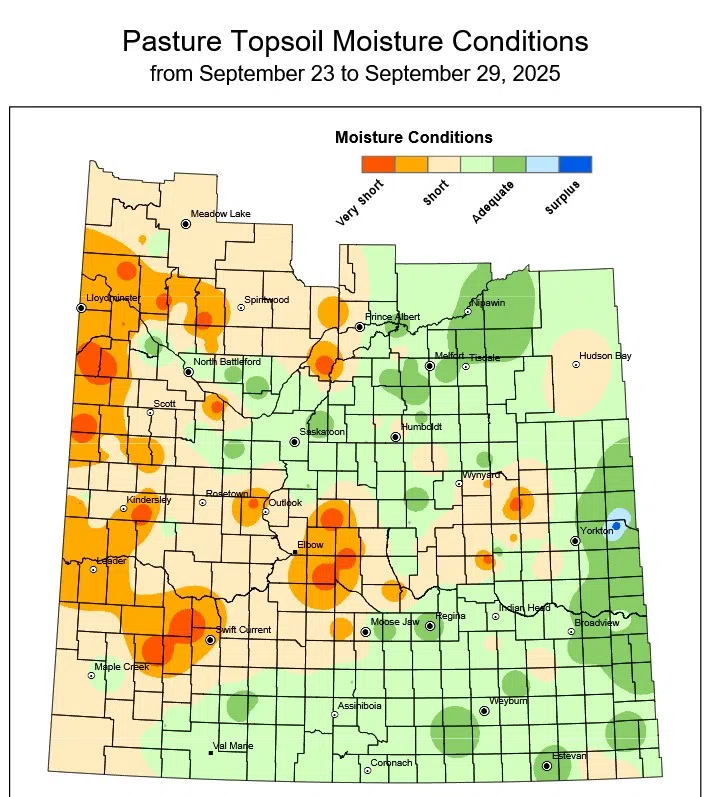
Topsoil moisture conditions fell again with provincial cropland ratings at one per cent surplus, 49 per cent adequate, 38 per cent short and 12 per cent very short. For pastures it’s 34 per cent adequate, 39 per cent short, and 26 per cent very short. Those numbers look pretty good when you compare them to the northwest. On cropland it’s 35 per cent adequate, 47 per cent short and 18 per cent very short. As for pasture topsoil moisture conditions in the northwest, it’s 27 per cent adequate, 36 per cent short and 37 per cent very short.
Volunteer reporters were also asked to rate livestock water supply and quality. Three per cent of respondents said there are severe/widespread shortages occurring. Thirty-one per cent reported moderate shortages, 16 per cent said shortages are anticipated and 50 per cent said there are no shortages occurring/anticipated. Provincially 23 per cent of respondents said producers are worried about livestock water quality while the remaining 77 per cent did not have concerns at this time. The bulk of water concerns are related to dry weather, low water levels in dugouts and decreasing water quality.
This week, most of the crop damage was caused by high winds. Some producers reported winds strong enough to blow swaths away. The other reports of crop damage were caused by wildlife and waterfowl.
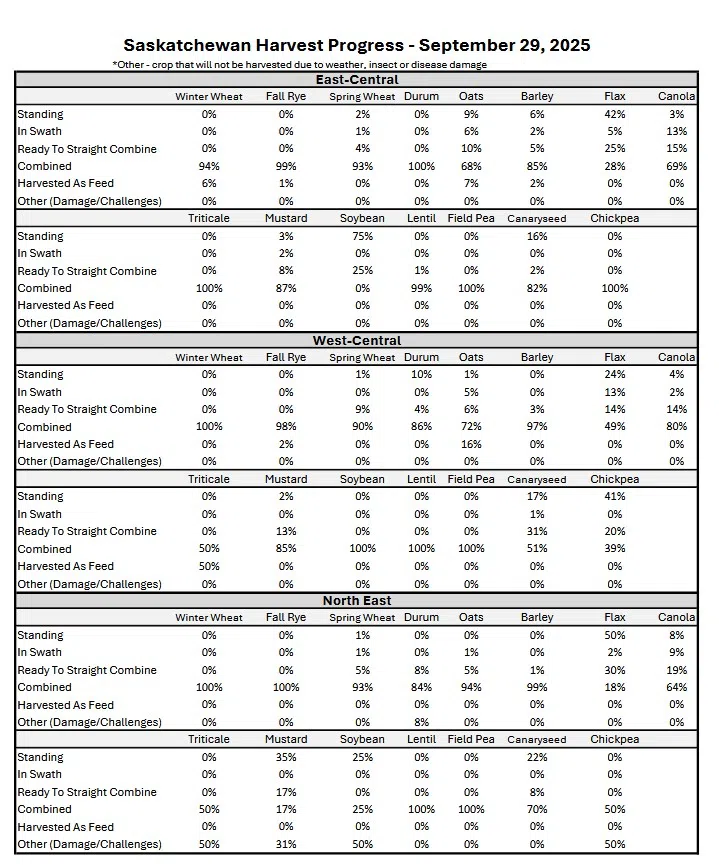
The following maps and charts show harvest progress by region as well as topsoil moisture conditions for cropland and pastures.