




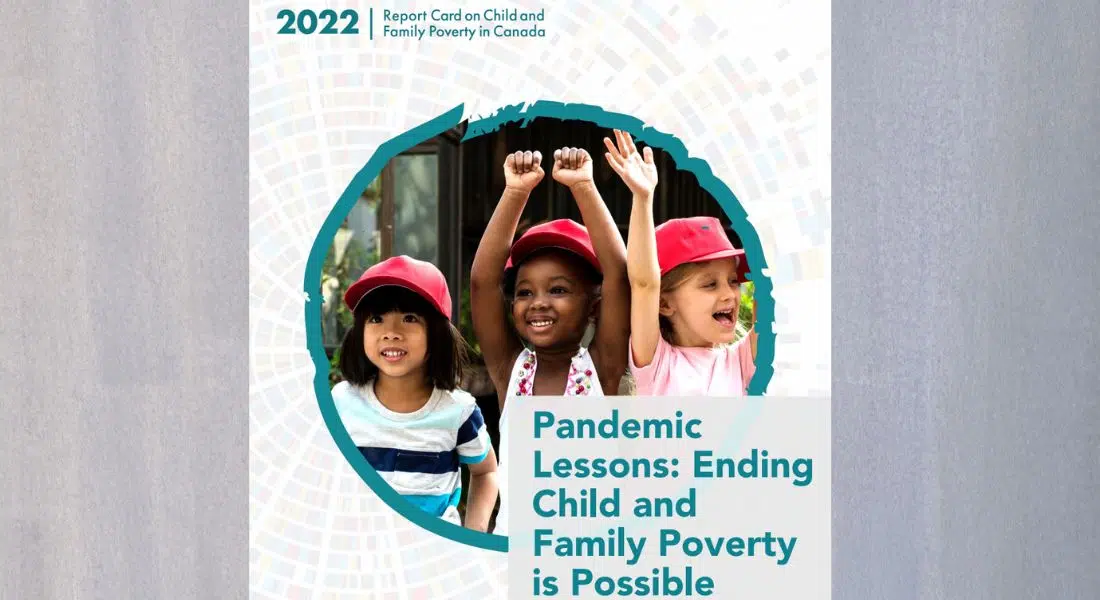
The 2022 report card on Child and Family Poverty in Canada states that one in eight Canadian children are growing up with the short and long-term physical, mental, emotional, economic and social harms of poverty.
From 2019 to 2020, child poverty was down in every province in territory, but it was largely due to the federal government’s pandemic response, which have now all expired. The report says these temporary benefits protected over a half-million children from falling into poverty in the first year of the pandemic.
The highest poverty rate of the provinces last year was Manitoba at 20.7 per cent, followed by Saskatchewan at 19.7 per cent. The national average was 13.5 per cent.
Some of the recommendations in the report include ensuring wages are adequate and legislating equal pay and benefits for all workers regardless of employment status, gender, racialization, or immigration status, and expand funding for community-based mental health and wellness programs. Also on the list of recommendations is to address the growing income inequality and generate revenue for poverty reduction programming by eliminating expensive tax loopholes, closing tax havens, and taxing extreme wealth.
This report has prompted the Official Opposition to call on the Premier to fix it. Carla Beck, Opposition Leader, and Trent Wotherspoon, Affordability Critic, say in a province as prosperous as Saskatchewan, there is no reason for 55,000 kids to go hungry. The New Democrats are now calling on Premier Scott Moe to scrap the new tax and fee increases, stop increases to SaskPower and SaskEnergy rates, and to begin an investigation into food pricing.
Click here for the report.