




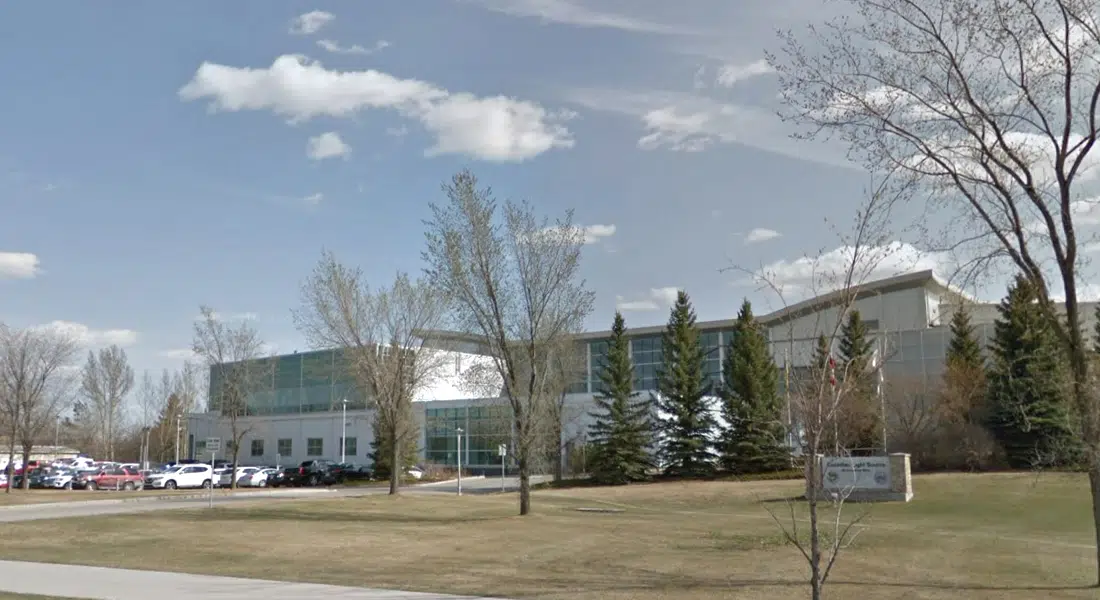
A scientist who worked on the University of Saskatchewan Campus and who won the Nobel Prize in chemistry 50 years ago this month, will have the main experimental hall of the Canadian Light Source now carrying his name.
It’s part of a national initiative called Herzberg50 to mark the anniversary of his Nobel Prize, which the website ‘defining moments of canada’ considers an important moment in Canada’s history.
Gerhard Herzberg and his wife Luise were refugees from Nazi persecution in 1935.
They both spent ten years at USask.
A news release from the university says three of Gerhard Herzberg’s books were published during that time and are still considered classic works on atomic and molecular structure,
USask President Peter Stoicheff says, “Canada and the University of Saskatchewan welcomed Herzberg and is wife when no other country or university did. His legacy is evident today in so many ways, including at our Canadian light Source, where scientists from across Canada and around the world continue to unravel the mysteries of atomic structure.”
After Herzberg died in 1999, the USask Herzberg Fund was established with gifts from many donors who have provided scholarships, fellowships, and travel awards for more than 150 graduate students since 2004.
Earlier this year, the chemistry department created a new student award, the Herzberg International Equity Award, which will assist close to 50 students from 20 countries this year alone.
2021 also marks the 50th anniversary of the German-Canadian Intergovernmental Agreement on Scientific and Technological Co-operation which has fostered more than 1,000 joint research projects.
USask and other Herzberg50 partners are working with the German Embassy on a Herzberg exhibit that will tour Canadian cities, starting with USask in January of 2022.
https://definingmomentscanada.ca/herzberg50/
https://research.usask.ca/herzberg/