




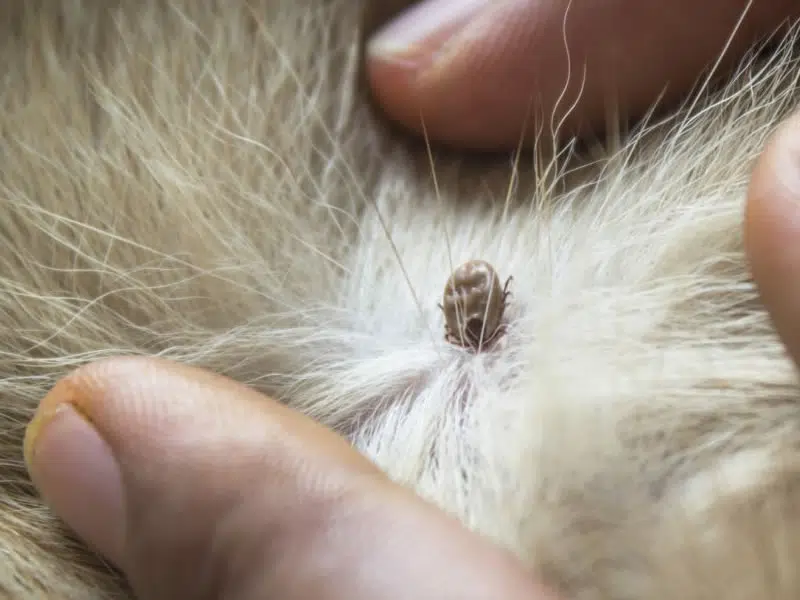
Brent Wagner Department Assistant with the Department of Veterinary Microbiology says the province’s tick surveillance program hasn’t had that many ticks sent into them this year.
Saskatchewan tracks ticks, so to speak. The Western College of Veterinary Medicine is serving as the primary lab for the provincial passive surveillance tick survey in the province. Wagner says the numbers usually peak around the end of May and then start to decline throughout the month of June.
He says mostly they get the standard tick which is the American Dog Tick. Once in a while they get deer ticks which are associated with Lyme disease. They let the submitters know what kind of tick it is and in the case of a deer tick they send it off to the national microbiology lab in Winnipeg and that information is also sent to the submitter.
Warmer weather and longer days brings ticks out but there are some things you can do like wear light coloured clothes to more easily spot the ticks, long pants, long sleeved shirts and closed toe shoes when hiking. Use an insect repellent with DEET.
Keep your pets out of wood areas and tall grasses. And check both yourself, your family and your pets for ticks if you’ve been somewhere they might be prevalent.